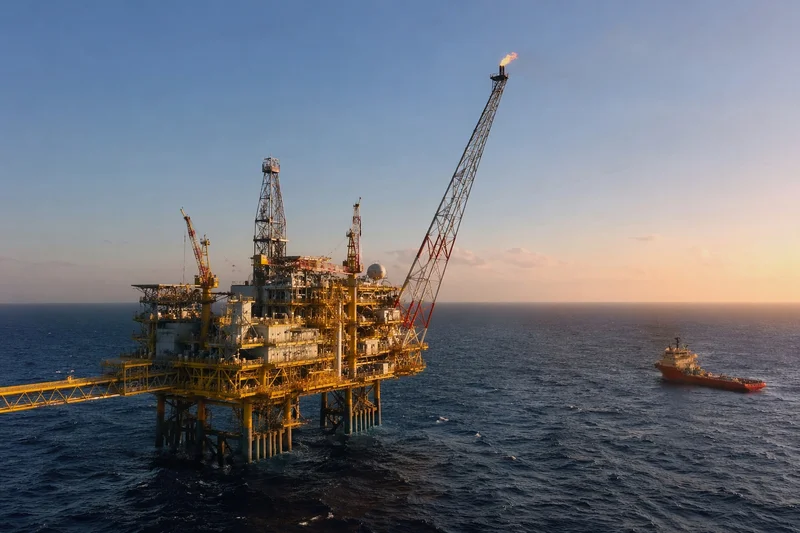
Oil Slide Hits Petrobras, YPF and Ecopetrol Hard
Key Facts
- USO tracked WTI crude down 5.19%closing at US$115.78 as a broad commodity sell-off gathered pace, flagged by the Invesco DB Commodity Index Tracking Fund.
- Petrobras shares dropped 1.78%finishing at US$18.72, as global benchmark weakness outweighed the fundamental support from Brazil’s pre-salt production machine.
- Argentina’s YPF fell a steeper 2.78%to US$49.64, reflecting how rapidly Vaca Muerta shale economics can sour when benchmark crude turns south.
- Colombia’s Ecopetrol declined 1.75%to US$16.31, moving almost in lockstep with Petrobras as the regional sell-off spared no state-controlled producer.
- The wider commodity basket slippedwith the Invesco DB Commodity Index Tracking Fund (DBC), in which energy carries the largest weight, falling 1.97% on the session.
- The move reset risk calculations across Latin Americafrom Guyana’s offshore boom to Mexico’s Pemex debt dynamics, as cheaper crude challenges revenue assumptions and upstream spending plans.
Today’s Focus
Oil equities across the Americas were hammered on Tuesday after the United States Oil Fund LP, the exchange-traded fund that tracks front-month WTI futures, fell 5.19% to US$115.78. The decline showed up in the wider commodity basket too, with the diversified Invesco DB Commodity Index Tracking Fund (DBC) down 1.97% on the session. For Latin America’s state-controlled giants and the new private-led boom in Guyana, the move instantly tightened the screws on revenue projections and share prices.
Brazil’s Petrobras shed 1.78% to US$18.72, a comparatively mild loss that underscores how the deepwater pre-salt machine can absorb a single-day crude shock, even if political interference in fuel pricing prevents a perfect correlation with global benchmarks. Colombia’s Ecopetrol displayed similar resilience, falling 1.75% to US$16.31, but Argentina’s YPF took a sharper 2.78% hit, closing at US$49.64 as the investment case for the Vaca Muerta shale play is directly pegged to sustained high WTI levels.
The sell-off reverberated beyond the listed producers. For Mexico’s Pemex, whose heavy debt load means its bonds act as a pure proxy for Mexican oil risk, lower crude threatens the cash-flow narrative that has kept creditors at bay, even though the company’s shares are not in our board. Conversely, Guyana’s Stabroek Block, operated by ExxonMobil, Hess and CNOOC, is adding low-political-risk barrels that become more valuable when higher-cost, state-run suppliers elsewhere in the region struggle, a dynamic that can accelerate the Atlantic basin’s supply shift away from legacy producers.
What matters today. A sudden 5.19% plunge in the WTI tracker USO dragged down every major Latin American oil equity, but the damage was uneven, with shale-exposed YPF suffering most and pre-salt giant Petrobras proving stickier.
” alt=”Oil daily market wrap.” />
01 The session in one read
A wave of selling swept through crude markets on Tuesday, sending the United States Oil Fund LP (USO) down 5.19% to US$115.78. The slide marked a decisive repricing of global growth expectations and dragged every major Latin American oil equity into negative territory.
Brazil’s Petrobras fell 1.78% to US$18.72, Argentina’s YPF slumped 2.78% to US$49.64, and Colombia’s Ecopetrol lost 1.75% to US$16.31. The uniform decline showed that while the trigger was global, the pain was acutely felt across state-controlled and private producers alike in the region.
This was a session where global macro fears, rather than regional supply fundamentals, dictated the direction, punishing the entire commodity complex and forcing a sharp markdown of Latin America’s oil-linked assets. The key variable to watch in the next session is whether the USO price can stabilise above US$115, because a further leg down would directly challenge the break-even assumptions underpinning Argentina’s Vaca Muerta drilling budgets and could renew credit-default concerns around Pemex’s debt universe.
02 The board
The price board reflected a classic risk-off rotation in commodities. The WTI-tracking USO settled at US$115.78, a drop of 5.19%, while the Petrobras American depositary receipt mirrored the mood with a 1.78% decline to US$18.72. YPF’s New York shares took the heaviest blow among the Latin American names, falling 2.78% to US$49.64, a move that highlights the outsized sensitivity of Argentina’s shale champion to sudden drops in benchmark crude.
Ecopetrol slipped 1.75% to US$16.31, moving in tight formation with Petrobras and confirming that the session’s dynamic was driven by an external commodity shock, not by company-specific news. The broader commodity basket also came under pressure, with the Invesco DB Commodity Index Tracking Fund (DBC) posting a drop of 1.97%, though copper-tracking funds rose, marking this out as an energy-led move rather than a wholesale liquidation of resource holdings.
| Asset | Level | Change |
|---|---|---|
| WTI crude (USO) | US$115.78 | -5.19% |
| Petrobras | US$18.72 | -1.78% |
| Ecopetrol | US$16.31 | -1.75% |
| YPF | US$49.64 | -2.78% |
Source: EODHD close, 2026-08-04. Where a commodity has no spot feed, an exchange-traded tracker or leading producer is shown as a labelled proxy.
Live Market IntelligenceThe live market board
Rio Times · Live Market Intelligence
Latin America — Cross-Market Board
| Instrument | Last | Change | YoY | Prev. | High | Low | Volume |
|---|---|---|---|---|---|---|---|
| IBOV | 177,894.97 | -0.06% | +33.78% | 178,000.24 | — | — | — |
| IPSA | 10,996.46 | -0.48% | — | 11,049.58 | 11,098 | 10,996 | 1,513,213,483 |
| IPC MEX | 66,848.35 | +0.22% | +17.98% | 66,700.17 | — | — | — |
| MERVAL | 3,188,971 | -2.61% | +39.42% | 3,274,443 | — | — | — |
| COLCAP | 2,374.67 | -0.42% | — | 9.04 | 9.05 | 9.02 | 4,133 |
| BVL PERÚ | 57,475.88 | — | — | — | — | — | — |
| USD/BRL | 5.13 | -0.02% | -6.71% | 5.13 | 5.14 | 5.12 | — |
| EUR/BRL | 5.92 | +0.81% | -7.00% | 5.87 | 5.93 | 5.91 | — |
| USD/MXN | 17.24 | -0.13% | -8.67% | 17.26 | 17.27 | 17.23 | — |
| USD/CLP | 910.64 | -1.60% | -5.76% | 925.48 | 910.65 | 910.63 | — |
| USD/COP | 3,197 | -1.39% | -21.97% | 3,242 | 3,201 | 3,194 | — |
| USD/PEN | 3.38 | -0.37% | -5.26% | 3.39 | 3.39 | 3.38 | — |
| USD/ARS | 1,496 | -0.03% | +10.20% | 1,497 | 1,496 | 1,496 | — |
| USD/UYU | 40.19 | +1.13% | +1.35% | 39.75 | 40.19 | 40.19 | — |
| USD/PYG | 5,932 | +1.24% | -19.53% | 5,859 | 5,932 | 5,932 | — |
| USD/BOB | 12.03 | +0.12% | +78.33% | 12.02 | 12.03 | 12.03 | — |
| USD/DOP | 58.31 | +1.61% | -3.54% | 57.38 | 58.31 | 58.04 | — |
| USD/CRC | 446.90 | +0.96% | -9.30% | 442.63 | 446.90 | 446.90 | — |
1 of 4names higher.
IPC MEXled, while
MERVALlagged.
03 What moved it
The 5.19% plunge in USO signalled a sharp reassessment of demand prospects, with front-month WTI futures dragged lower by a combination of macroeconomic anxiety and a strengthening US dollar. Because USO rolls front-month contracts, it captures immediate shifts in futures positioning, and today’s move indicated that traders aggressively priced out near-term scarcity premiums.
The broader commodity complex confirmed the bearish tilt. The Invesco DB Commodity Index Tracking Fund, which holds a mix of crude, refined products and metals, saw its previous close rest at a multi-session low, while copper-tracking funds also retreated, severing any link between oil’s weakness and a rotation into industrial metals. This was a wholesale de-risking, not a targeted bet against energy.
04 The Latin American read
Brazil’s Petrobras, ending at US$18.72, absorbed the shock with relative composure thanks to the geological bounty of the pre-salt, where low lifting costs at the Santos and Campos basins insulate upstream margins even when WTI stumbles. However, the company’s discount to the crude move also reflects a persistent political risk premium, as the federal government’s influence over fuel pricing prevents a straightforward correlation with global benchmarks.
Argentina’s YPF, by contrast, cratered 2.78% to US$49.64 because the Vaca Muerta shale formation in the Neuquén Basin depends on sustained high WTI levels to justify the capital-intensive drilling and midstream infrastructure that investors have been betting on. Colombia’s Ecopetrol, at US$16.31, fell in sympathy, reminding the market that Andean producers cannot decouple from a broad Atlantic basin sell-off. Venezuela’s heavy crude, meanwhile, remains a latent supply variable: any US sanctions easing could suddenly release extra-heavy Orinoco Belt barrels, adding downward pressure to the heavy-light differential that already competes with Brazil’s and Guyana’s lighter offshore grades.
05 The names to watch
Petrobras is the bellwether for how pre-salt economics interact with volatile global benchmarks. Its ability to hold above US$18.70 in a down-5% crude session suggests that deepwater production margins provide a sturdy floor, but any sign of Brasília interfering in the dividend policy would test that support.
YPF stands as the highest-beta play in the region, amplifying WTI’s move in both directions. With shares now below US$50, the company’s ability to attract foreign partners for Vaca Muerta’s next drilling phase becomes a live question. In the Guyanas, ExxonMobil-led Stabroek Block production is the silent counterweight, adding low-cost, low-political-risk barrels that make the investment case for higher-cost state operators like Pemex and PDVSA even more challenging when prices fall.
06 The outlook
The immediate trajectory hinges on whether USO can find a floor near the US$115 mark or whether algorithmic selling extends the decline into a second session. For Latin American equities, a stabilisation in WTI would allow investors to refocus on company-level catalysts, such as Petrobras’s next pre-salt output report or YPF’s midstream capacity expansions. However, if the commodities complex continues to slide, the market will rapidly reprice the fiscal resilience of every state-controlled producer, from Mexico City to Buenos Aires.
07 What to watch
- USO stabilisation:Watch whether USO rebounds above US$115.78 in the next session; a failure to hold that level would confirm a momentum break and could trigger a second wave of selling across YPF and Ecopetrol.
- Petrobras political risk:Monitor any news from Brasília on fuel-pricing policy or dividend distributions, because a political misstep could sever Petrobras’s relative resilience and push shares well below US$18.72.
- YPF break-even stress:With YPF below US$50, track any statements from the company or Neuquén province on drilling activity, as a sustained low WTI environment would directly threaten the economics of new Vaca Muerta pads.
- Venezuela sanctions chatter:Any credible signal of US sanctions easing on PDVSA could immediately widen the heavy-light crude spread, pressuring Brazil’s and Guyana’s lighter grades and challenging the premium that pre-salt barrels currently command.
Frequently Asked Questions
Why did Latin American oil stocks fall on August 5?
A global crude sell-off drove the WTI-tracking USO down 5.19% to US$115.78, pulling Petrobras, Ecopetrol and YPF lower as investors repriced Latin America’s revenue outlook for cheaper oil.
Why did YPF fall more than Petrobras?
YPF dropped 2.78% to US$49.64 because the Vaca Muerta shale play requires consistently high WTI prices to justify drilling costs, whereas Petrobras’s low-cost pre-salt fields absorbed the crude shock with a milder 1.78% decline.
How does Guyana fit into this sell-off?
Guyana’s Stabroek Block, operated by ExxonMobil, Hess and CNOOC, is adding low-cost offshore barrels to the Atlantic basin; cheaper crude makes those projects even more competitive against higher-cost state producers like Pemex and PDVSA.
Is this a broader commodity problem or just oil?
It was mostly an energy story: the broad Invesco DB Commodity Index Tracking Fund (DBC) fell 1.97%, but copper-tracking funds actually rose, so investors were selling crude rather than the whole commodity complex.
This article was produced by The Rio Times’ automated newsroom system. How we use AI · Report an error
LatAm Markets: Live Signals → — real-time movers, turnover leaders and FX across Latin America.