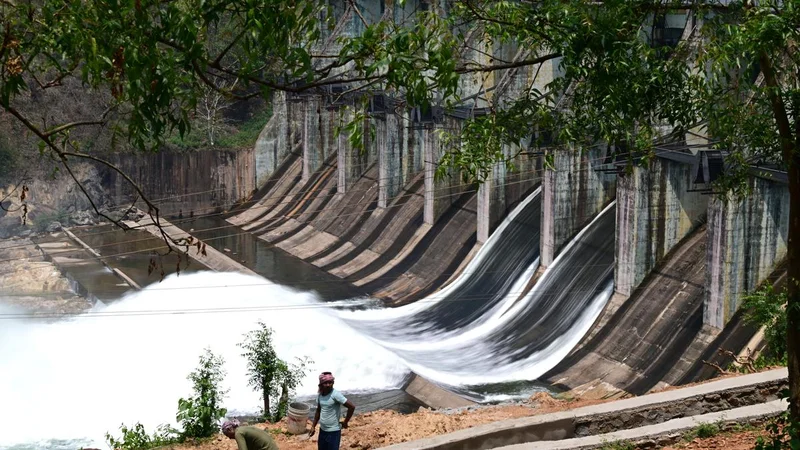
Despite Odisha receiving rainfall in excess of close to 96% in July, the State government has decided to go for rationalising hydropower generation in order to prioritise drinking water and irrigation needs.
“If water levels drop below the critical baseline required for irrigation and drinking purposes, ensure that power generation is completely suspended without waiting for further clearances,” says a government letter instructing the Engineer-in-Chief of the Water Resource Department on Tuesday (August 4).
In a meeting held in the second week of July, Chief Minister Mohan Charan Majhi observed that reserving sufficient water to fully meet the critical needs of drinking water supply and agricultural irrigation was absolute and paramount.
“Accordingly, it has been categorically mandated that if the water levels in any reservoir are found to be less than the required threshold needed to secure these priorities, power generation must be stopped immediately,” says the letter.
The government is also wary of El Niño phenomenon and the resulting lower water storage levels compared to previous years.
The EIC was asked to continuously monitor all power-generating reservoirs across Odisha on a 24-hour basis and maintain rigorous daily logs of live storage levels, inflows, and prospective depletion rates.
Moreover, the engineers have been asked to stop hydropower generation without waiting for clearance in the event of water level in reservoirs falling below the threshold.
Odisha has an installed hydropower capacity of 2,099.5 MW. In the post-summer period, the Odisha Hydro Power Corporation (OHPC) has already taken precautions and lowered the generation level. Hydropower stations were running below 30% of installed capacity.
Published - August 05, 2026 10:57 am IST