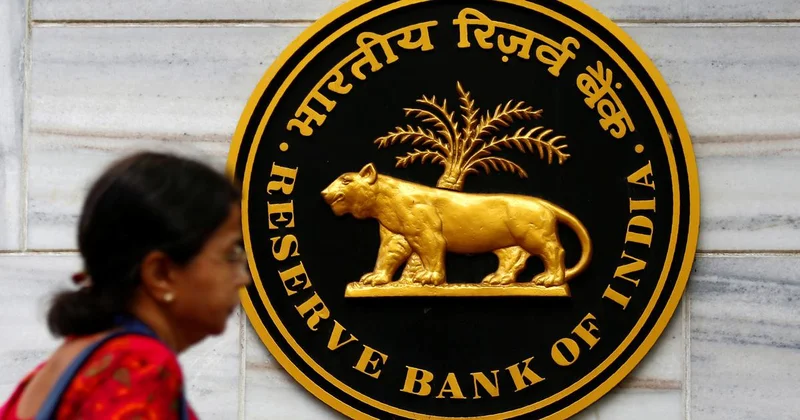
The Reserve Bank of India’s Monetary Policy Committee on Wednesday kept the repo rate unchanged at 5.25%.
The repo rate is the interest rate at which the central bank lends money to commercial banks. The Monetary Policy Committee reviews the rate every two months.
The committee had cut the repo rate by 25 basis points from 5.50% in December and kept it unchanged in February, April and June.
A basis point is one-hundredth of a percentage point. Basis points are used to describe the percentage change in the value of a financial instrument.
Central banks usually reduce repo rates to stimulate economic growth by making borrowing cheaper for individuals and businesses. This translates to lower equated monthly instalments for borrowers.
On Wednesday, the policy committee said that it had decided to maintain its monetary policy stance as “neutral”.
A neutral stance means that the Reserve Bank remained flexible in adjusting policy rates based on prevailing economic conditions.
State of the economy
The consumer price index inflation increased to 4.4% in June mainly because of higher food and fuel inflation, the Reserve Bank said. This was the first time in 16 months that it had risen above the target of 4%. The central bank is tasked with keeping inflation at 4%, with a tolerance band between 2% and 6%.
Fuel inflation is also elevated because of the increase in retail prices amid an energy crisis triggered by the war in West Asia, it said.
The impact of El Niño on the distribution of rainfall in India remains a risk, the committee said.
The El Niño weather phenomenon involves the warming of ocean surface temperatures in the eastern and central Pacific. It typically occurs every few years and has been linked to reduced monsoon rainfall over India. La Niña has the opposite effect of El Niño.
The real gross domestic product in the financial year 2026-’27 is expected to grow at 6.7%, the central bank said. This is marginally higher than the 6.6% growth rate projected for the fiscal year in June.
Written by Nachiket Deuskar. Edited by Neerad Pandharipande.
We welcome your comments at letters@scroll.in.