Why Syria will not join the fight against Hezbollah in Lebanon
The issue of what role Damascus could play regarding Hezbollah has returned to the forefront, amid a flurry of recent high-level statements.
On Tuesday, the Lebanese movement has - for the first time - publicly expressed its willingness to hold talks with Damascus.
"There is no impediment to a public meeting between Hezbollah and the Syrian leadership at a time considered appropriate by both sides," said Hezbollah leader Sheikh Naim Qassem in a televised speech.
This move comes after US President Donald Trump again openly entertained the idea of Syria getting involved in Hezbollah’s disarmament during his meeting with Lebanese President Joseph Aoun at the White House last month.
“[The Syrian president] would like to come in,” Trump said. “You know, they’ve been fighting. He’s been fighting Hezbollah for a long time. I think it’d be very effective. So it’s something I think about.”
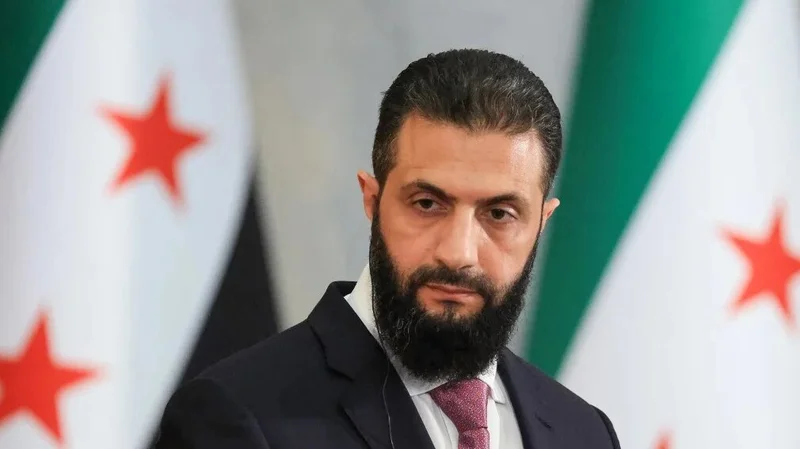
Trump's remarks were the latest in a series of statements that have appeared to advocate Syrian intervention against Hezbollah in Lebanon, while suggesting President Ahmed al-Sharaa would be more than willing to get involved.
The idea of Syria fighting Hezbollah first emerged last November, in a post on X (formerly Twitter) by US envoy Tom Barrack.
“Damascus will now actively assist us in confronting and dismantling the remnants of [the Islamic State group], the [Iranian Revolutionary Guard], Hamas, Hezbollah, and other terrorist networks, and will stand as a committed partner in the global effort to secure peace,” Barrack noted after Sharaa’s first visit to Washington.
While he did not explicitly say how Syria would provide such assistance, Reuters later reported that Washington had urged Damascus to conduct military operations against Hezbollah in Lebanon, but that Syrian officials were reluctant, citing domestic stability risks. Barrack denied the report.
Sphere of influence
Since then, and despite Trump’s pronouncements, Sharaa has strongly denied any intention to fight Hezbollah, while simultaneously intensifying operations against arms shipments that Damascus says were bound for the group.
“We are not considering military intervention, but Syria has several cards that it can offer the Lebanese state to use as it sees fit,” Sharaa told Al Jazeera in a recent interview, while voicing support for a Lebanese state monopoly on arms.
Sharaa has not openly discussed how Damascus could help disarm Hezbollah, short of military action - but some have speculated that it may seek to do so through a new Syrian-backed “Sunni base” in Lebanon.
By going to war against Hezbollah after Trump's public prodding, Sharaa risks looking like an American stooge
A July visit by Syrian Foreign Minister Asaad al-Shaibani to the northern Lebanese city of Tripoli drew widespread attention, with many interpreting it as a sign that Damascus was building a sphere of “Sunni influence” in Lebanon, centred in Tripoli - and prompting questions about whether Syria could leverage this to help eradicate Hezbollah.
The problem is that taking this path would feed the Sunni-vs-Shia narrative, upon which terrorist groups such as Islamic State (IS) thrive. This could enable IS to establish a foothold in Lebanon, much as it did in Syria and Iraq - and from there, the group could pursue its broader agenda, which includes toppling the Syrian government.
Recent developments have amplified this risk, after Lebanese authorities last month announced the arrest of a senior IS security official believed to have been in charge of operations in southern and central Syria. Days later came the arrest of an individual accused of providing funds to IS in Syria.
The Sunni-vs-Shia narrative could also undercut joint Syrian-Lebanese cooperation against IS, potentially weakening Lebanon’s multi-sectarian military and security agencies. That would be detrimental to the Syrian government as it seeks to keep IS at bay.
Fuelling tensions
Lebanon has emerged as an important partner for Syria in the battle against IS. Intelligence sharing reportedly helped to uncover and dismantle the cell accused of orchestrating a bombing in Damascus, during the visit of French President Emmanuel Macron in early July.
Notwithstanding his public statements, some observers have suggested that Sharaa may ultimately opt to send Syrian troops to Lebanon to fight Hezbollah in an effort to placate the more radical elements within the Syrian state structure, who accuse him of betraying jihad. But this, too, could work to the advantage of IS.
By going to war against Hezbollah after Trump’s public prodding, Sharaa risks looking like an American stooge. That could fuel rather than ease tensions with radical Syrian elements, while also lending credence to the anti-Sharaa IS narrative, and thus boosting the group’s efforts to recruit from Syria’s military and security ranks.
At the same time, senior Lebanese officials have rejected the prospect of Syrian military intervention against Hezbollah, with Aoun describing disarmament as a solely domestic issue. Even political figures staunchly opposed to Hezbollah, such as Lebanese Forces party leader Samir Geagea, have dismissed the idea of Syrian intervention as “not viable”.
This stems largely from the fact that an outsized Syrian role is a deeply unpopular prospect in Lebanon, after the era of Syrian domination over the country during the Assad dynasty. Syrian military intervention against Hezbollah would also risk undermining bilateral ties with Lebanon, further damaging their collaboration against IS.
While there exists a bitter history between Hezbollah and Sharaa, there exists an equally bitter history between the Syrian president and IS. Yet unlike IS, Hezbollah has not openly declared war on the Syrian government, nor has it carried out attacks reaching the heart of Damascus.
It is therefore IS that poses the existential threat to Sharaa as he seeks to rebuild Syria.
Hezbollah leader's conciliatory gestures this week will be all the more reason why Sharaa must tread carefully, lest he undermines his war of necessity against IS for a war of choice against Hezbollah.
The views expressed in this article belong to the author and do not necessarily reflect the editorial policy of Middle East Eye.