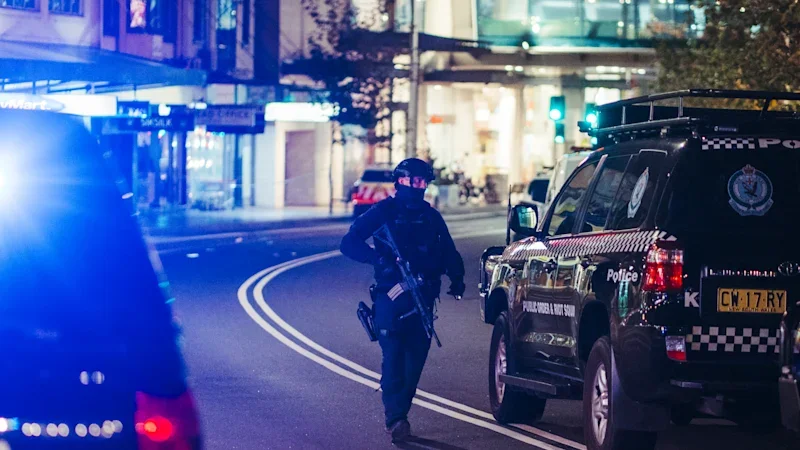
The Minns government has been accused of “all talk and no action” for failing to fully support a key recommendation from the coronial inquest into the Bondi Junction Westfield stabbing attack that would deliver crisis accommodation to those at most risk of psychosis.
Mental Health Coordinating Council chief executive Dr Evelyne Tadros described the government’s reluctance to deliver short- and long-term accommodation as “not putting your money where your mouth is”, saying investment in early intervention mental health care was essential to avoiding future crises.
Queenslander Joel Cauchi, 40, stabbed 16 people at Bondi Junction Westfield on April 13, 2024. Six people died of their injuries while a further 10 people were injured but survived.
A coronial inquest determined Cauchi, who suffered schizophrenia, was psychotic on the day of the attack.
The NSW government on Wednesday announced it would accept 11 of the coroner’s 13 recommendations in full. These included a new health-led response model for mental health emergencies backed by more than $270 million over 10 years, reforms to knife scanning laws after the statutory review of NSW’s wanding powers and improving emergency service communications, training and major incident response arrangements.
However, the government will only support recommendation seven – urging modelling demand for short-term accommodation services in greater Sydney to support those suffering mental health episodes and homelessness, and supporting the establishment and evaluation of long-term accommodation based on existing models – in principle.
The government said it recognised the need to build on proven accommodation models, but was committed to ensuring this “approach is clinically appropriate and leverages existing system strengths”.
Australian Society of Psychiatrists chief executive Dr Pramudie Gunaratne urged the government to “emphatically support” the recommendation and expand supported accommodation with integrated clinical care.
“Without somewhere safe to live, recovery becomes much harder,” Gunaratne said.
“The Bondi Junction tragedy exposed systemic gaps rather than a single point of failure. Preventing future tragedies requires sustained investment across the entire mental health system – from outreach and supported accommodation to specialist community teams and ongoing treatment for people with the most severe illnesses.”
Tadros said the consequence of underfunding programs would be further crisis.
“All talk, no action, she said. “There is just this sense of, you know, supporting everything in principle, but not putting your money where your mouth is.”
Tadros said too many people were already missing out on care beyond crisis, which was evident in Cauchi’s case. Four-fifths of people requiring psychosocial support in NSW were not receiving it.
“It’s really imperative that, first and foremost, early intervention prevention is prioritised rather than dealing with things at the crisis end. Care beyond crisis is really essential. The short-term and long-term accommodation is also paramount,” she said.
Opposition mental health spokeswoman Sarah Mitchell said the decision to stop short of fully supporting the change was “not an oversight, it’s a choice”.
“If Labor was serious about preventing another tragedy like Bondi Junction, it would fund the accommodation model in full and not point to bits and pieces of existing services as an acceptable substitute.”
Mental Health Minister Rose Jackson said the government was funding accommodation initiatives, but acknowledged more was required to address demand for mental health services.
“I think we’re probably going to need to go beyond that. But I think it’s a really important first step,” she said.
“This is the first time in a long time that we’ve recognised that the answer isn’t just more social housing, although we need more of that. It’s actually more dedicated supported housing. We’re putting real money into delivering actually hundreds of beds, but we will need to get them online and then look to do more.”
Australian Society of Psychiatrists chair Dr Kathryn Drew said overall it was encouraging to see the support for the inquest’s recommendations.
“The strongest theme running through these recommendations is that we need to build a much stronger community mental health system. Good mental healthcare doesn’t start in an emergency department or with police; it starts much earlier, with outreach, continuity of care and specialist teams that can stay engaged with people over time.”
NSW Health Minister Ryan Park said the mental health reforms would “help people access the right care at the right time”.
“The government’s response continues our work to strengthen mental health services, improve access to care, and ensure people with severe and complex mental illness receive the support they need earlier and closer to home,” he said.
The coronial inquest urged the government to house and care for the mentally unwell, referred the killer’s psychiatrist to the watchdog over treatment “failures”, and recommended bravery awards for the heroism displayed by police, victims and witnesses to the tragedy.
Leesa Topic has been advocating for an appropriate co-responder model like the type recommended since the February 2015 death of her daughter Courtney. The 22-year-old was in the grips of psychosis and armed with a knife when she was shot by police 41 seconds after officers confronted her in the car park of a fast food chain.
Topic was part of the “extensive consultation” the government undertook as part of a $270 million commitment to fund a health-led response model over the next decade. It is hoped this model will better respond to people in psychological distress.
“It’s a start,” Topic said. “Mental illness is not a crime, it shouldn’t be treated as such.
“There are always going to be instances where police need to be at mental health responses. But if they’re not trained adequately, if they’re not trained in the right approach, people are going to continue to die.”