Singapore to boost defences against animal-borne diseases with six new research projects
AI generated
SINGAPORE - Amid a surge in pet ownership and human-wildlife interactions, the National Parks Board (NParks) has awarded grants to projects that investigate how animal-borne diseases spread here.
Announced on Aug 5, the projects are funded by the $15 million Biosurveillance Research Programme, which taps the local research community to deepen scientific knowledge of animal-borne diseases and develop strategies to manage them.
Led by researchers from Duke-NUS Medical School, the National University of Singapore (NUS), and Nanyang Technological University (NTU), the projects will help the Republic better anticipate public health risks that can arise from climate change and the cross-border movement of people, animals and agents that carry and transmit diseases, said NParks.
Six of the seven proposals submitted were selected.
Chua Tze Hoong, group director of veterinary health at NParks’ Animal and Veterinary Service, noted that even as Singapore remains free of major animal-borne diseases such as rabies, the Republic is a major transit hub for migratory birds and animal products, and is located in a region with many animal-borne diseases.
The research supplements Singapore’s biosurveillance efforts during “peacetime”, said Chua.
Under the grant, researchers will study novel molecular approaches and paint a clearer picture of the complex interactions between disease-carrying organisms, humans, animals, and the environment. This includes analysing how land use and human behavior influence animal movement and disease distribution.
One project, led by Gavin Smith, Professor and Director of the Emerging Infectious Diseases Programme at Duke-NUS Medical School, will investigate disease pathways in settings like dog runs, veterinary clinics and animal shelters, among other things.
The project will involve sampling the environment for diseases of concern as well as lesser-known bacterial parasites and viruses, painting a clearer picture of how they move between humans and animals, said Smith.
By understanding how diseases spread, authorities can implement simple but effective interventions, such as targeted cleaning protocols, to reduce the spread of specific disease-causing agents, he added.
“Given how close we are with our pets: how we hug them, kiss them...There has been an increase in interest and new evidence regarding the interactions and transmission pathways of certain pathogens from companion animals to humans,” said veterinary consultant Tan Boon Han, who is a co-investigator of the project.
On a personal note, Tan, who is a managing partner at VetTrust Singapore, said the research will help him better protect his veterinary care staff by studying the poorly understood risks that they face on the job.
Another project will assess and quantify the risk of diseases spreading from local wild mammals to humans through shared environments.
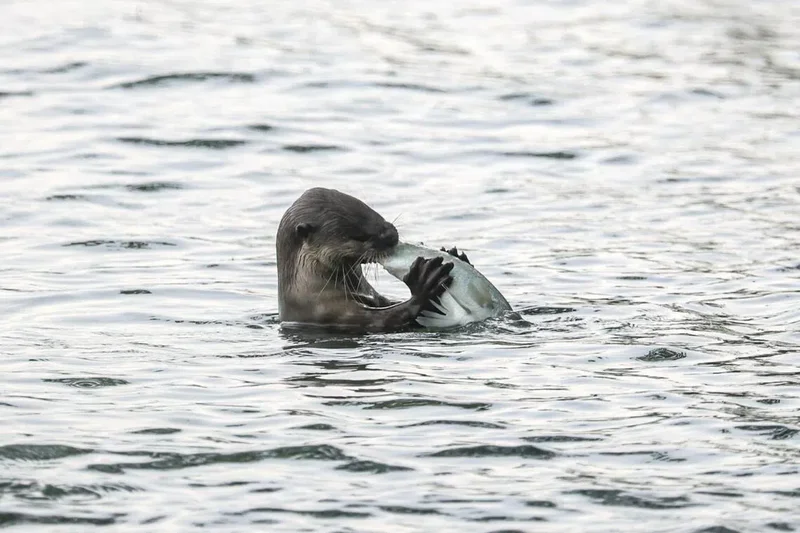
Led by Janelle Thompson, an Associate Professor from NTU’s Singapore Centre for Environmental Life Sciences Engineering, the team will focus on otters, civets, plantain squirrels, and fruit bats, as these are commonly found in urban spaces.
Thompson said the team will cast a wide net by measuring biomaterials shed in both nature reserves and high-traffic human-animal interfaces, such as housing estates and parks.
She added: “The point of our project is not to pick one pathogen and focus on it, but to use an approach that could handle any pathogen.”
The Biosurveillance Research Programme, launched in 2025 under Singapore’s Research, Innovation and Enterprise (RIE) 2025 Plan, is rooted in the World Health Organization’s “One Health” approach.
The framework recognises the interconnection between human health, animal health, and the environment.
Singapore’s One Health agencies NParks, the Ministry of Health, the National Environment Agency, the Singapore Food Agency and national water agency PUB have operated under a cooperative framework since 2012.
These projects will continue to contribute to a better understanding of disease transmission for the agencies, allowing NParks to take preventative actions to safeguard public health, said Chua.
He said: “Some of this could be in the form of public education… We will also look at the risk messages that we can share.”
The projects are due to be completed in three years.