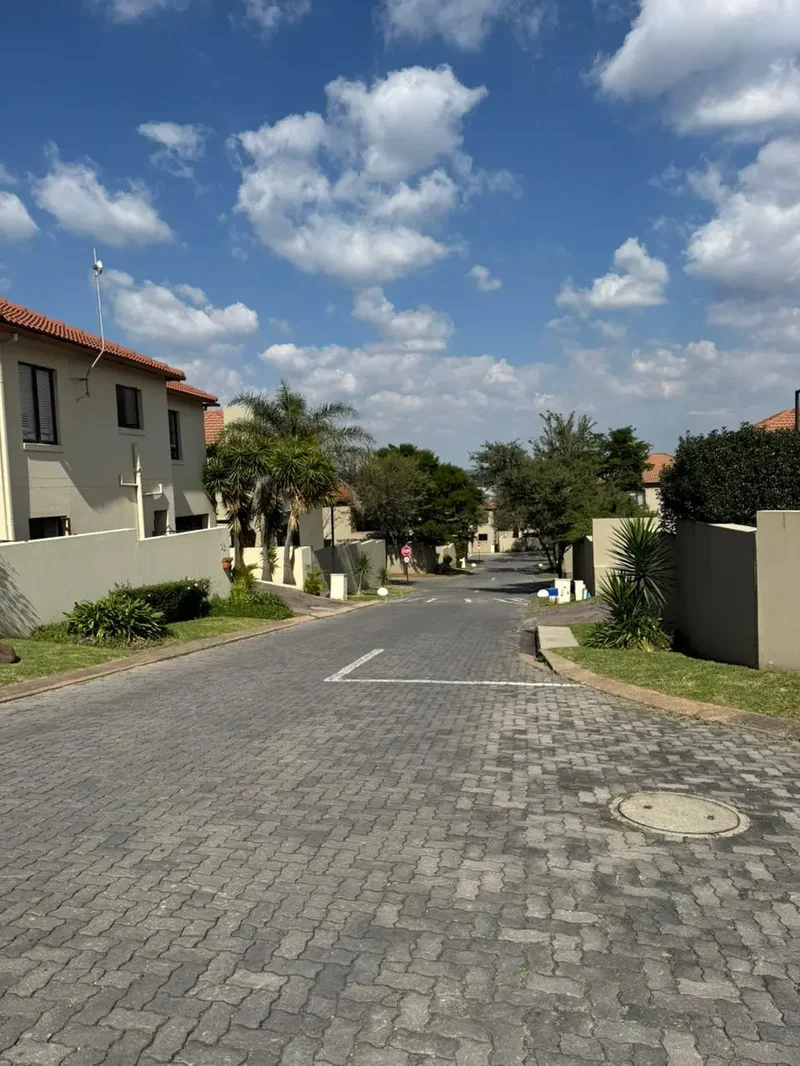
In our complex, the monthly levy was R1 092 in 2019. By 2025 it had risen to R1 311. Yet according to our former managing agent’s records, a homeowner who owed R67 523 in March 2019 owed R975 138.72 by December 2025.
Sit with that number for a moment. Even if that owner had paid nothing for the entire period, roughly 82 months of levies at those rates comes to little more than R100 000. Add it to the opening balance and you get to about R170 000. The agent’s ledger says R975 138.72 — more than five times that.
To date, no schedule of interest, penalties, legal fees or any other charges has been produced that reconciles the figure. It is a number that fails basic arithmetic, sitting in the books of a professionally managed, annually audited scheme.
This article is about how a number like that survives for six years — past a managing agent’s in-house accounting function, past an auditor’s sign-off and past successive boards of well meaning, passionate homeowners.
The answer is not unique to our complex. It is a structural weakness in how South Africa’s community schemes are governed: we elect boards for their passion, when what stands between a scheme and this kind of number is competence.
**A debtors’ book that only ever grew **
Our scheme has 61 households. Most pay their levies in full and on time; some pay in advance. And yet, year after year, the arrears book presented in our financials moved in only one direction:
**Year **
Debtors’ book
2019
R151 852
2020
R301 133
2021
R385 980
2022
R453 044
2023
R600 000
2024
R600 000
2025
R600 000
By 2023 the book had settled at R600 000 — roughly seven-and-a-half months of the entire scheme’s levy billing — and stayed there.
Alongside it, the managing agent extended the scheme a "funding facility" of the same magnitude, marketed as a tool to alleviate the cash flow constraints caused by the arrears and charged to the scheme at 2% a month. Twenty-four percent a year, paid from the levies of the owners who did pay, to carry the owners who supposedly did not.
Here is what was never provided: granular detail of the debtors said to be behind the numbers. Which units? What was billed? When? What interest and penalties were raised? On what authority? At what rate? What collection steps were taken over six years and with what result?
A funding facility justified by an arrears book should live and die on the detail of that book — and the detail was never on the table. No flag was raised by the agent’s own accounting function and none reached the members from the audit, year after year.
The gap became visible only when our security provider issued a letter of demand for more than four months of unpaid fees and threatened to pull guards off site. These matters are now before the Property Practitioners Regulatory Authority and other regulators, including the audit regulator and I will let those processes speak for themselves.
**The volunteer blind spot **
The harder question is closer to home: How did successive elected boards let this pass? Not through bad faith — through a structural mismatch. Community schemes — sectional title bodies corporate and homeowners associations alike — are governed by volunteers, elected because they care, because they have time or because nobody else put up a hand. Caring is necessary. It is nowhere near sufficient.
A managing agent is a professional counterparty. They produce the financials, control the accounts, hold the records and set the rhythm of every meeting. A board that cannot interrogate what is put in front of it is not overseeing the agent — it is being managed by the agent. The relationship quietly inverts and nobody notices because the reports keep arriving and the grass keeps getting cut.
Every year, our boards received an age analysis of debtors that was visibly incomplete, with entire units missing. Every year it was accepted, politely queried and filed. The foresight to say "this document cannot be relied on and until it can, nothing built on it can be either" was never institutionalised — it depended on whether that year’s volunteers happened to include someone who knew to say it.
**The five capabilities every board needs **
When we rebuilt our governance, we identified five capability gaps that had allowed a failing debtors’ book and everything built on it to run unchallenged. Every scheme in the country should audit its board against the same list:
- Financial literacy and oversight. At least one trustee must be able to read a set of financials critically — reconcile the income statement against the bank statement, question journal entries and track the debtors’ book year on year. A book that quadruples in four years or a single levy account approaching R1 million at a R1,311-a-month scheme, should stop a board meeting in its tracks. If the numbers make sense only when the agent explains them, that is a red flag, not a service.
- Contract and vendor management. Someone on the board must have read the management agreement and know what the agent is contractually obliged to deliver — monthly bank statements, complete age analyses, annual financials by a deadline and records on request. An obligation nobody enforces does not exist.
- Governance discipline. Decisions belong in minuted meetings and written resolutions, not WhatsApp threads. Any facility, advance or loan in the scheme’s name must trace to a signed agreement and an authorising resolution. Years later, the difference between "we discussed it" and "we resolved it, here is the signed resolution", is the difference between a defensible position and an unexplainable one.
- Conflict management and communication. Financial crises in community schemes almost always become interpersonal crises. Boards without the maturity to separate the issue from the individual end up fighting each other while the underlying problem compounds.
- Basic legal and regulatory awareness. Trustees do not need law degrees but they must know the landscape: what the scheme’s constitution actually says, what the Community Schemes Ombud Service can and cannot do, that the Property Practitioners Regulatory Authority regulates managing agents and administers a Fidelity Fund, and that fidelity insurance exists for a reason.
**The key message **
Passion recruits trustees; competence protects schemes. A managing agent is not a substitute for governance — it is the thing governance exists to supervise. Where a board cannot independently verify the debtors’ book, the bank balance and the basis of every facility in the scheme’s name, the scheme is not being managed by its members. It is being managed for them, on terms they cannot see. That is how a R1 311 monthly levy quietly becomes a R975 138.72 debt and how an arrears book becomes the justification for a 24% facility — with nobody asking how.
**The call to action **
Homeowners: at your next general meeting, put three questions to your board in writing. When did the trustees last see the bank statements for every account in the scheme’s name — not the agent’s summary? Does a complete, unit-by-unit age analysis exist that reconciles to the debtors’ book in the financials, showing the basis of every charge? Does any loan, advance or funding facility exist between the scheme and the managing agent. If so, where is the signed agreement, the authorising resolution and proof the money reached the scheme’s bank account?
Boards: audit yourselves against the five capabilities above and co-opt or recruit for the gaps before the next crisis, not after it.
Members: when you next elect trustees, vote for the person who will read the bank statements — not just the person who loves the complex the most. Ideally, find people who do both. The managing agent, it turns out, also needs managing. That is the board’s job — and it is time we started electing boards that can do it.
Des Mojanaga is a homeowner and former trustee of a Johannesburg homeowners association. She writes in her personal capacity. All figures are drawn from the scheme’s financial statements and the managing agent’s own records. Regulatory and insurance claim/fidelity fund proceedings referenced are ongoing.