Ever since humans have been writing stories, the idea of invisibility has been a seductive one. Writers have used all manner of narrative devices to introduce the ability to vanish from sight into their storiesâmagic, manipulating the bodyâs refractive index, high-tech cloaking devices, camouflage, and more. It turns out, however, that you can get a pretty good approximation by just spinning really fast.
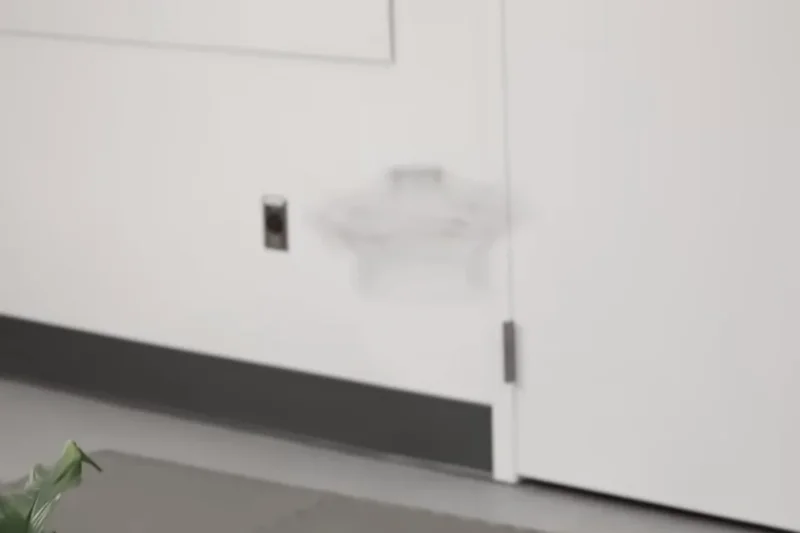
Thatâs the idea behind a drone developed by researchers at Northwestern University, anyway. The drone is called âPhantom Twistâ, and it rotates around its central axis at 25 times per second (thatâs 1500 rpm, to save you doing the math). At this speed, the drone seems to disappear in the same way that a fan or propeller doesâbecause itâs moving too fast for the human eye to track, its trajectory gets smeared out into what the teamâs news release calls a âghostly smudge.â
You might wonder whether spinning that fast is noisy, and judging by the teamâs video, the answer is âyesâ: the drone emits an unholy whine as it circles an oblivious indoor plant, sounding like an entire battalion of hungry mosquitoes choosing the same moment to perform a midnight fly-by of your earhole. Itâs noticeable, however, that the whine gets higher as the spinning intensifies, and thereâs probably some terrifying future in which an improved version of the Phantom Twist rotates so fast that the resultant whine is too high for us to hear.
The rapid rotation of this design is achieved by its single propeller configuration: As the press release explains, âUnlike a typical quadcopter with four separate rotors, Phantom Twist has one motor and one propeller. The propeller spins in one direction, and the rest of the drone spins in the opposite direction.â The design was apparently âfully automatedâ, which means that the team âused artificial intelligence (AI) and optimization algorithms to repeatedly rearrange the dronesâ major components, including a motor, propeller, circuit board, counterweight and batteries.â
And then the team used what theyâd learned toâwait, no, there was more AI. The various configurations were then tested with âa perception model that approximates human vision to determine how noticeable each design appeared.â The configurations that performed best were then run through the optimization algorithms again, and the design that triumphed over its competitors became the Phantom Twist. The key point of the victorious design is that the various opaque componentsâbatteries, motor, etcâwere spread around the frame, meaning that when the drone begins spinning, âthe drone becomes a faint, semi-transparent cloud rather than a distinct shape.â
And there you have it: a partially invisible drone, designed almost entirely by AI, and sure to be used for entirely benevolent purposes and absolutely not to deliver ordnance to unfortunate third-world recipients. The future is bright; the future is spinning rapidly.