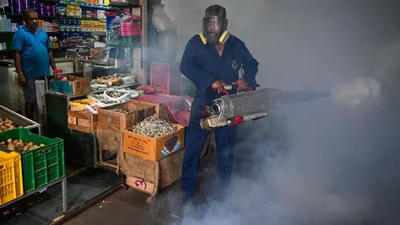
’s public health services and hospitals are battling the worst outbreak of mosquito-borne dengue in nearly a decade, and turning to the island nation’s armed forces to help curb the spread of the disease.
The efforts range from air force
tracking stagnating rooftop pools of water after monsoon rains to military and police officers helping to inspect homes, building sites and schools in a campaign to stamp out mosquito-breeding sites.
With 53 deaths and 76,044 infections since it began in January, the numbers of the stricken, spread wider by a more virulent strain, are approaching the tally of more than 100,000 notched by a 2017 outbreak.
“It’s challenging for the doctors because it’s a rapid increase in patients,” said consultant Lalindra Dias in Negombo, one of the worst-hit areas, located about 35km (20 miles) north of the key city of Colombo.
“All of a sudden, you get a large influx coming into the hospital,” added Dias, whose district general hospital treated nearly 1,800 sufferers in less than two months since June, up from about 1,050 in 2025.
A dengue patient is assisted by a family member at the District General Hospital in Negombo, Sri Lanka, on Thursday. Photo: Reuters
Hospitals rushed to add beds, convert wards to care for the ill and step up hours worked by doctors and nurses in the battle to treat an influx of more than 18,000 cases in the first two weeks of July, health authorities said.