Key Facts
- WTI strength lifted the tone USO tracks WTI crude, and the board shows USO at 125.51 $, up 1.25% d/d on 2026-07-20.
- Petrobras held the Brazil read Petrobras closed at 18.19 $, up 1.22% d/d on 2026-07-20, keeping Brazil’s pre-salt story in the market’s sights.
- Guyana remains the fastest-growing oil story Government-linked reports say Guyana’s offshore output averaged 903,000 barrels per day in April 2026, after 910,000 barrels per day in March.
- YPF stayed central in Argentina Reuters said YPF swung to a first-quarter 2026 net profit of 409 million dollars, helped by higher prices and shale production.
- Venezuela is still constrained by policy Reuters reported Venezuelan crude exports at about 1.2 million barrels per day in June, with flows shifting across buyers and traders.
- Mexico and Pemex remain a structural lag No fresh verified production or earnings figure for Pemex was provided in the search set, so the safest read is that Mexico remains a benchmark of underinvestment rather than a catalyst.
Today’s Focus
Oil traded with a firmer tone in the latest settled session, with USO, the exchange-traded fund that tracks WTI crude, closing at 125.51 $ and up 1.25% d/d on 2026-07-20. That matters for Latin America because the region’s oil exporters tend to move in sympathy with global crude, even when their own company stories differ.
Brazil’s Petrobras, Guyana’s offshore boom, Argentina’s Vaca Muerta, Mexico’s Pemex and Venezuela’s export politics remain the key regional reference points for investors. Petrobras closed at 18.19 $, YPF at 50.44 $, while Ecopetrol slipped to 16.03 $, showing that stock performance can diverge even when the oil tape is broadly supportive.
Guyana remains the standout growth engine, with production already near 900,000 barrels per day and government receipts approaching 2 billion dollars in the first half of 2026. Argentina’s YPF has been rewarded for stronger shale output and profits, while Venezuela’s volumes continue to be shaped more by sanctions and licensing than by geology.
The main short-term question is whether higher crude prices and steadier global demand can outweigh country-specific constraints, especially in Mexico and Venezuela. For readers outside the region, the simple frame is this: Latin America offers both supply growth and policy risk, and the market is pricing both at once.
What matters today. The variable to watch is whether stronger crude holds long enough to keep financing, investment and export momentum alive across Latin America’s oil producers.
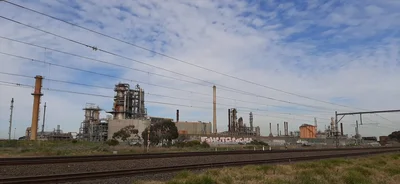
Oil — the daily wrap. (Photo internet reproduction)
One-stop reference
Company Intelligence
Every listed company in Latin America — financials, ownership and structure for 1,450+ companies across 26 exchanges, in one place.
01 The session in one read
Oil ended the latest settled session with a firmer tone, and USO, which tracks WTI crude, closed at 125.51 $, up 1.25% d/d on 2026-07-20. For foreign investors, that is the simplest signal: the global oil pulse improved, and Latin American oil names were judged against it.
Brazil’s Petrobras and Argentina’s YPF both closed higher, while Ecopetrol fell, which underlines a familiar market truth in the region: oil direction matters, but company-specific execution still matters more. Guyana remained the growth story in the background, while Mexico and Venezuela stayed defined by structural limits rather than near-term upside.
Assessment — Strength helps, politics rules HIGH
The latest oil move favours Latin American producers, but the region is not trading as one block. Brazil and Argentina benefit most when crude is firm, Guyana is still scaling from a high base, and Venezuela remains boxed in by sanctions, licences and operational strain. The near-term question is less about geology than about whether policy and capital flow allow the winners to keep compounding, with WTI the variable to watch.
02 The board
The board shows WTI crude, via USO, at 125.51 $, up 1.25% d/d on 2026-07-20. Petrobras finished at 18.19 $, also up 1.22% d/d, while YPF closed at 50.44 $, up 1.53% d/d.
Ecopetrol ended at 16.03 $, down 0.37% d/d. Read together, the board says the oil complex was constructive, but investors still preferred names with clearer leverage to production growth and higher prices.
| Asset | Level | Change |
| --- | --- | --- |
| WTI crude (USO) | 125.51 $ | +1.25% |
| Petrobras | 18.19 $ | +1.22% |
| Ecopetrol | 16.03 $ | -0.37% |
| YPF | 50.44 $ | +1.53% |
Source: EODHD close, 2026-07-20. Where a commodity has no spot feed, an exchange-traded tracker or leading producer is shown as a labelled proxy.
Live Market IntelligenceCommodities — Live Market BoardInside: market breadth, the sector heatmap, currencies \& rates, the Latin America scoreboard and the full instrument board.
Rio Times · Live Market Intelligence
Commodities — Live Market Board
Global
Jul 20, 2026 · 23:09
Brent crude · benchmark
88.66
+0.64%
+28.10% over 12 months
Market breadth · 15 names
53% advancing
8 ▲ advancing7 declining ▼
Currencies, rates \& key inputs
Full instrument board
| Instrument | Last | Change | YoY | Prev. | High | Low | Volume |
| --- | --- | --- | --- | --- | --- | --- | --- |
| GOLD | 4,031 | +0.44% | +18.48% | 4,013 | 4,041 | 4,003 | 13,267 |
| SILVER | 57.38 | +2.39% | +46.74% | 56.04 | 57.50 | 56.38 | 2,891 |
| BRENT | 88.66 | +0.64% | +28.10% | 88.10 | 89.15 | 88.31 | 639 |
| WTI | 82.34 | -0.18% | +22.53% | 82.49 | 82.74 | 81.92 | 6,971 |
| COPPER | 6.37 | +2.41% | +13.54% | 6.22 | 6.37 | 6.33 | 2,016 |
| LITHIUM | 66.92 | -2.14% | +57.46% | 68.38 | 67.75 | 66.78 | 178,132 |
| IRON ORE | 161.91 | — | +65.48% | | 161.91 | 161.91 | 1 |
| SOY | 1,223 | +1.54% | +20.49% | 1,205 | 1,225 | 1,220 | 9,460 |
| CORN | 471.25 | +5.96% | +16.72% | 444.75 | 472.00 | 469.00 | 11,441 |
| WHEAT | 676.00 | -0.99% | +24.67% | 682.75 | 678.75 | 670.25 | 2,392 |
| COFFEE | 323.50 | -1.51% | +8.83% | 328.45 | 327.05 | 315.40 | — |
| SUGAR | 14.81 | -0.13% | -9.53% | 14.83 | 14.94 | 14.73 | — |
| COCOA | 5,507 | -0.47% | -32.48% | 5,533 | 5,681 | 5,349 | — |
| ORANGE JUICE | 146.90 | +6.30% | -55.12% | 138.20 | 148.15 | 136.65 | — |
| COTTON | 78.88 | +2.35% | +18.55% | 77.07 | 81.75 | 79.75 | 15,747 |
| BEEF | 223.30 | -0.50% | -0.85% | 224.43 | 223.53 | 219.83 | 24,937 |
| CATTLE | 346.78 | +0.24% | +5.85% | 345.95 | 347.00 | 338.30 | 11,861 |
| USD/BRL | 5.09 | -0.38% | -8.73% | 5.11 | 5.09 | 5.09 | — |
Largest moves today
ORANGE JUICE
146.90
+6.30%
CORN
471.25
+5.96%
COPPER
6.37
+2.41%
SILVER
57.38
+2.39%
COTTON
78.88
+2.35%
LITHIUM
66.92
-2.14%
SOY
1,223
+1.54%
COFFEE
323.50
-1.51%
The session read
The Brent crude rose 0.64%, with breadth positive — 8 of 15 names higher. ORANGE JUICE led, while LITHIUM lagged.
From The Rio Times
Related coverage · 20 Jul 2026
G7 China Decoupling: What It Means for Latin America Trade
Read →
03 What moved it
The biggest driver was the global oil backdrop itself: when crude firms, the revenue outlook improves for exporters, refiners and oil-linked equities, especially in Latin America. That is why the market can treat USO as a shorthand for the sector’s mood.
Country news then sharpened the picture. Reuters reported Guyana’s output still near 900,000 barrels per day in early 2026, YPF’s first-quarter profit of 409 million dollars, and Venezuelan exports around 1.2 million barrels per day in June, showing a region with very different growth paths and political constraints.
04 The Latin American read
Brazil remains the region’s big integrated oil story because Petrobras sits at the centre of the country’s pre-salt, meaning deep offshore reservoirs that have been unusually productive. The board’s rise in Petrobras suggests investors still see cash generation in Brazil, even if they remain alert to political and capital-allocation risks.
Guyana is the clearest growth market, because offshore output is rising from a much smaller base and the state is already collecting meaningful cash. Argentina’s Vaca Muerta shale basin, the country’s major unconventional oil and gas field, is again attracting attention through YPF’s profit rebound, while Mexico’s Pemex still stands for an older model of heavy state control and weak investment.
05 The names to watch
Petrobras matters because it is Brazil’s flagship oil company and the most direct way to play pre-salt output and pricing. Investors watch its cash flow, dividend policy and any shift in government influence because those three forces usually explain the stock more than oil alone.
YPF matters because it is the main listed proxy for Vaca Muerta and because Reuters reported a first-quarter 2026 net profit of 409 million dollars, against a 10 million dollar loss a year earlier. Guyana matters because output has already passed the 900,000 barrels per day mark in official reporting, and Venezuela matters because production and exports still depend on sanctions policy, licences and operational discipline rather than normal market conditions.
06 The outlook
Near term, the oil story for Latin America is about whether the crude rally can hold, because that determines whether earnings momentum, tax receipts and investment plans stay intact. Brazil and Argentina are the clearest beneficiaries of firmer pricing, Guyana remains the fastest producer, and Venezuela is still the most policy-sensitive.
For Mexico, the key issue is not a single daily move but whether Pemex can keep pace with a changing regional market that increasingly rewards scale, exports and execution. The most important variable now is WTI, because it will influence everything from Petrobras cash generation to YPF sentiment and the wider investment case for the region.
07 What to watch
- WTI crude: If WTI stays firm, the region’s exporters get better cash flow, better sentiment and more room to invest.
- Petrobras: Watch for whether the stock keeps reflecting pre-salt strength or is pulled back by politics and capital spending.
- Guyana output: Any further rise in offshore production reinforces Guyana’s role as Latin America’s fastest-growing oil market.
- Venezuela policy: Sanctions, licences and export permissions remain the key swing factor for volumes and pricing power.
Frequently Asked Questions
Why does USO matter here?
USO is an exchange-traded fund that tracks WTI crude, so it is a quick way to read the oil market’s direction without looking at individual producers.
Why is Petrobras important to the region?
Petrobras is Brazil’s flagship oil company and the main market proxy for the country’s pre-salt offshore resources.
Why is Guyana getting so much attention?
Guyana has moved from a new producer to one of the world’s fastest-growing oil provinces, with official reporting already near 900,000 barrels per day.
Why is Venezuela still hard to price?
Because output depends heavily on sanctions, licences and operational constraints, which can change faster than the underlying geology.
LatAm Markets: Live Signals → — real-time movers, turnover leaders and FX across Latin America.
Read More from The Rio Times