TORONTO – Wildfires burning across Ontario have grown to 735,000 hectares (1.8 million acres), from 650,000 hectares over the weekend, Premier Doug Ford said on Monday, as air quality from smoke improved in much of the province but remained unhealthy in parts of the U.S. Midwest.
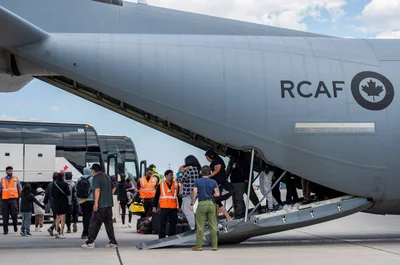
Ford said at a press conference in Toronto that the province is battling 190 active blazes and around 1,800 residents had been evacuated from sparsely populated communities in northwestern Ontario.
“We will not spare a penny fighting these fires and keeping people safe,” Ford said. The wildfires, which are mostly in difficult-to-access areas, have increased tensions between Canada and the U.S., where some politicians have criticized Canada’s response. Heavy smoke from fires in northern and western Ontario as well as northern Minnesota brought the world’s worst air quality to Toronto last week, which then spread to New York and Washington.
Air quality has since improved in southern Ontario as well as the U.S. Northeast and Mid-Atlantic, although it remained poor in several U.S. states in the Midwest. As of 11:30 a.m. ET, the U.S. Environmental Protection Agency’s AirNow site rated the air quality as “unhealthy” or “unhealthy for sensitive groups” in an area covering parts of Wisconsin, Iowa, Missouri, Illinois, Indiana, Ohio and Michigan.
U.S. President Donald Trump said on Sunday that he told Canadian Prime Minister Mark Carney that Canada must do better at controlling Ontario wildfires. Trump said he spoke to Carney about the issue at the FIFA World Cup final that both of them attended on Sunday, two days after threatening to levy additional tariffs on Canadian goods to punish Canada over the wildfire smoke. Carney has not directly responded to Trump, though he has said all countries including the U.S. must do more to address climate change.
Ford said it’s “unacceptable” that Trump has chosen to criticize Canada’s wildfire response and threaten tariffs rather than sending help. He cited Ontario sending hydro workers to the U.S. in 2024 to help with the response to Hurricane Helene and water bombers to California to fight wildfires in 2025 as evidence of Canadian support for its neighbor during natural disasters.
“Rather than criticize and threaten Canada, your closest friends, maybe one day you’re going to need our help,” Ford said.
Major forest fires have become a regular occurrence in Canada, home to some of the world’s largest forests. Climate experts say rising temperatures have led to drier timber and increased fire risk.