For years te reo pronunciation on global tech platforms has made Māori speakers cringe, a Māori tech expert says, and while there are trade offs, a new tool for Google Maps will help change that.
In July, Google and Te Taura Whiri i te Reo Māori launched an AI-powered text-to-speech (TTS) model that could correctly pronounce cities and towns with te reo Māori names.
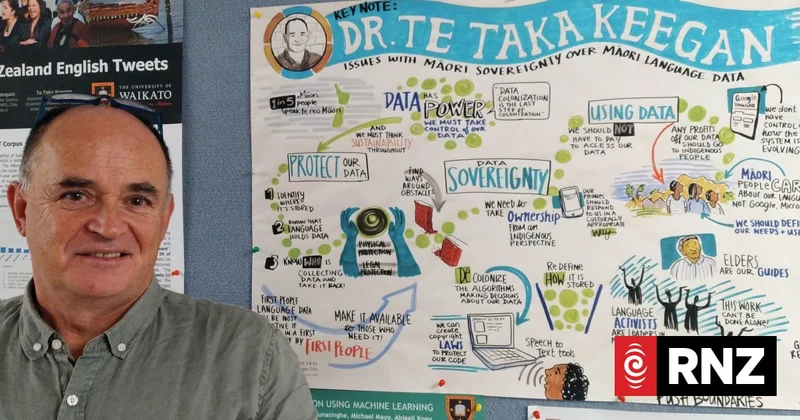
University of Waikato computer science professor Te Taka Keegan was blunt in his assessment of te reo pronunciation on tech platforms in the past: "Our Māori place names have been bastardised for 150 years and I believe this tool, more than anything else, will start correcting that."
Keegan worked at Google for six months in 2008 and 2009 helping to develop the Google Translator Toolkit.
Ultimately that tool was deprecated, meaning Google withdrew its support for it. Keegan said that showed him while Google may have the best intentions ultimately those intentions were not the same as Māori.
"I consider myself a Māori language activist, I'm actively trying to build tools to support te reo Māori. Google aren't Māori language activists. They are a large computer science for-profit company. And even though they have a famous historic motto, 'don't be evil,' profit is their underlying goal. Whereas when Māori are working to support Māori language, other considerations will always be more important than profit."
However, Keegan said he has worked on many projects over the last 30 years to do with Māori language and technology and this was one of the first where a large international company had taken Māori data seriously.
"If you listen to the tool, the way it pronounces Māori language is beautiful. It's a beautiful pronunciation, it's not a loud punch you in the face, boisterous, it's a real subtle, real ngāwari, relaxing pronunciation.
"And its beauty will draw people in. When I say people, I mean Pākehā New Zealanders, because Māori language speakers in Aotearoa already understand the value of te reo and already pronounce Māori place names correctly. So in that sense, it is really a tool for transformation among non-Māori language speakers, and that transformation happens through subtlety."
Non-Māori speakers would only need to hear it maybe four or five times before, hopefully, they will start saying Māori place names correctly, he said.
Country Director of Google New Zealand Caroline Rainsford said Māori data sovereignty was an incredibly important part of the project.
"Because we don't actually want to own the models, you know, we very much believe in doing the work to enable them. But so what we've done at the moment is Te Taura Whiri will be the guardian of the Māori lexicon. And Google has actually a licence from them to use this for the purposes of the text-to-speech model, starting with Google Maps and hopefully over time other products."
Beyond that the plan was that a group of interested parties would become the guardians of the data to ensure academics, researchers and local communities would be able to access the data and share in the benefit, she said.
Keegan said some Māori, with good reason, were hesitant to engage with big tech companies, however in this instance the positive benefits outweigh the negatives.
"There are always trade-offs when working with big tech, but in this case Google has agreed that Māori retain intellectual property rights over Māori language data. That's unique. This is an example of engaging with big tech to develop a solution that, ultimately, I believe will be better for the long term health and attitude towards te reo Māori."
Maybe a little further down the track Māori will have their own version of Google Maps they completely controlled under a mana motuhake governance, that speaks te reo from start to finish, he said.
In the meantime we now had Google Maps that spoke Māori places names way better than it used to, he said.
"Ultimately, it should be Māori that are building technology for Māori, and especially for Māori language. It should be Māori AI engineers that are building Māori AI for Māori."
When the new tool went live, Keegan decided to test it out on a drive with his nine-year-old moko, after the first word her eyes widened and by the fourth she was laughing.
"She was laughing with happiness and laughing with joy that finally it's pronouncing reo Māori names correctly. And I think that's what this tool can do, I think it can bring joy to Māori language speakers to hear our language spoken as it should be spoken."
Te Taura Whiri chief executive Ngahiwi Apanui-Barr told Sunday Morning recently he had difficulties getting his own staff on board with working with a tech giant.
Authentic new voice for Google Maps NZ
But, he said their job was to normalise te reo and all learners needed to see the language reflected back at them.
Apanui-Barr said they were aiming to get place names pronounced correctly, however there were tens of thousands of place names and hundreds of thousands of street names.
"So some of them won't be quite correct, but we'll be working with people and we encourage people to feed back where there are mispronunciations of street names."