Sudan’s El Obeid Braces for Siege as UN Security Council Meets
Sudan · Great Powers
Key Facts
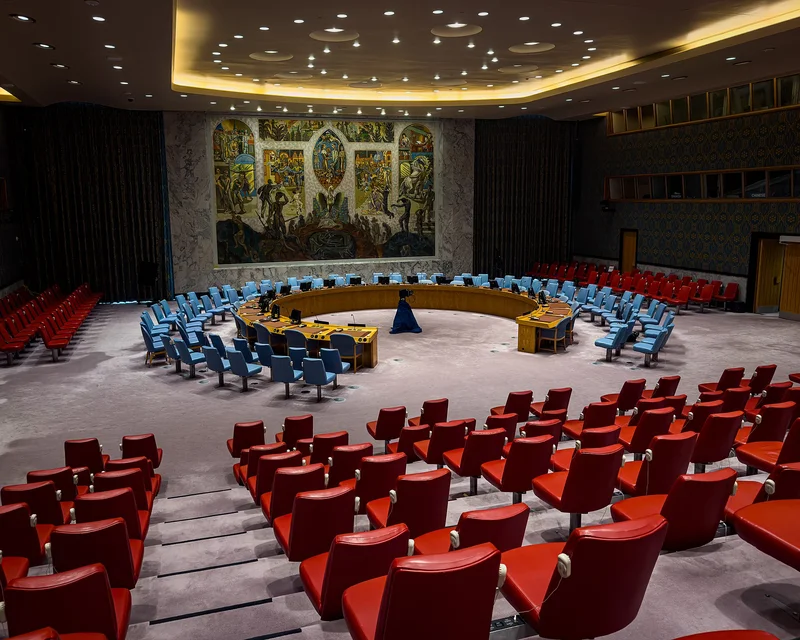
- Council meets.The UN Security Council held closed consultations on Sudan on 5 August, requested by Denmark and the UK, with OCHA’s Lisa Doughten briefing.
- El Obeid under pressure.The Rapid Support Forces have massed fighters around El Obeid and hit power, fuel and water facilities with near-daily drone strikes.
- Army counter-offensive.The Sudanese Armed Forces recaptured the Al Sadarat highway and five towns in North Kordofan in late July, reopening a key supply route.
- Court strike.A 2 August drone strike on a traditional court session in Ghara al-Zawiya, North Darfur, killed at least 35 people, according to the Emergency Lawyers group, which attributed it to the SAF.
- Atrocity warnings.UN officials and the G7 warn El Obeid could see a repeat of the El Fasher massacres.
The Sudan El Obeid crisis reached the UN Security Council on 5 August, as the RSF tightens its grip around the North Kordofan capital and the army fights to keep its supply corridor open. UN officials warn the city of half a million could become the next El Fasher.
Denmark and the United Kingdom, the Council’s penholder on Sudan, called the closed meeting to hear an update on the humanitarian situation. The briefer was Lisa Doughten of the UN’s Office for the Coordination of Humanitarian Affairs.
The war between the Sudanese Armed Forces and the paramilitary Rapid Support Forces, which erupted in April 2023, has created what the UN calls the world’s largest humanitarian crisis. Around 34 million people need assistance.
More than 12 million people have been displaced inside and outside Sudan since the fighting began. Darfur and Kordofan have absorbed some of the war’s worst violence, and the front lines have shifted repeatedly as both sides burn through men and matériel.
Why El Obeid matters
El Obeid is the strategic gateway between Khartoum and the Darfur region. It is also a critical logistics hub for humanitarian operations across Kordofan.
The city has been contested since the war’s opening weeks, when RSF units briefly entered it before the army restored control. Its airport, garrison and market make it the prize of central Sudan, and its half a million residents have endured months of shortages as the noose tightened.
Since June, the RSF has built up forces around the city and imposed siege-like conditions. Drone strikes have systematically targeted the main power station, fuel depots, water facilities and healthcare infrastructure, in some weeks on a near-daily basis.
UN investigators warned in July that “El Obeid must not become the next crime scene,” a reference to the mass killings, abductions and gang rapes documented after the RSF took El Fasher. The G7 foreign ministers issued a similar warning on 14 July.
The army fights back
In late July, the SAF launched a major ground offensive in North Kordofan. It announced the recapture of the Al Sadarat highway and five towns along the route, including Bara, Um Sayala and Gebrat al-Sheikh, after two days of intense clashes.
The highway had been a critical RSF corridor that sustained pressure on El Obeid. Its loss improves the army’s ability to reinforce positions around the city and reopen movement toward Khartoum.
Kordofan has become the war’s hinge. Whoever holds it links or severs the army’s western supply lines, and both sides have poured reinforcements into the region since June.
Fighting has also intensified in North and West Darfur. ACLED recorded 63 conflict-related fatalities across the Tina, Karnoi and Um Baru localities near the Chadian border since June, and a 21 July RSF drone strike on a water source in Tina killed at least 21 civilians.
A courtroom turned target
The war’s indiscriminate character was underlined on 2 August, when a drone strike hit a traditional court session in the village of Ghara al-Zawiya in North Darfur. At least 35 people were killed as civilians gathered for hearings on local disputes.
The Emergency Lawyers group, which documents the conflict, attributed the strike to the Sudanese Armed Forces. OCHA said the casualty figures could not be independently verified.
The attack drew condemnation because the victims were participating in a community justice institution, not a military gathering. It added to a pattern in which both sides face accusations of striking civilian infrastructure.
What to watch
First, whether the Council moves beyond consultations toward a formal product on El Obeid. Members have warned of mass atrocities since June without changing the battlefield equation.
Second, whether the SAF can hold the Al Sadarat corridor. The RSF has reversed army gains before, and control of the route decides whether El Obeid stays supplied.
Third, the humanitarian access question put to OCHA at the 5 August meeting. Sudan’s collapse is reshaping the wider region, tracked in The Rio Times pillar The New Scramble for Africa in 2026 and its Eastern Africa coverage.
Frequently asked questions
What did the UN Security Council discuss on 5 August?
The Council held closed consultations on Sudan, requested by Denmark and the UK. OCHA’s Lisa Doughten briefed members on the humanitarian situation in Darfur, Kordofan and Blue Nile, with the siege of El Obeid at the centre.
Why is El Obeid important in the Sudan war?
El Obeid is the capital of North Kordofan and the gateway between Khartoum and Darfur. It is a critical logistics hub for humanitarian operations, and the RSF has massed forces around it while drone strikes hit power, fuel and water infrastructure.
What happened in Ghara al-Zawiya on 2 August?
A drone strike hit a traditional court session in the North Darfur village, killing at least 35 people attending hearings. The Emergency Lawyers group attributed the strike to the Sudanese Armed Forces; OCHA said the figures could not be independently verified.
Could El Obeid become the next El Fasher?
UN investigators, the Security Council and the G7 have all warned of that risk. The RSF’s siege of El Fasher ended in documented mass killings and abductions, and the UN says the window to prevent a repeat in El Obeid is narrowing.
This article was produced by The Rio Times’ automated newsroom system. How we use AI · Report an error