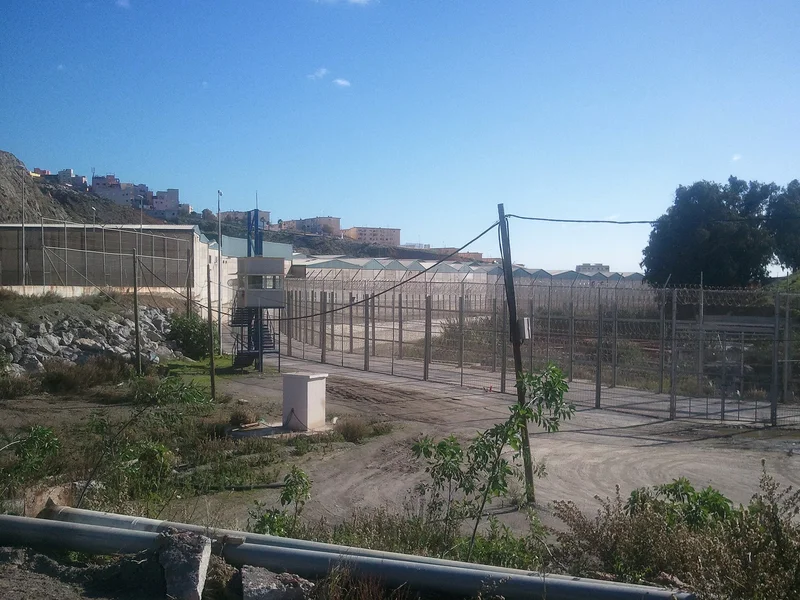
Ceuta Migrant Crisis Kills at Least 72 as Europe Turns on Spain
Morocco · Great Powers
Key Facts
- Mass crossing.Between 50,000 and 60,000 people crossed from Morocco into the Spanish enclave of Ceuta on 30 and 31 July, one of the largest single border events in Europe in years.
- Rising death toll.At least 72 people died, many drowning as they tried to swim around the Tarajal breakwater.
- EU emergency meeting.Ireland, holding the EU presidency, convened emergency talks of interior ministers on 4 August after 22 member states signed a joint letter on hybrid migration threats.
- Italy suspends Schengen with Spain.Rome reinstated passport checks on air and sea travel from Spain for one month, despite sharing no land border with it.
- New call for 15 August.Ceuta’s government says social networks are circulating calls for another mass entry on 15 August, and Moroccan forces remain on alert.
The Ceuta migrant crisis has left at least 72 people dead after up to 60,000 people crossed from Morocco into the Spanish enclave in two days. The surge has triggered an emergency EU meeting, a rare Schengen suspension by Italy and warnings of a fresh crossing attempt called for 15 August.
The crossings began on 30 July, when thousands of people reached Ceuta’s beaches within hours and overwhelmed the Guardia Civil. Spain’s Interior Ministry later estimated around 50,000 arrivals, while several outlets put the figure closer to 60,000.
By the weekend, authorities said more than 48,000 people had returned to Morocco, some through organised repatriation and others on their own after finding no food or shelter in the enclave of about 84,000 residents.
What triggered the Ceuta migrant crisis
The immediate backdrop is a Spanish Supreme Court ruling, Judgment 814/2026, issued on 29 June and made public on 8 July. It found that the practice of summary “hot returns” could not legally be extended to migrants intercepted while swimming.
Spain’s government says smuggling networks exploited the ruling, spreading maps, advice and even tips on where to buy swim fins through a Facebook group of some 20,000 members. Whether the ruling caused the surge is unproven, but the timeline has become central to the political fight.
Demographics did the rest. Roughly a quarter of Moroccans aged 15 to 24 are not in education, employment or training, and calm summer seas made the swim around the breakwater look survivable.
Europe turns on Spain
The crisis quickly became a European quarrel. Italy’s Prime Minister Giorgia Meloni suspended the open-border Schengen arrangement with Spain for one month, and Foreign Minister Antonio Tajani blamed Madrid’s past regularisation programmes for encouraging smuggling.
Spain summoned Italy’s ambassador in response. Prime Minister Pedro Sánchez accused some EU partners of acting out of “prejudice, fake news, ignorance or political interests” and cited Frontex data showing Spain’s border among the bloc’s least permeable between 2021 and 2026.
On 4 August, EU interior ministers held emergency talks under the Irish presidency. A joint letter from 22 governments warned that uncontrolled mass crossings, the instrumentalisation of migration and other hybrid threats must not create the perception that illegal entry into the EU is possible.
Morocco’s role under scrutiny
Questions about Rabat’s response have not gone away. Spanish politicians and analysts noted that Moroccan forces appeared to do little to stop the first wave, reviving memories of the 2021 Ceuta crisis, which followed a diplomatic dispute.
Some analysts link the timing to Sánchez’s recent visit to Algeria, which backs Western Sahara’s independence and is Morocco’s regional rival. Rabat denies any instrumentalisation, calls its migration cooperation with Spain “exemplary” and blames smuggling networks.
Morocco has since reabsorbed most of those who crossed and reinforced its side of the border near Fnideq. It is also managing domestic pressures, with authorities warning nine provinces about forest-fire risk in the same week.
Why Ceuta matters beyond Spain
Ceuta and Melilla form the European Union’s only land border with Africa. What happens at their fences shapes migration policy far beyond Spain, from Frontex budgets to cooperation deals with West African states.
The route data shows a displacement effect. Canary Islands arrivals fell about 82% year on year in early 2026 after Spain signed interception deals with Mauritania and Senegal, while Ceuta arrivals were up 149% by mid-July, even before the surge.
Africa’s wider contest over movement, labour and diplomacy is tracked in The Rio Times pillar, The New Scramble for Africa in 2026, and across its Northern Africa coverage.
What to watch
First, the 15 August date circulating on social networks. Ceuta’s government says it is taking the call seriously, and both Spain and Morocco have reinforced the border.
Second, whether the EU meeting produces concrete support for Spain, from Frontex deployments to a common line on returns. The 22-country letter suggests the political centre of gravity is moving toward enforcement.
Third, the autopsy results and the final death toll. Officials warn the number could rise once the Moroccan side is fully accounted for.
Frequently asked questions
How many people died in the Ceuta migrant crisis?
At least 72 people died after the mass crossings of 30 and 31 July 2026, according to Spanish authorities. Autopsies are being conducted, and officials warn the toll could still rise.
Why did so many people cross into Ceuta at once?
Spain says smuggling networks exploited a Supreme Court ruling that ended summary “hot returns” for migrants intercepted at sea. High youth unemployment in Morocco and calm summer seas added to the pressure.
How did the EU react to the Ceuta crisis?
EU interior ministers held emergency talks on 4 August after 22 member states signed a joint letter on hybrid migration threats. Italy separately suspended its Schengen open-border arrangement with Spain for one month.
Could another mass crossing happen?
Ceuta’s government says social networks are circulating calls for a new mass entry on 15 August. Spain and Morocco have both reinforced the border, and Moroccan security forces remain on alert.
This article was produced by The Rio Times’ automated newsroom system. How we use AI · Report an error