Ghana Orders Refineries to Pay for Local Crude in Cedis, Not Dollars
Ghana · Energy
Key Facts
- The order.President John Mahama has told Energy Minister John Jinapor to rethink how Ghana’s refineries pay for Ghanaian crude — in cedis rather than US dollars.
- The anomaly.The Tema Oil Refinery and the private Sentuo refinery process crude and sell fuel in cedis, yet the Petroleum Revenue Management Act obliges them to pay for the feedstock in foreign currency.
- The trigger.The instruction came as TOR received one million barrels of Ghana’s own Jubilee Medium Sweet crude aboard the MT Apache on 1 August, alongside newly refurbished processing units.
- The logic.The central bank governor agreed that buying dollars on the market puts pressure on the cedi and adds cost; a structuring meeting is due within days.
- The ambition.Mahama wants a strategic plan to lift TOR’s processing capacity to 100,000 barrels a day, more than double its 45,000-barrel nameplate.
Ghana cedi crude payments are now presidential policy. John Mahama has instructed his energy minister to find a way for the country’s refineries to pay for Ghanaian oil in the local currency, breaking a rule that forces them to buy US dollars for crude pumped from Ghanaian waters.
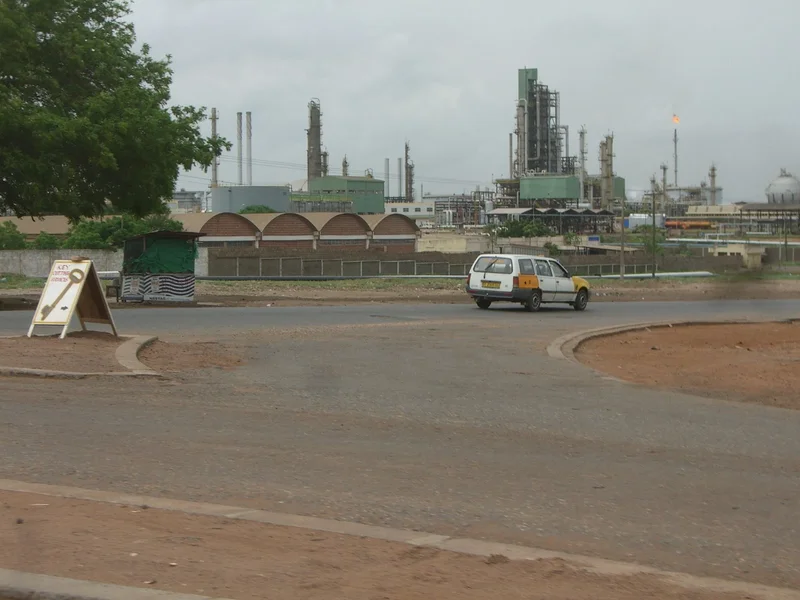
The instruction landed at a symbolic moment. On 1 August, the state-owned Tema Oil Refinery commissioned a refurbished crude distillation unit, a residue fluid catalytic cracking unit, a 120-tonne steam boiler and a new crude heater.
The same ceremony marked the official receipt of one million barrels of Jubilee Medium Sweet crude, produced off Ghana’s Western Region and delivered aboard the MT Apache for local refining.
A rule that costs Ghana dear
Energy Minister John Jinapor recounted how the president questioned the arrangement at a meeting attended by the finance minister and the governor of the Bank of Ghana. Refineries take the crude, process it and sell the products in cedis — so why, Mahama asked, must they scour the foreign-exchange market for dollars to pay for it?
The answer lies in the law. The Petroleum Revenue Management Act and the Petroleum Holding Fund framework require payment for crude — including Ghana’s own — in foreign currency, in line with the industry’s global practice of pricing oil in dollars.
Jinapor quoted the central bank governor siding with the president. Every dollar the refineries buy adds pressure on the cedi and layers extra cost onto the supply chain, the governor conceded, proposing a meeting within days to structure the change.
The irony is sharp for a country that has courted currency stability. The cedi has been one of Africa’s strongest performers this year, as The Rio Times documented in its report on the cedi’s rise past the rand — yet state law still routes the country’s own barrels through the dollar.
A refinery back from the dead
The dollar question would matter less if Tema were still dormant. Instead, the refinery shut since 2021 has come back to life, resuming operations in December 2025 after a four-year suspension.
Mahama said TOR had received three separate one-million-barrel cargoes since May — Bonga crude from Nigeria, Baleine crude from Côte d’Ivoire and now Ghana’s own Jubilee Medium Sweet. Two million barrels have already been processed into petroleum products, and the Jubilee cargo has been paid for in full.
The revival has been achieved, the president stressed, without drawing on government funds. He also pledged to restructure TOR to remove political interference from its operations.
The financial hole remains deep. The refinery’s debt reached about US$517 million by mid-2025, with liabilities exceeding assets by roughly US$435 million — the legacy of decades of trading losses and a 45,000-barrel-per-day plant that rarely ran at capacity.
Mahama’s answer is scale. He directed Jinapor to work with TOR’s board on a strategic plan to raise processing capacity to 100,000 barrels a day, which would transform the economics of Ghana’s downstream sector.
Part of a bigger currency play
The cedi-crude instruction fits a pattern. Ghana already obliges large-scale gold miners to sell a fifth of their output to the central bank in cedis under its gold-for-reserves programme, building bullion stocks that have underpinned the currency.
Applying the same logic to oil would keep more of the petroleum value chain in local currency and trim demand for dollars at the margin. It would also hand Sentuo, the private Chinese-built refinery in Tema, the same relief as the state plant.
The stakes are visible at the pump. Ghanaians watched fuel prices climb this month as crude rose and the cedi slipped, a squeeze The Rio Times covered in its August fuel-price report. Fewer dollar purchases along the supply chain would not cap prices, but they would remove one self-inflicted cost.
What to watch
First, the structuring meeting between the energy ministry, the finance ministry and the Bank of Ghana. Paying cedis into the Petroleum Holding Fund sounds simple; the fund’s dollar obligations to international partners are not.
Second, the legal path. The payment rule sits inside the Petroleum Revenue Management Act, so a durable change likely needs legislative work, not just a presidential instruction.
Third, the precedent. If Ghana routes its own crude trade into cedis, other African producers weighing resource nationalism will take note — another thread in the New Scramble for Africa in 2026, this one written into payment systems rather than treaties.
Frequently asked questions
What exactly did President Mahama order?
He instructed Energy Minister John Jinapor to “rethink and take a second look” at how the Tema Oil Refinery and the Sentuo refinery pay for Ghanaian crude, so they can settle in Ghana cedis instead of buying US dollars. A meeting to structure the change was due within days.
Why do Ghana’s refineries pay for Ghanaian oil in dollars?
Ghana’s Petroleum Revenue Management Act and the Petroleum Holding Fund framework require crude payments in foreign currency, mirroring the global practice of pricing oil in US dollars — even when the crude is produced in Ghana and the fuel is sold in cedis.
What is the state of the Tema Oil Refinery?
TOR resumed operations in December 2025 after a four-year shutdown and has processed two million barrels from three cargoes since May. Its debt stood at about US$517 million by mid-2025, and President Mahama wants capacity raised from 45,000 to 100,000 barrels a day.
Would cedi payments change fuel prices in Ghana?
Not directly. Pump prices follow global crude and product markets. But cutting the refineries’ dollar purchases would reduce pressure on the cedi and remove transaction costs from the supply chain, which the central bank governor acknowledged adds expense.
This article was produced by The Rio Times’ automated newsroom system. How we use AI · Report an error
LatAm Markets: Live Signals → — real-time movers, turnover leaders and FX across Latin America.