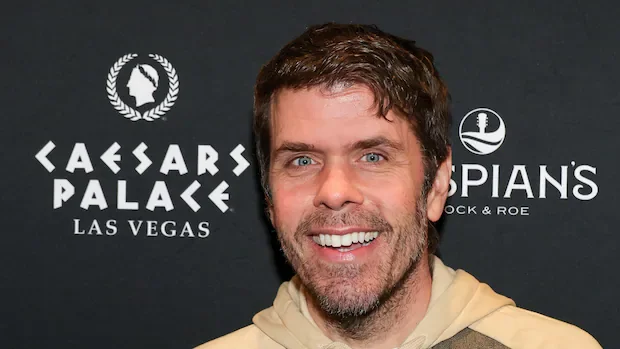
Perez Hilton livestreamed apparent self-harm. How did TikTok let this happen?
The livestream ran for about 15 minutes, the social media platform confirmed
Warning: This article contains details about self-harm, suicide and violence.
Celebrity gossip blogger Perez Hilton was hospitalized Tuesday night after livestreaming a disturbing TikTok video that appeared to show him engaging in self-harm.
TikTok has since taken down the video, but not before viewers watched the blood-covered blogger holding a knife while in what seemed to be mental distress. Some participating in the livestream yelled at him to stop, while others said to call 911.
As the video circulated, social media feeds were flooded with people shocked by what they had just seen, calling it "horrific" and saying they were "terrified." Clips from the video, which CBC News has viewed, were visible on other social media platforms such as X.
"I genuinely can't even believe what I just saw," one person posted on TikTok on Tuesday night.
"How or why TikTok allowed that livestream to go on for so long is still baffling to me," someone else posted.
"I was in the livestream and am traumatized," another viewer commented.
TikTok's policies clearly forbid content showing suicide or self-harm, and its automated content moderation system, which includes AI, is meant to prevent videos like Hilton's from ever being posted.
In its most recent transparency report, TikTok said it suspended 50.7 million live sessions between January and March this year alone for violating its rules. This year, it also removed 99.8 per cent of videos violating its mental health community guidelines before anyone ever saw them, a company spokesperson told CBC News.
So how did Hilton's livestream continue for what TikTok confirmed was about 15 minutes?
"If I was TikTok, I would definitely be revisiting how they could have sped up this process ... because what you want to see is much quicker intervention," Emily Laidlaw, the Canada Research Chair in Cybersecurity Law and an associate professor at the University of Calgary's law faculty, told CBC News.
The TikTok spokesperson added that its automated moderation systems flagged the livestream within minutes and routed it to its U.S. human moderation team for review.
TikTok said it closed several subsequent streams within 90 seconds and banned the account.
No solution will ever be perfect
Tuesday's TikTok livestream is far from the first time disturbing, even horrific, events have been broadcast live on social media.
There was the 2019 massacre at two mosques in New Zealand that was livestreamed on Facebook for about 17 minutes, for example. Fifty people were killed. And in 2022, a gunman livestreamed his racially motivated shooting at a grocery store in Buffalo, N.Y., on Twitch. He killed 10 people.
And so many people have broadcast their own suicides on social media that there's a term for it: livestream suicide.
- Live streamed mass shooting shows more internet regulations needed, New Zealand expert says in Winnipeg
- Viral mosque shooting video raises questions about social media firms' responsibilities
Trying to address problems when they happen on a livestream is incredibly difficult, both in terms of detecting it and acting quickly, Laidlaw said. But since the social media platforms designed the spaces, they have to take responsibility for putting safety measures in place, she said.
Many social media companies have different safeguards, she said. TikTok, for example, uses different AI detection tools that might look for certain behavioural indicators (like changes in affect), language (like explicit statements of finality) and visual (such as blood or weapons).
It also relies on people to report what they see, Laidlaw added.
WATCH | TikTok allowed to continue operations in Canada:"There's no way the solution is ever going to be perfect," she said. "You need to proactively think through what those measures are going to be, but things are always going to be slipping through the cracks."
As for Hilton's apparent self-harm, artificial intelligence can "absolutely" help detect this type of content, but it isn't foolproof and is very unlikely to ever be a complete solution, said Peter Lewis, the Canada Research Chair in Trustworthy Artificial Intelligence and an associate professor of computer science at Ontario Tech University in Oshawa, Ont.
"What is needed are robust and well-resourced processes at the platform level, so that action can be taken swiftly when such content is detected or flagged," Lewis said in an interview.
TikTok said it proactively alerted law enforcement to the situation with Hilton.
'I made a lot of mistakes'
Police in Miami responded on Tuesday after receiving "multiple calls regarding an individual who was livestreaming acts of self-harm on social media," the Miami-Dade Sheriff’s Office confirmed in a statement to CBC News.
"Deputies quickly located the individual’s residence, where they spoke with family members on scene and confirmed he was alone inside," the sheriff's office said.
Hilton was safely recovered and transported to a local hospital, where he's receiving medical attention.
- Dead or 'unalive'? How social platforms — and algorithms — are shaping the way we talk
- As disinformation and hate thrive online, YouTube quietly changed how it moderates content
His agents, Dante Rusciolelli and Rebekah Kochan, shared a statement on Instagram asking for his privacy to be respected.
"Our primary concern is Perez's health and well being, as well as the well being of his family. Until we have confirmed information, we will not speculate or comment further."
Born Mario Lavandeira Jr., Hilton, 48, began his popular celebrity gossip blog in the early 2000s, which he called "Hollywood's most-hated website." He often calls himself "the original influencer."
Hilton became notorious for his unfiltered, controversial posts, as well as for several high-profile celebrity feuds. But in recent years, he has expressed remorse and apologized for his "selfish behaviour" after a medical scare earlier this year.
"I made a lot of mistakes in my past. We all have. Nobody's perfect," Hilton said in a video posted April 2.
"But my mistakes are very public. The internet is forever. Receipts are forever. I carry with me deep shame and regret. I'm sorry, I will continue to apologize. I have also reached out to make amends. I have apologized publicly and privately to dozens of people."
If you or someone you know is struggling, here’s where to look for help:
- Canada’s Suicide Crisis Helpline: Call or text 988.
- Provincial and territorial mental health support.
- Kids Help Phone: 1-800-668-6868. Text 686868. Live chat counselling on the website.
- This guide from the __Centre for Addiction and Mental Health__outlines how to talk about suicide with someone you're worried about.