One year of updates couldn't save the Pixel 10's GPU — and now the Pixel 11 is at risk
Aug 6, 2026 — 5:30 AM ET
The Pixel 10 series may be Google’s best phones yet, but gamers got the short end of the stick. The Tensor G5 marked Google’s switch away from Arm’s Mali GPUs in favor of Imagination Technologies’ PowerVR architecture — specifically the mid-range, already aging DXT-48-1536.
With the Pixel 11 launch approaching, one question keeps nagging at me: will history repeat itself? Rumors suggest the Tensor G6 will use another modest PowerVR GPU, the CXTP-48-1536. If Google’s recent trajectory is anything to go by, the Pixel 11 could fall even further behind rival flagship GPUs.
That’s hardly encouraging for anyone who takes mobile gaming seriously. My biggest concern isn’t peak performance, though. We all know that Google is far more invested in AI silicon and camera processing capabilities when it comes to picking its priorities. Instead, what I’m anxious about is whether Google has ironed out issues that dogged its transition to PowerVR series GPUs almost one year ago.
Are you happy with the Pixel 10's gaming performance in August 2026?
A troubled start to a new GPU
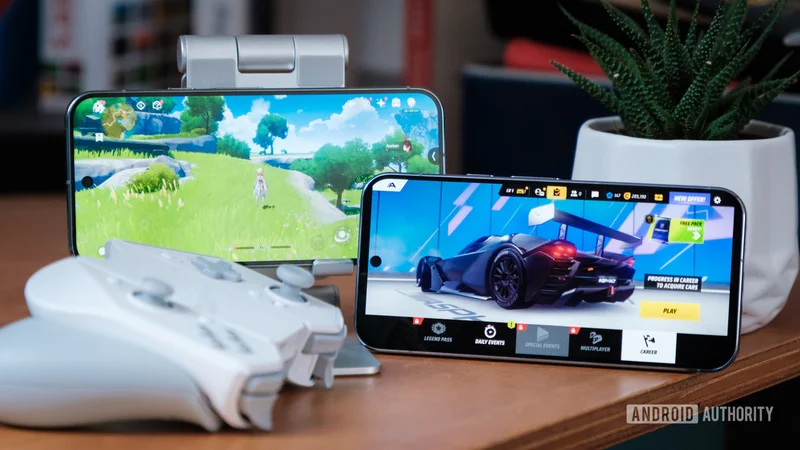
Rewind to the launch of the Pixel 10 series, and gaming was a mixed bag. General performance wasn’t as bad as many feared. Games like PUBG Mobile, COD Mobile, Genshin Impact, Honkai: Star Rail, and Diablo Immortal were all perfectly playable. It never descended into the chaos of Samsung Eynos’s AMD Xclipse debut, where some games barely ran at all.
However, my early experience was far from issue-free. I noticed antialiasing glitches while playing COD Mobile’s Battle Royale mode at higher graphics settings, causing foliage to flicker in and out of existence. Perhaps more alarming was that performance on some of Android’s best-maintained emulators went from reasonably smooth to outright unplayable. The difference was stark. My Pixel 9 Pro XL maintained near-locked 60 fps in Dolphin’s F-Zero GX. The Pixel 10 Pro XL bounced between 40 and 60fps, with frequent drops below 30fps.
The Pixel 10 launched with GPU drivers that simply weren't ready.
Even switching to Vulkan, often the faster graphics backend, failed to deliver comparable performance with its last-gen sibling. In fact, enabling anti-aliasing under OpenGL crashed F-Zero GX on launch, while Vulkan produced missing textures when AA was enabled. Neither was an issue with my Pixel 9 Pro XL, pointing to some rather severe issues with early PowerVR drivers.
Combined with more aggressive performance throttling than its predecessor, the early impressions of the Pixel 10 series were really quite disappointing.
Have Google’s updates fixed the issues?
Of course, unforeseen bugs are somewhat expected when making a major architectural shift like this. As such, Google issued a key driver update for the Pixel 10 series as part of its QPR beta updates around the end of 2025 that certainly improved performance and fixed a few issues in my subsequent testing. Progress on mainstream consumer releases was obviously slower, and the fixes have continued to trickle in over the past few months. Google was spotted fixing various graphics bugs and issues as recently as its March security update, and that work continued with the build-up to Android 17 as well.
Now that Google’s latest OS version is rolling out nearly a year after launch, is gaming finally in a good spot for the Pixel 10 series, and does that bode well or poorly for the Pixel 11 range? I retested my usual gaming lineup on a Pixel 10 Pro XL running Android 17 with the July security patch to see how much had changed.
The results are encouraging but still not entirely convincing. Graphical glitches seem to be a thing of the past, at least in the popular titles I tested. Most Android games now run smoothly, as long as you’re willing to dial back graphics settings. Even six-year-old Genshin Impact still struggles to hold 60fps at maximum settings, hovering closer to the mid-40s on my most recent playthrough.
Software updates can only do so much. Tensor still trails Snapdragon and Exynos in GPU performance, with lower graphics presets and frame-rate caps in games like Asphalt Legends and COD Mobile. I expect the Pixel 11 to remain a capable mid-tier gaming phone, but not a flagship built for the next five years of increasingly demanding Android games and emulators.
Performance is better with Android 17, but far from flawless.
Unfortunately, emulator performance remains more of a mixed bag. OpenGL performance in Dolphin is still a mess compared to the Pixel 9’s Mali GPU — the PowerVR graphics unit doesn’t come close to hitting the same 60fps target. Vulkan performance has improved dramatically since launch, but even so, Dolphin’s performance still lags well behind the Pixel 9’s Mali GPU and can’t quite deliver a consistently smooth 60fps. That said, Vulkan performed far worse in NetherSX2, with neither API producing a playable frame rate in Need for Speed: Most Wanted.
The Pixel 11 won’t be the gamer’s choice
A year of updates has made the Tensor G5’s PowerVR GPU far more usable than it was at launch. The glitches are largely gone, performance has improved, and the Pixel 10 Pro XL is unquestionably a better gaming phone today than it was a year ago.
But that progress doesn’t erase the underlying problem. The phone still has issues and sometimes performs worse than my Pixel 9 Pro XL, particularly when running emulators. Arm’s Mali GPUs benefit from years of mature Vulkan driver development, often allowing them to outperform what their raw specifications suggest. The same clearly can’t be said for Imagination Technologies’ PowerVR DXT series, which, although improved, remains a small but noticeable step backward compared to Google’s 2024 launch. Given the popularity of playing retro classics on Android these days, the Pixel 10 still has a glaring weakness.
I'm not convinced Google has learned lessons in time for the Pixel 11's launch.
With that in mind, I’m still incredibly anxious about the upcoming Pixel 11 series. Not only because the Pixel 10 still has a few lingering issues, but also because Google is apparently downgrading to yet another GPU series, the PowerVR CXT range. On paper, the CXT family sits below DXT in Imagination’s product stack, raising obvious questions about performance. However, the “P” model revision that Google is apparently using boasts improved energy efficiency, which, combined with more efficient manufacturing, might surprise us with boosted clock speeds. In any case, I’m not expecting the Tensor G6 to surpass the G5’s DXT cores, which is a disappointing place to start from.
My biggest concern isn’t raw performance — it’s drivers. A new GPU architecture means another fresh software stack, and we’ve already seen how painful that transition can be. Hopefully, Google has spent the past year preparing the Pixel 11 instead of simply patching the Pixel 10 after the fact. Its track record doesn’t give me much confidence
If it takes another year for the Pixel 11 to become a genuinely good gaming phone, I’ll struggle to believe Google is serious about delivering a flagship gaming experience. Prove me wrong, Google.