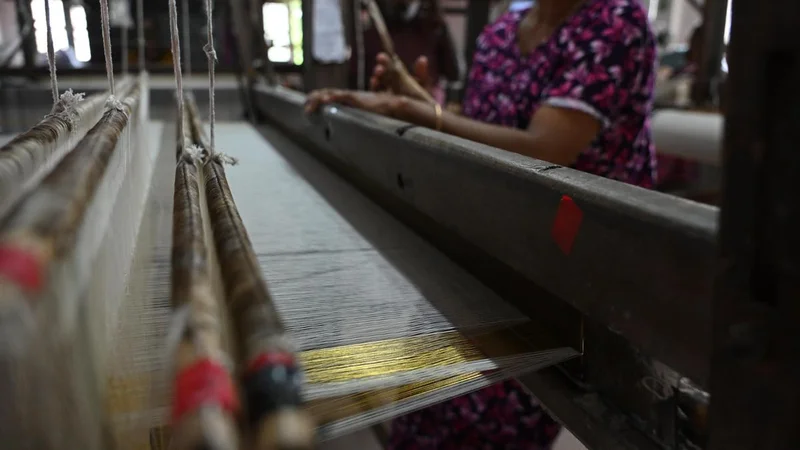
The making of a developed nation is not defined by technology alone. It is shaped by the ability to transform enduring strengths into engines of future growth. As India advances towards Viksit Bharat 2047, it is investing in frontier technologies, strengthening manufacturing and building globally competitive industries.
Yet, one of India’s greatest strengths has been with India all along — its handloom tradition. On August 7, as India marks the 12th National Handloom Day, it is time to view handloom as a strategic sector for a world that values sustainability, authenticity and resilient supply chains.
Prime Minister Narendra Modi’s vision of Viksit Bharat 2047 is built on prosperity, self-reliance, inclusivity and cultural confidence. Handloom embodies this vision by bringing together heritage and innovation, while driving women-led development, rural entrepreneurship, livelihoods and global competitiveness.
Threads of India’s legacy
Every handwoven fabric reflects the courage to preserve tradition, the patience to perfect every thread, the integrity of honest craftsmanship and the wisdom passed down through generations. That is why handloom is not merely a craft, but one of India’s greatest civilisational strengths. From the Indus Valley Civilisation, where cotton was first cultivated and woven, to the 18th century when Indian textiles dominated global trade, India set global benchmarks in textile excellence. Bengal’s legendary muslin — so fine that a 25-metre length could pass through a ring — along with Banarasi silk, Kanchipuram weaves, Pochampally Ikat and countless regional traditions, earned India worldwide admiration.
Today, as the world turns towards authentic, sustainable and handcrafted products, India has a historic opportunity to reclaim that leadership. India’s next handloom revolution must export not just textiles, but also craftsmanship, heritage, innovation and trust, making every handwoven product an ambassador of Brand India.
Transformation through policy
Handloom is India’s largest cottage industry, supporting the livelihoods of more than 35 lakh weavers and allied workers, nearly 72% of whom are women. Over the past decade, the Government has strengthened the sector through the Raw Material Supply Scheme, 797 handloom clusters, over 1.24 lakh improved looms, skill upgradation for nearly 97,000 artisans, and initiatives such as Producer Companies, GI tagged products, the Handloom Mark, India Handmade certification, Urban Haats and Design Resource Centres.
Today, 29 Weavers’ Service Centres provide end to end support through training, upskilling, design development, raw material assistance and market linkages, while the 11 Indian Institutes of Handloom Technology are being strengthened to expand advanced training and develop niche, high-value handloom products. The forthcoming National Handloom and Handicraft Programme will accelerate this transformation by strengthening 1,800 clusters across more than 500 districts, benefiting 65 lakh weavers and artisans and establishing Handmade in India as a globally recognised brand.
Mahatma Gandhi’s Ambar Charkha made spinning easier, faster and more efficient, advancing the vision of self-reliance.
More recently, Assam’s Maina Loom and the Chitranjan Handloom developed in Sivasagar have shown how better loom design can make weaving easier and more productive. The Centre of Excellence for Handloom Technology, established with the Indian Institutes of Technology, is developing lighter, stronger and easier to use looms that reduce physical effort and improve productivity, including for persons with disabilities. Under the Centre, the Handloom 4.0 initiative uses digital tools and Artificial Intelligence to monitor productivity, quality and maintenance, and is being piloted on 100 looms before expanding across the States.
Technology should empower the artisan, not replace the artisan. Platforms such as VisioNXT can help forecast demand, identify design trends, authenticate genuine handloom products and connect weavers directly with global markets. At the same time, product diversification into premium silk, natural fibres, sustainable fibres and innovative blends can create high-value products and unlock new markets. Combined with better branding, value addition and direct market access, these innovations can significantly enhance weavers’ incomes. The vision is to enable every weaver to earn a dignified and aspirational income, with the ambition of ₹50,000 per month in the years ahead.
India’s identity
India’s weavers are not merely a workforce. They are entrepreneurs, innovators and creators of value. By enabling them to build brands, move up the value chain and reach global markets, handloom can be transformed into one of India’s most dynamic creative industries. This is also a call to India’s youth to bring together heritage and technology, creativity and enterprise, to shape the next chapter of handloom.
On this National Handloom Day, let us celebrate India’s weavers not only as custodians of our heritage, but also as architects of India’s progress. Every handloom product we buy and wear strengthens a weaver’s livelihood, preserves a timeless tradition and carries India’s story to the world.
Giriraj Singh is Union Minister of Textiles, Government of India. The views expressed are personal
Published - August 07, 2026 12:08 am IST