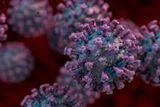
When the COVID-19 pandemic started in 2020, leading to the largest, fastest, and most successful global development of a vaccine, researchers focused on the surface spike protein of SARS-CoV-2. This protein allows the virus to enter human cells, and because it sticks out all over the virus's outer shell, it makes the perfect target for a vaccine.
But the spike protein isn't the only one that helps maintain the virus's function. By taking a closer look at the previously unrecognized role of the SARS-CoV-2 nucleocapsid protein, researchers from the University of California, Los Angeles (UCLA) found that it can hyperactivate the immune system in ways that may explain severe cases of COVID-19.
In their study, published in Science Advances, they compared SARS-CoV-2's version of the nucleocapsid protein to those of other coronaviruses, like SARS and MERS, hoping to understand how to better tackle future virus outbreaks.
“Coronaviruses are notorious for encoding proteins that antagonize the body's natural antiviral defenses,” said study lead Melody Li, an associate professor of microbiology, immunology, and molecular genetics at UCLA, in a news release. “When SARS-CoV-2 first appeared, almost nothing was known about it, so we wanted to find out whether it was using the same playbook.”
A SARS-CoV-2 Protein Triggers the Immune System Unlike Other Viruses
When someone is infected with SARS-CoV-2, their immune system detects the intruder and triggers a cascade of reactions. The first responders are immune cells called macrophages, which can detect outsiders and engulf infected cells containing the virus before releasing chemicals that alert the rest of the body.
Usually, viruses try to suppress this macrophage response to stop the body from destroying them, allowing them to spread for as long as possible under the radar. But the nucleocapsid protein behaves differently.
While it initially dampens immune responses, it also boosts inflammation, a tissue-damaging immune response, within the macrophages. They observed the same pro-inflammatory effect in other highly pathogenic coronaviruses (SARS-CoV-1 and MERS-CoV), with the SARS-CoV-2 Delta variant showing the strongest level of inflammation.
“It’s a bit like a thief trying to slip past a bank’s security system, but instead of staying quiet, it trips the alarm,” said Li. “We don’t think these viruses intend to do this — a virus’s whole goal is to spread, not to make its host severely sick. But this looks like an unintended side effect that in the case of COVID, it ends up fueling the disease.”
Read More: Long COVID May Affect Motivation and Memory by Injuring the Brain’s Dopamine System
Virus Protein May Weaken Heart Barrier
A persistently overactivated immune system eventually attacks tissues, often starting with the insides of blood vessels. The team set out to see if the pro-inflammatory effects caused by nucleocapsid proteins could be connected to the brain and heart complications often seen in severe COVID-19 cases.
Using two human cell-based models representing the brain's blood-brain barrier and the heart's coronary artery lining, they observed that the heart barrier weakened significantly when exposed to fluids impacted by nucleocapsid proteins from the Delta variant.
The researchers suggest that because the heart relies on tight, functioning blood vessel linings for proper function, identifying the harmful mechanism caused by the virus may explain the uptick in heart problems seen in some COVID-19 cases.
Informing Treatment for Severe COVID-19 Cases
Although the pandemic emergency phase has officially been declared over, COVID-19 is still a global health threat and an ongoing topic of research to refine treatment for those still experiencing severe outcomes.
The research team explains that a treatment specifically targeting the nucleocapsid protein may better protect blood vessels harmed during hyperinflammation. Today, corticosteroids are often prescribed to reduce inflammation in severe cases, but they don't work very selectively. Researching this particular protein and the mechanisms it triggers in the immune system could also be important beyond SARS-CoV-2.
“It’s critical to keep studying COVID-19 so that we can constantly improve patient care — not everyone responds well to vaccines, and people who are immunocompromised often have limited treatment options,” said co-study author Pablo Alvarez in the release. “These studies can also help us prepare for future coronavirus outbreaks.”
This article is not offering medical advice and should be used for informational purposes only.
Article Sources
Our writers at Discovermagazine.com use peer-reviewed studies and high-quality sources for our articles, and our editors review for scientific accuracy and editorial standards. Review the sources used below for this article:
- This article references information from a study published in Science Advances:SARS-CoV-2 nucleocapsid induces hyperinflammation and vascular leakage through the Toll-like receptor signaling axis in macrophages