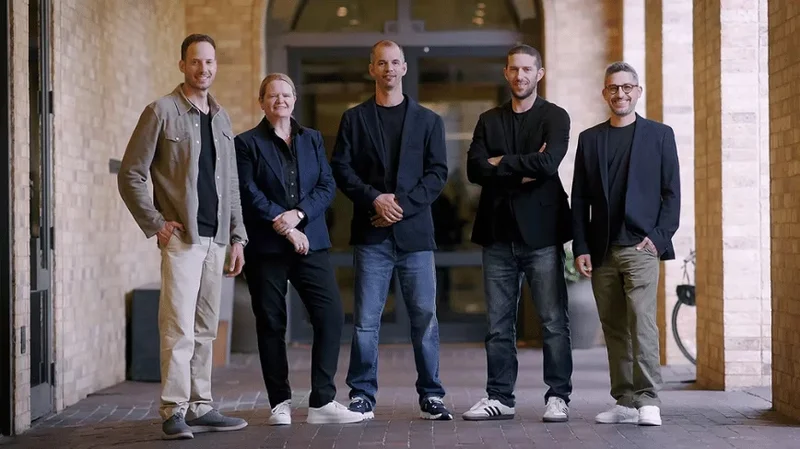
The founder now asking enterprises to trust AI with their laptops once built one of Silicon Valley’s most notorious surveillance tools. Roi Tiger co-created Onavo, the app Meta turned into a scheme to spy on its rivals. His new company, Glow, wants to do something close to the opposite.
Glow has emerged from stealth with $180m in funding at a $1.2bn valuation. Sequoia, Cyberstarts, Greenoaks and Redpoint Ventures led the round, with Index Ventures, Lux Capital and others joining. Founded in 2025 and split between Tel Aviv and Palo Alto, the startup already employs close to 100 people.
Prevention over detection
Its pitch inverts how most security works. Today’s tools mostly spot threats and respond after the fact. Glow wants to prevent them, using AI agents that map everything running on a device, judge the risk, and block unapproved software before it lands.
“Prevention was always the right answer in security. It just never worked at enterprise scale without blocking the business,” said Tiger. “AI solves that.” His case rests on a shift he says AI forced. By Glow’s own count, regular AI use on corporate devices has jumped from 15% to 45% in a year, much of it unapproved.
That widens the attack surface just as attackers gain frontier models of their own. Glow argues teams should assume adversaries wield Mythos-class AI, able to exploit any overlooked gap at machine speed. Its agents run on Anthropic and Google Gemini models, via Amazon Bedrock, layered with Glow’s own reasoning engine. The firm says the system has already stopped malicious code packages from installing on customer devices.
The founder’s shadow
That is where Tiger’s past complicates the sell. He co-founded Onavo, a data-analytics app Meta bought in 2013, and stayed nine years, rising to VP of engineering. As Tech Funding News noted, Onavo became the basis of “Project Ghostbusters.”
Court documents unsealed in 2024 showed Meta repurposed Onavo’s VPN to intercept and decrypt rivals’ encrypted traffic, targeting Snapchat, YouTube and Amazon. Apple pulled the app in 2018 and Meta shut it in 2019. The filings described the conduct as criminal. Tiger has not spoken publicly about his role, and Glow’s launch does not mention it.
The irony is hard to miss. Onavo watched and reported in secret. Glow promises to control what runs on a device and keep the risk out in the open.
A billion before revenue
The valuation is striking for a company that has disclosed no revenue. Glow has named no customers beyond broad sectors: healthcare, retail and financial services. It joins a run of AI-security startups that crossed the billion-dollar mark before proving a business, a pattern familiar from the Israeli cyber scene that produced Wiz. Several of Glow’s backers funded Wiz too.
Its rivals are entrenched. CrowdStrike, Microsoft and SentinelOne dominate the endpoint, and they built their empires on detection. The open question is whether enterprises will trust an AI agent to block software on its own, with no human in the loop. For a founder whose last act eroded exactly that kind of trust, it is a fitting test.