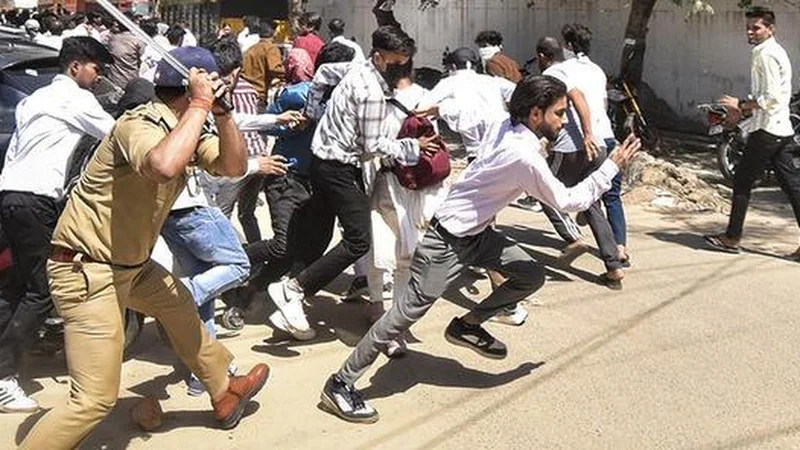
For many workers and activists involved in the April 13 Noida protest, speaking out for better wages and improved working conditions has come at a heavy cost, draining their savings and leaving them struggling to find work.
Four months after the protest, workers arrested following the police action say they continue to face financial hardship. The costs of securing bail, procuring legal documents and pursuing their cases have run into tens of thousands of rupees. For some, the expenditure has crossed several lakhs.
The expenses include drafting and filing court applications, affidavits, notarisation, certified copies, photocopying of documents, repeated travel to the Surajpur court for hearings, loss of wages due to court appearances, and other expenses such as food and local transport.
Adding to the burden were repeated trips by family members between Delhi, the Surajpur court, the Allahabad High Court and their hometowns to obtain documents and complete verification formalities required for bail and release.
Manjeet (name changed), a 25-year-old trainee supervisor at a garment manufacturing company, was picked up five days after the protest allegedly turned violent. A month after his release, he said he struggles to find work. “Having lost my job since I was arrested, I lacked the confidence to apply anywhere. After my friends insisted, I went for a couple of interviews but did not get any response,” Mr. Manjeet said.
On April 18, he had just stepped out of his company when he was picked up by the police and taken to Kasna jail. With his parents and six siblings living in Prayagraj, Uttar Pradesh, his family could not immediately reach him. “Despite having a big family, I felt completely alone. My uncle was able to meet me only 10 days after my arrest,” he said.
According to Mr. Manjeet, his uncle spent at least ₹15,000-₹20,000 on paperwork alone.
“This was when lawyers took up my case pro bono. There were several others with multiple FIRs against them who did not have lawyers fighting their cases for free,” he said.
Karan (name changed), an e-rickshaw driver, was picked up on the night of April 13 after he parked his vehicle for the day. “He was going to buy dinner from a nearby stall when some policemen took him away,” his uncle said.
“I have spent over ₹2.5 lakh on my nephew’s bail and release. Four days after the protest, the police registered another case against him under the same Sections but at a different police station,” he said. “The expenses include legal costs of procuring and drafting documents, as well as travel. I also had to pay his room rent for four month and the EMI for his e-rickshaw,” Mr. Karan’s uncle said.
Naman’s (name changed) father, whose son worked at a textile factory, said he had spent at least ₹27,500, excluding travel and food expenses. “I also lost several days of work while trying to get my son released from jail,” he said.
“Our lawyer charged only ₹5,100, but we heard of others who took ₹3,000 to ₹5,000 for a single hearing and then disappeared,” he added.
Crowdfunding, loans keep legal battles going
Keshav Anand, brother of activist Aditya Anand, said legal expenses for activists facing at least 10 FIRs had already run into lakhs.
“For all eight activists, we have already spent around ₹7-10 lakh. This is despite senior lawyers fighting our cases pro bono, despite two of them facing charges under the National Security Act. Most of the money has come through crowdfunding by friends and families, while some has been arranged through loans,” he said.
Mr. Keshav said family members have been travelling repeatedly between Delhi, Surajpur and the Allahabad High Court to file vakalatnamas, submit bail applications and attend hearings.
Published - August 08, 2026 09:36 pm IST