Your support helps us to tell the story
From reproductive rights to climate change to Big Tech, The Independent is on the ground when the story is developing. Whether it's investigating the financials of Elon Musk's pro-Trump PAC or producing our latest documentary, 'The A Word', which shines a light on the American women fighting for reproductive rights, we know how important it is to parse out the facts from the messaging.
At such a critical moment in US history, we need reporters on the ground. Your donation allows us to keep sending journalists to speak to both sides of the story.
The Independent is trusted by Americans across the entire political spectrum. And unlike many other quality news outlets, we choose not to lock Americans out of our reporting and analysis with paywalls. We believe quality journalism should be available to everyone, paid for by those who can afford it.
Your support makes all the difference.
Read more
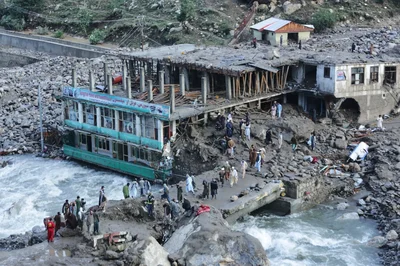
Rescue crews in Afghanistan searched Tuesday for survivors and bodies among the rubble of houses destroyed by devastating flash floods that authorities say have killed nearly two dozen people and left more than 100 people missing.
The Afghanistan National Disaster Management Authority said Tuesday that 23 people had died, 80 had been injured and more than 100 were missing after floods struck the eastern province of Nuristan on Monday, causing an undetermined number of buildings to collapse. The provincial capital city of Parun was among the areas affected, authorities said.
More extreme weather has been forecast, with heavy rain; thunderstorms; strong winds accompanied by dust and sand; and flash floods predicted in 10 of the country’s 34 provinces, the Ministry of Transport and Civil Aviation’s meteorology department said Monday evening. The ministry warned residents to avoid riverbanks and other areas at risk of flooding.
Afghanistan is highly vulnerable to extreme weather events, with snow and heavy rain that trigger flash floods, often killing dozens, or even hundreds, of people at a time. In 2024, more than 300 people died in springtime flash floods. Earlier this year, at least 110 people were killed by widespread flooding and landslides in several parts of the country.
Decades of conflict, along with poor infrastructure, a struggling economy, deforestation and the intensifying effects of climate change, have amplified the impact of such disasters, particularly in remote areas where many homes are built of mud and offer limited protection against sudden deluges or heavy snowfall.