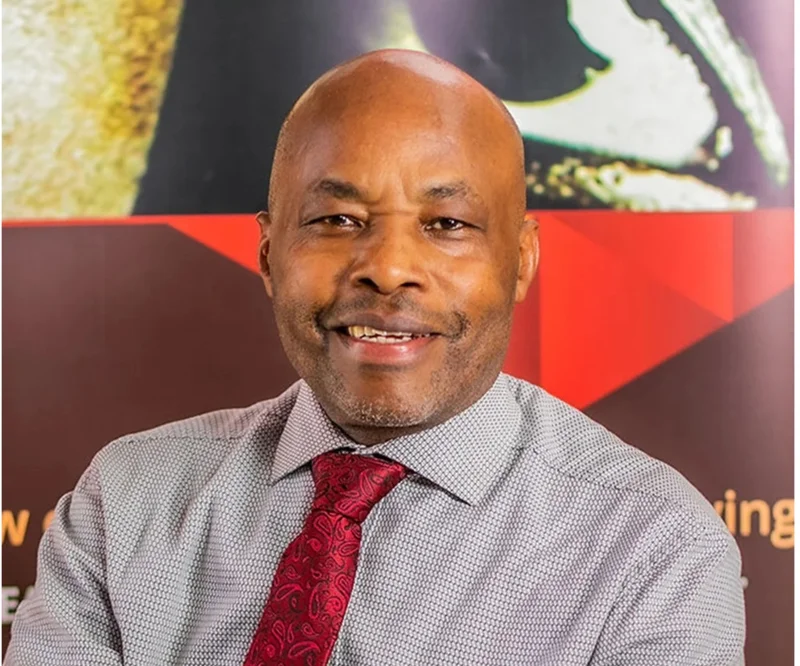
A Research Professor of Development Studies at the Institute for Development Studies, University of Nairobi, Kenya, Prof. Karuti Kanyinga, has warned that courts across Africa have become “commodified”, saying judicial systems are increasingly vulnerable to bribery, political pressure and executive interference.
Kanyinga said the erosion of judicial independence had made access to justice available mainly to the wealthy and politically connected, a trend he described as a major threat to democracy across the continent.
He spoke on Tuesday while delivering the keynote address at the 2026 Goodluck Jonathan Foundation Democracy Dialogue, held at the International Conference Centre, Bauchi.
The dialogue, hosted by former President Goodluck Jonathan and Bauchi State Governor Bala Mohammed, had the theme, “Beyond Elections: Can Political Parties and the Judiciary Save African Democracy?”
“The only problem with the judiciary and the courts in particular is that the courts across the continent have become commodified,” Kanyinga said.
Quoting a popular saying from East Africa, he added, “Why would you like to hire a lawyer when you can buy a judge? Why would you like to waste your money by hiring an advocate, and yet you can buy a judge?”
According to him, the saying reflects the growing perception that justice can be purchased in many African countries.
“It means that access to justice is only possible for those who have got money and those who have got political power. And that itself has ruined the independence of the judiciary across the continent, or in many parts of the continent,” he said.
Kanyinga argued that courts could no longer effectively uphold the rule of law or resolve disputes in a manner that was fair and seen to be fair by all citizens.
“This is even worse where you’ve got strong executives or strong presidentialism. It is even worse where parliament is co-opted and where parliament is weakened. Because in the process of weakening parliament, you also seek to weaken the judiciary,” he warned.
The professor also blamed politicians, saying,
“We must admit that we turn the judiciary into another political battlefield. We are asking the judiciary to arbitrate disputes that we have been unable to resolve politically.”
He noted that such practices contaminate judicial institutions and place judges under enormous pressure, intimidation and even threats to their lives.
“You end up having courts and judges that are now in fear of how to address political cases and political disputes because you don’t know whether you’ll be alive or not,” he said.
According to him, judges are often subjected to intimidation or inducement through material rewards.
“If they are not intimidated, for sure, they are co-opted. Some are bribed with houses, some are bribed with cars, or even cash is a common phenomenon,” he added.
Kanyinga called for deliberate efforts to protect judges from political interference and to depoliticise the judiciary.
“We need to start thinking very carefully about what can be done to protect our courts and our judges from intimidation by politicians and make them as independent as they should be,” he said.
Beyond the judiciary, the Kenyan scholar urged African leaders to rethink the continent’s democratic model, saying elections alone had failed to eradicate poverty despite decades of democratic governance.
“We have elections almost every other four or five years across Africa, but it is a pity that even with all these elections we have not eradicated poverty on the continent. We are indicted,” he said.
He cited poverty levels in Nigeria, Kenya, Tanzania and South Africa as evidence that democratic processes had not translated into improved living standards for millions of Africans.
Kanyinga also lamented the rising cost of politics, which he said had placed public office beyond the reach of ordinary citizens, especially women.
“As I’ve been looking at the study on the cost of politics in Nigeria, Kenya and other countries, I’m surprised that the House of Representatives requires no less than N500 million, while becoming a governor requires something close to N2 billion,” he said.
He argued that politicians who rely heavily on private business funding often become captured by those interests once elected.
“The moment you win an election, they capture the policies. You are back to zero again because the policies they capture are not for the interest of society, but for their own interest,” he added.
The professor further criticised African political parties for lacking clear ideological identities and policy differences.
“Political parties seem not to be having an agenda that can be differentiated from one another ideologically,” he said.
He also linked the increasing migration of young Africans abroad to policy failures across the continent.
“We want an Africa where there will be no japa unless you’re going out for tourism. The youth who leave Africa for jobs are voting with their feet because our policies have failed them,” Kanyinga said.
Commending the Goodluck Jonathan Foundation for creating a platform for continental reflection, he said the future of Africa would depend not only on elections and political parties, but also on governance that delivers jobs, security and opportunities for citizens.
“We need political parties that can think beyond political competition and focus on governance that can feed our people,” he said.