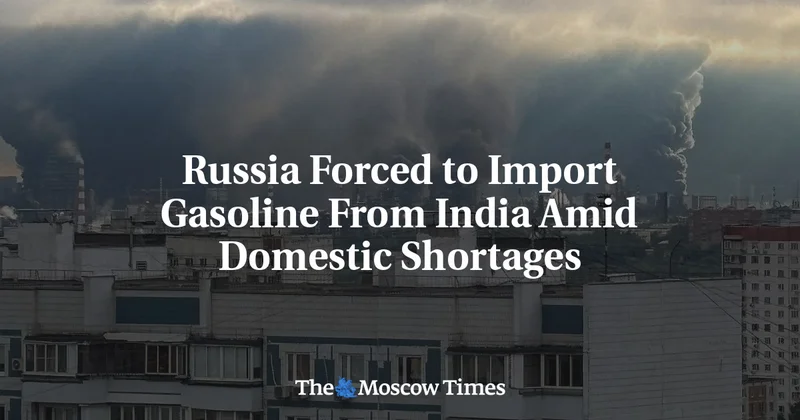
Russia last week received its first shipment of gasoline from India to offset domestic fuel shortages caused by Ukrainian drone strikes on its oil refineries, Bloomberg reported Wednesday, citing ship tracking data.
According to market analytics firm Kpler, the Indian gasoline arrived at a Russian port on Wednesday, Aug. 5. It was reportedly produced by Nayara Energy, an Indian refiner partially owned by Russian state oil giant Rosneft.
Russian-flagged tanker Cyclone in mid-June reportedly loaded 42,000 metric tons of gasoline from the Vadinar refinery in western India and used a chain of shadow fleet tankers off the coast of Egypt.
Last month, Reuters reported that Russia had quietly begun purchasing gasoline from Indian refineries to stabilize domestic supplies. Russian officials have since claimed the domestic fuel market partially stabilized.
Moscow previously relied primarily on fuel imports from neighboring Belarus and Kazakhstan in response to Ukraine’s intensified drone attacks against Russian oil infrastructure.
The long-range assault also forced Russia, the world’s second-largest exporter of crude oil and third-largest exporter of refined petroleum products, to ban fuel exports through the end of 2026.
In response to the supply drop, authorities have introduced fuel rationing measures across Russia and in annexed Crimea. The disruptions came at a critical time, with both the summer vacation travel season and the agricultural farming season in full swing.
Analysts cited by Bloomberg said Ukrainian strikes reduced Russian crude processing rates to 3.6 million barrels per day in July.
The average price of gasoline in Russia has climbed 17.7% since the start of the year, but dipped by 1.4% over the past week. A single-week decrease lowered the national average to 77.69 rubles per liter ($3.61 per gallon) as of Aug. 3.
A Message from The Moscow Times:
Dear readers,
We are facing unprecedented challenges. Russia's Prosecutor General's Office has designated The Moscow Times as an "undesirable" organization, criminalizing our work and putting our staff at risk of prosecution. This follows our earlier unjust labeling as a "foreign agent."
These actions are direct attempts to silence independent journalism in Russia. The authorities claim our work "discredits the decisions of the Russian leadership." We see things differently: we strive to provide accurate, unbiased reporting on Russia.
We, the journalists of The Moscow Times, refuse to be silenced. But to continue our work, we need your help.
Your support, no matter how small, makes a world of difference. If you can, please support us monthly starting from just $2. It's quick to set up, and every contribution makes a significant impact.
By supporting The Moscow Times, you're defending open, independent journalism in the face of repression. Thank you for standing with us.
.