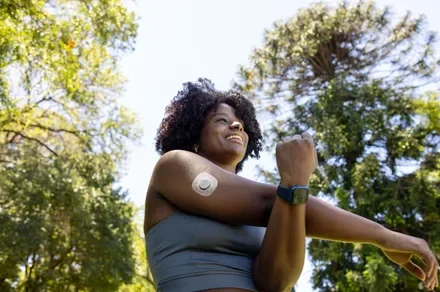
Datamaxxing sounds like the sort of wellness trend that would involve a spreadsheet, three supplements, and far too much free time. The basic idea is much more sensible. People are feeding data from their wearables into AI chatbots and asking them to explain what all those numbers actually mean. The Wall Street Journal recently documented several people building systems around exactly that idea.
There’s a genuine gap for AI to fill here. A 2026 Nature Communications study found that wearables are good at producing summaries, but much less useful when people want personalized answers about their own data. An AI agent built by the researchers reached 84% accuracy on objective numerical questions.
Why AI adds what trackers lack
Your smartwatch can tell you that your sleep was worse than usual or that your recovery score dropped. What it often can’t do is explain those changes in a way that feels useful.
AI can make that data conversational. Instead of staring at charts, you can ask how your recent sleep compares with previous weeks or whether a change lines up with your training.
Wearable companies are already moving this way. Oura says 60% of people who tested Oura Advisor felt it helped them understand metrics they hadn’t fully grasped before. Google Health Coach takes a similar approach with personalized guidance around fitness and sleep.
Datamaxxing is basically the DIY version of that experience.
How good can an AI coach get
There’s some evidence that these systems can go beyond explaining a chart. A 2025 Nature Medicine study tested Google’s Personal Health Large Language Model across 857 sleep and fitness cases. Its fitness responses performed similarly to those from human experts, while its personalized sleep insights improved over the base Gemini model.
That still doesn’t make a chatbot a clinician. It does suggest AI can be genuinely useful when the job is finding patterns across data you’re already collecting rather than offering medical advice.
Where datamaxxing can go wrong
Even specialized systems can invent details or misread user data. Those mistakes become much more serious when a conversation moves from fitness coaching into medical advice.
A 2025 clinical case report described a 60-year-old man who developed bromism after replacing table salt with sodium bromide for three months. The authors didn’t have his original ChatGPT logs, so they couldn’t verify exactly what the chatbot told him.
Datamaxxing looks most useful when AI helps interpret the health data you already have. Once it starts suggesting diagnoses or treatments, your smartwatch experiment has wandered into territory better handled by a health professional.