Your support helps us to tell the story
From reproductive rights to climate change to Big Tech, The Independent is on the ground when the story is developing. Whether it's investigating the financials of Elon Musk's pro-Trump PAC or producing our latest documentary, 'The A Word', which shines a light on the American women fighting for reproductive rights, we know how important it is to parse out the facts from the messaging.
At such a critical moment in US history, we need reporters on the ground. Your donation allows us to keep sending journalists to speak to both sides of the story.
The Independent is trusted by Americans across the entire political spectrum. And unlike many other quality news outlets, we choose not to lock Americans out of our reporting and analysis with paywalls. We believe quality journalism should be available to everyone, paid for by those who can afford it.
Your support makes all the difference.
Read more
The death of Kevin Keegan yesterday, from cancer at the age of 74, prompted a spate of tributes from former teammates, admirers, and even royals – and gave fans an excuse to revisit the highlights of a truly singular figure. There were the goals, of course, but also the dafter memories – chief among them the much-memed clip of his 1996 rant against Man United’s Sir Alex Ferguson (“I will love it if we beat them!”). What got less of a mention was the brief period of time when Keegan tried to be a pop star.
You read that right: King Kev released a handful of singles in the 1970s and early 1980s. And they sound... about as good as you might expect. He was still in his footballing pomp when he attempted to make the perilous transition from scoring bangers to recording them: it was in 1972, shortly after he made the leap from Scunthorpe to Liverpool, that he released his debut single “It Ain't Easy”. A cover of a forgotten song by the forgotten Merseybeat band The Fourmost, “It Ain’t Easy” largely failed to make its mark. Keegan said he wanted to make it “specially for his young fans”, and that it was the most exhausting achievement of his life. He could sing well enough, but the naff, plodding four-on-the-floor beat makes “Blue is the Colour” sound like Steely Dan.
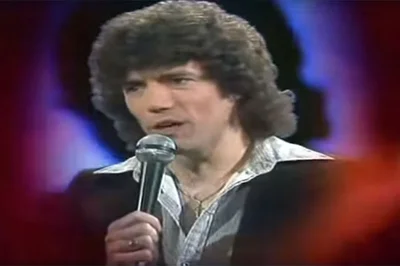
Seven years later, Keegan tried again: by this point, he was on top of the world, a multiple league-winning superstar tearing up Germany’s Bundesliga. He had also started sporting his signature Seventies look – that much-discussed “poodle perm”, a big, flappy mass of shoulder-length hair. It was immortalised on the cover of his 1979 single, “Head Over Heels in Love”. Listen to the track now, and you’ll hear a sort of garishly dated but not altogether meritless work of musical miscellanea, complete with swoopy string fills and a catchy hook. Written by Chris Norman and Pete Spencer of the Yorkshire band Smokie, “Head Over Heels” was something of a legitimate success for Keegan, peaking at No 31 in the UK singles chart, and rising all the way to No 10 in Germany.
But his status as emergent pop sensation was to prove short-lived: just one year later, when he moved from Hamburg to Southampton, he released “England”, a slower, anthemic track that serves as an ode to his home country. “To be home again in England / To be where I belong,” he sings. The song failed to chart – it’s probably no surprise that the Germans didn’t really go for it this time. But it does make you long for a world in which all footballers released bespoke music justifying their transfer decisions. (In an alternative universe somewhere, perhaps, Ashley Cole had a No 1 record with a cover of “Money, Money, Money” after his switch from Arsenal to Chelsea in 2006.)
Kevin Keegan in the video for ‘Head Over Heels in Love’ (Social media)
Keegan is far from the only footballer to have dabbled in the arts. Petr Cech, steady between the sticks, is an equally steady rock drummer; Steve Bruce wrote murder mystery novels; Frank Leboeuf became an actor; and Eric Cantona, of course, does whatever the hell he wants. But Keegan’s brief stint as a pop-charts hopeful endures as one of the quirkier footnotes to career that was anything but frivolous.
After “England”, Keegan seemed to abandon his pursuit of music stardom – though was a core part of the 1982 world cup anthem “This Time (We'll Get It Right)”, again written by Norman and Spencer. In the years since, he never really spoke about his crooning days. But his tiny back-catalogue is there online, for anyone to listen to – a reminder of what made Keegan one of the most surprising, and compelling, men in football.