The death of yet another woman following childbirth has deepened Rajasthan’s unexplained maternal health crisis. Early on July 20, a woman died at the Mahatma Gandhi Hospital in Jodhpur after battling severe post-delivery complications, taking the number of maternal deaths reported from government hospitals across the state since May to 20.
The deaths, spread across several districts, have displayed an alarming similarity: excessive bleeding after delivery, rapid deterioration, kidney failure and, in many cases, unsuccessful attempts to save patients through blood transfusions and dialysis.
The latest victim had delivered normally at a private hospital on June 24, but developed severe bleeding soon afterwards. She was shifted first to the Ummaid Hospital in Jodhpur and later to the Mahatma Gandhi Hospital, where she died despite intensive treatment. The case has heightened concern because it marks the first such death in Jodhpur district, indicating that the problem is no longer confined to a few identified hotspots.
The anxiety has been compounded by fresh complications reported from Ummaid Hospital. On July 18, five women who underwent caesarean sections over the previous two days had to be shifted to the intensive care unit after developing serious post-operative complications, prompting authorities to keep a close watch on their condition.
The crisis first came into focus in Kota, where five women died after childbirth under similar circumstances. Since then, Bhilwara has reported six deaths while Bikaner and Banswara have recorded four each. The pattern has raised disturbing questions because most of the fatalities occurred after caesarean deliveries or after patients developed severe post-partum complications.
The Rajasthan government, however, maintains that no single cause has emerged. Health minister Gajendra Singh Khimsar, who visited several affected hospitals, has said doctors have failed to establish a common medical thread linking the deaths. According to the government, many women in critical condition were either referred from other facilities to government medical colleges or were already categorised as high-risk pregnancies because of underlying medical complications.
That explanation has not entirely quelled concerns. Since the first deaths surfaced, the government has sought expert assistance from AIIMS New Delhi, AIIMS Jodhpur and senior specialists from Jaipur. Samples of medicines administered to affected patients were also sent for laboratory examination. While the findings have never been fully disclosed publicly, officials acknowledge that different inquiries have pointed to multiple factors, including suspected poor-quality medicines in some cases, infections and lapses in adherence to standard operating procedures inside labour rooms and operation theatres.
One senior official admitted that scrutiny of a medicine initially suspected in the early deaths lost momentum after its manufacturer was allegedly found to have powerful political connections, though no official conclusion has been announced.
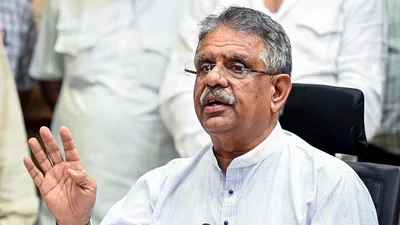
Recognising the gravity of the situation, chief secretary V. Srinivas has personally taken charge of monitoring the state’s response. Over the past few days, he has chaired multiple review meetings with medical college principals, district collectors, obstetricians and senior health officials to strengthen surveillance and improve maternal care systems.
“Our effort is to ensure strict adherence to standard operating protocols in labour rooms, operation theatres and post-operative care,” Srinivas told INDIA TODAY. He added that no fresh post-surgical complications had been reported over the previous two days, suggesting that the immediate situation was stabilising.
But even before hospitals, he says, the government wants to ensure a strong system in place to take care of pregnant women. So the government has simultaneously launched one of its largest maternal surveillance exercises. “Around 54,000 Accredited Social Health Activists (ASHAs), 17,000 Auxiliary Nurse Midwives (ANMs), doctors and medical college faculty have been mobilised to identify high-risk pregnancies across Rajasthan,” Srinivas added.
Analysis of medical records of nearly 100,000 pregnant women has found that roughly 15 per cent fall into the high-risk category, including women suffering from severe anaemia, hypertension and other pregnancy-related complications. These cases are now being monitored more closely to prevent emergencies before delivery.
The crisis comes against the backdrop of Rajasthan’s steady improvement in maternal mortality. According to official data, the state’s Maternal Mortality Ratio has declined from 113 to 87 deaths per 100,000 live births over the past five years, reflecting better institutional deliveries and expanded maternal health services. Yet the recent deaths underline how fragile those gains remain.
Public health experts have long argued that identifying high-risk pregnancies early, ensuring deliveries at adequately equipped institutions, maintaining infection-control protocols and transferring critically ill women without delay are essential to preventing avoidable maternal deaths.
For the Bhajan Lal Sharma government, the challenge now extends beyond finding the medical explanation behind the recent fatalities. Restoring public confidence in government maternity services may prove equally critical. Until the precise cause is established—and corrective measures demonstrably work—the series of unexplained post-delivery deaths will continue to cast a shadow over Rajasthan’s maternal healthcare system.
*Subscribe to India Today Magazine*
- Ends
Published By:
Shyam Balasubramanian
Published On:
Jul 21, 2026 18:39 IST