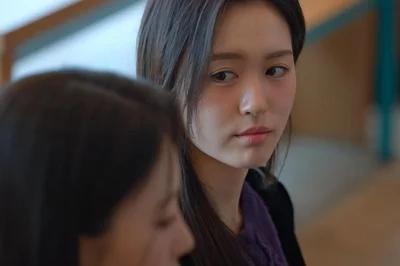
A scene from the second season of "Better Late Than Single" / Courtesy of Netflix
"Little change, plenty of charm," a producer said, adapting a Korean idiom to describe the strategy behind the second season of "Better Late Than Single," the Netflix dating show returning after a year.
Instead of relying on bigger twists, the series again focuses on personal growth that distinguished it from other dating shows.
"Better Late Than Single" is a dating series about people who have never dated but are looking for love. The program follows them through makeovers and their first attempts at dating. The first season, released in 2025, drew wide attention after it overtook the third season of "Squid Game" to reach No. 1 on Netflix’s Top 10 series chart in Korea.
The premise added a distinctive element to a familiar reality format built around the dating lives of everyday people. Dating shows had already saturated the market, but "Better Late Than Single" struck a chord by focusing on people with no experience to guide them. Their awkward reactions, unpredictable relationships and personal growth separated the series from dating shows built around more experienced participants.
The second season retains those strengths. It continues to find humor in the participants’ awkward behavior while following their efforts to grow more comfortable with themselves and one another. The panelists respond with empathy, while the participants’ choices give viewers plenty of opportunities to offer advice.
The makeover process remains part of the story, but the program also follows how people with little romantic experience develop feelings in an unfamiliar setting and gradually learn to express them. This close attention to their emotional development helps draw viewers into the relationships.
The returning celebrity panelists are singer-actor Seo In-guk, actor Kang Han-na, comedian Lee Eun-ji and musician Car the Garden. Their empathetic reactions and lively commentary add humor without overshadowing the participants. Producers retained the program’s core while refining the format to help participants express their feelings more naturally.
From left, Seo In-guk, Kang Han-na, Lee Eun-ji and Car the Garden, who returned as panelists for the second season of Netflix reality show "Better Late Than Single," pose during a press conference at Hotel Naru Seoul MGallery in Mapo District, Wednesday. Courtesy of Netflix
It also introduces activities designed to help participants connect. During one dinner date, a prop links two participants’ hands, easing an interaction that might otherwise feel awkward. The program also arranges unusual dates that allow participants to get to know one another comfortably.
Participants in conventional dating shows generally draw on previous experience as they develop relationships. For those on "Better Late Than Single," a first date, the first time telling someone how they feel and first moments of physical intimacy all involve unfamiliar territory. Producers use planned activities to ease that awkwardness, giving participants room to communicate more openly and develop relationships at their own pace.
That strategy stands out as Korea’s dating show market struggles to hold viewers’ interest. Channel A’s "Heart Signal 5," part of a franchise widely credited with helping launch Korea’s dating show boom, has posted ratings below 1 percent, according to Nielsen Korea. Earlier seasons regularly produced widely discussed cast members, but the current season has not generated the same level of buzz.
Other dating shows — SBS Plus and ENA’s "I Am Solo," KBS2’s "Noona, You Are a Woman to Me" and Netflix’s "The Love Lab" — are losing momentum. Familiar storylines and repeated efforts to add more drama have gradually worn down viewer interest. As more programs compete for attention, bigger twists can wear viewers out rather than draw them in.
The second season of "Better Late Than Single" takes the opposite approach. Rather than adding more drama, it sharpens the qualities that made the first season popular. The format remains familiar, but producers have refined the details and improved the overall production. In a market crowded with dating shows, provocative premises alone no longer guarantee viewer attention.
A scene from Netflix dating reality show "Better Late Than Single" Season 2 / Courtesy of Netflix
Sincere feelings, relationships that develop naturally and storytelling that presents those changes convincingly now carry more weight. That is the program’s advantage in a crowded market. "Better Late Than Single" does not try to overwhelm viewers with an ever-growing collection of twists. It concentrates on doing what it already did well — only with greater care. The creators bet that a familiar format can still feel fresh when the emotions inside it do not feel routine.
This article from the Hankook Ilbo, the sister publication of The Korea Times, is translated by a generative AI system and edited by The Korea Times.