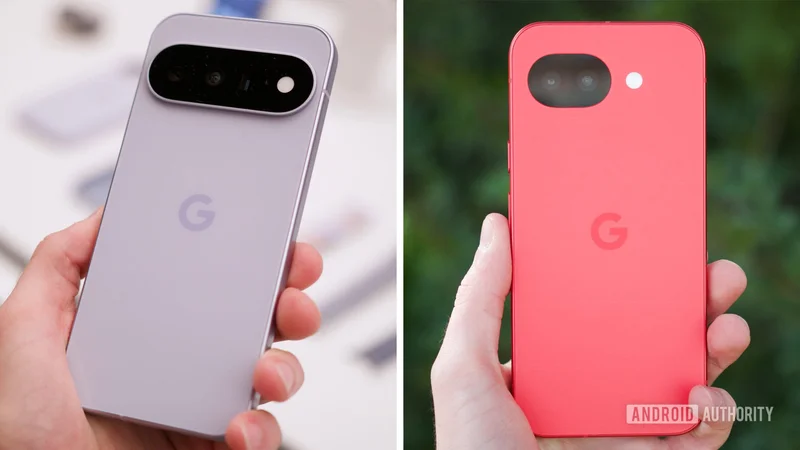
Pixel 11 or Pixel 10a? Here's why the Pixel 11 really is worth $400 more
Aug 15, 2026 — 5:30 AM ET
For years, Google’s A-series phones have been my default recommendation for anyone who wants a clean Android experience and a great camera without spending flagship money. The A-series distills much of what makes the full-blown Pixels great into an affordable package. However, with the launch of the Pixel 11, that gap has increased.
Look, the Pixel 10a is a solid phone for everyday use, but once you start pushing it beyond the basics, it’s inevitable that you’ll run into its limits. Be it the limited RAM, so-so zoom, or just the overall lower-tier hardware, those trade-offs become harder to ignore the longer you use the phone.
Rather than simply offering a faster processor or a handful of extra features, Google’s mid-tier flagship, the Pixel 11, focuses on several upgrades you’ll actually notice every day. If you’re debating between saving some money on the Pixel 10a or splurging on the Pixel 11, here are a few reasons why I’d choose the Pixel 11.
Would you spend more for the Pixel 11 over the Pixel 10a?
A camera system that’s far more versatile
The biggest difference between the Pixel 10a and Pixel 11 that you’ll immediately notice is the camera system. Like most budget phones, the Pixel 10a skips a dedicated telephoto camera and relies on digital zoom instead. That’s perfectly fine when you’re taking everyday photos, but the quality drops quickly once you start zooming in. Be it travel photos, concerts, or just your dog at the park, telephoto zoom gets used way more often than you realize, and digital zoom just can’t compare. Yes, even Google’s magical AI-powered Super Zoom is susceptible to hallucinating details, and it can’t overcome physics and give you tack-sharp images beyond a certain point.
Google's AI-powered zoom can't compete with an actual telephoto lens.
The Pixel 11 solves that with a dedicated 10.8MP 5x telephoto camera. Combined with Google’s image processing, it offers up to 30x Super Zoom while delivering much sharper photos at longer focal lengths. If you regularly find yourself zooming in, this alone is a compelling reason to step up to the premium smartphone. But that’s just one part of the camera story.
The main camera gets a significant upgrade, too. This year, the Pixel 11 gets a brand-new 48MP sensor, allowing it to capture brighter, cleaner photos in challenging lighting conditions. Low-light conditions, objects in motion, and even everyday photography should fare much better than the Pixel 10a.
Of course, it won’t be a Pixel phone without some new camera tricks. Google is pairing the upgraded hardware with several new and useful camera features. First up is Magic Capture, which lets you record a video while automatically saving the best HDR+ still frames. That’s a solid quality-of-life improvement for when you have decision paralysis between recording a video of a cherished moment or taking photos.
There’s also Camera Looks. Similar to the iPhone’s Photography Styles and the film recipes on phones from OPPO and vivo, this feature lets you preview different color profiles directly inside the viewfinder before taking a shot. It’s a small addition, but one that makes it easier to give your photos a more distinctive style without editing them afterward.
The Pixel 11 gives you more room to grow
With phones leaning further and further into on-device AI features, RAM has become an even more important part of the spec sheet. At the same time, the ongoing RAM shortages and price hikes mean that many brands are looking at cutting down the amount of RAM offered or flat-out implementing steep price hikes. It’s a tricky situation to say the least.
The Pixel 10a ships with 8GB of RAM. By and large, that’s sufficient. Rarely will you come across a force close when juggling Spotify, Google Maps, and, let’s say, the camera app. But it can happen, and when it does, it’s a serious annoyance. Nor is the amount of RAM enough if you want to seriously lean on offline LLMs.
The Pixel 11's extra RAM and storage give it more headroom over years of use.
The Pixel 11 ships with 12GB of RAM as standard, giving Android much more room to keep your apps open. It also gives the phone more headroom to keep a local LLM in memory, which I suspect will get increasingly more important as on-device agentic AI gets more commonplace.
Elsewhere, the Pixel 10a starts with 128GB of storage, which sounds reasonable until you begin downloading offline playlists, installing large games, and shooting lots of photos and videos. While it might not be something that bothers you over the first few months of usage, if you plan to keep the phone for any length of time, it’s a pitiful amount of storage. Google doubles the base storage on the Pixel 11 to 256GB, giving you much more breathing room for obvious reasons.
Of course, one of the largest upgrades comes to the processor. The Pixel 11, powered by the Tensor G6 processor, benefits from two generations of upgrades. Along with faster app launches and smoother browsing, it should bring noticeable improvements to on-device AI features like Live Translate and Google’s wide-ranging AI features. The Tensor G6 also includes Google’s Titan M3 security chip, adding another layer of protection alongside Android’s regular security updates.
Modern conveniences make a difference
As far as battery life and charging go, there isn’t a significant difference between the two devices. The Pixel 10a packs a marginally larger 5,100mAh battery compared to the 4,985mAh battery on the Pixel 11, but the Pixel 11 should be able to make up that deficit with its more efficient chipset. So far, so good.
The real difference comes down to convenience and, admittedly, premium features. The Pixel 10a supports 10W wireless charging, yes, but the Pixel 11 gives you much faster 25W Qi 2.2 wireless charging. Moreover, the latter includes magnets to enable compatibility with the Pixelsnap ecosystem of accessories, not to mention the broader array of MagSafe accessories on the market.
Faster wireless charging and a more premium build make the Pixel 11 feel like a proper flagship.
Keeping the bigger differences between the two phones aside, it’s also worth keeping in mind that the Pixel 10a and Pixel 11 target fairly different market segments. The difference in cost stretches not just to the internals, but also to the materials used.
Where the Pixel 10a uses Gorilla Glass 7i on the front and plastic on the back, the Pixel 11 upgrades that to Gorilla Glass Victus 2, both on the front and back. That’s a pretty substantial difference in how the phone feels in the hand, not to mention durability.
And while you might say that the Pixel 10a’s flat design is more conducive to everyday use, the Pixel 11 gets an upgrade on that front, too. This time around, the camera bar is around 40% thinner, with an edge-to-edge glass finish that should make it feel just a bit more compact.
For a phone that’s meant to be kept for years, these differences make a big difference.
The Pixel 10a is good, but the Pixel 11 is worth the extra cash
The Pixel 10a remains a good option if you’re shopping on a tighter budget. It still delivers Google’s clean software experience and excellent computational photography at a lower price. But if you can stretch your budget, the Pixel 11 offers meaningful improvements in almost every area.
Between the better cameras, more RAM and storage, faster charging, a brighter display, and a more premium build, all these upgrades add up to a noticeably better everyday experience and a device that should hold up better over the years.