We live in a culture that devours true crime documentaries with a hunger that never goes away — but if you ask me, we're doing it all wrong.
In fact, I'd go as far as to say that we consume true crime irresponsibly. In part thanks to how streaming services such as Netflix have chosen to produce them, we often see the unearthed trauma of strangers as entertainment rather than education.
Just look at how shows such as Trust Me: The False Prophet, Devil in the Family: The Fall of Ruby Franke and Unknown Number: The High School Catfish were quickly commodified for internet and meme culture soon after their release. Revisiting more severe crimes doesn't seem to do much for those involved, either. Only Making A Murderer has so far been able to change an "unjust" active case.
In my eyes, we'd all benefit so much more if education became the primary focus of true crime — and, happily, BBC iPlayer has done exactly that. Now streaming for free on the service is season 3 of Murder 24/7, which should be the gold standard for any true crime docuseries that comes after.
Murder 24/7 proves that investigations are frustrating, time-consuming, and far from glamorous
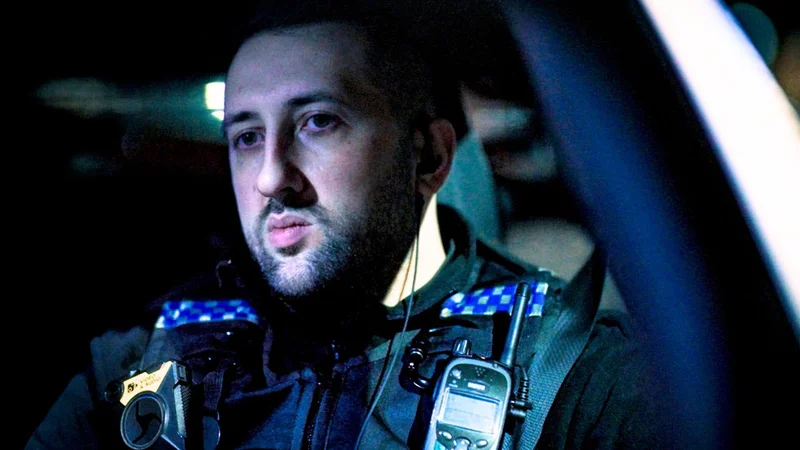
But why is it so good? In a nutshell, we're following different regional UK detectives and police forces to work through a variety of murder cases in real-time.
In stark contrast to what we usually see, there are no sit-down VT interviews with the people involved, no narration, and very little in the way of additional comments. Everything we see is through bodycam footage, interview archives and camera crews on site as events unfold.
There's a beautiful British undertone to everything that happens — where else can you see murder suspects being handled as politely as if they were at a tea party? — but Murder 24/7 finally sheds light on a gruelling reality that's a world away from the high-gloss sheen of US production.
Sign up for breaking news, reviews, opinion, top tech deals, and more.
From door-to-door enquiries and crime scene sweeps to information processing and sentencing, we're taken every step of the way through an investigation. Instead of something that resembles a bingeable crime drama, the reality is far more painstaking, time-consuming and frustrating than we've been conditioned to believe.
Suspects don't cooperate, hours are poured into reviewing evidence, team briefings and typing up endless word documents, which often leads to a less-than satisfying punishment for whoever is convicted. This format allows you to ask more questions of not just the system, but yourself, with each case challenging our ability to think critically.
Murder 24/7 isn't just a refreshing format, but it's a timely one too. For the last 30 minutes of the season 3 finale, we're taken through a variety of cases that document the explosion of violence against women. In one such instance, Lee Sargent, who is convicted to 18 years and 10 months in prison for attempted murder, bludgeoned his partner in their bedroom with a meat cleaver.
As he's taken away by an ambulance after a 999 call, we hear neighbours shouting out of the window that they've had to put up with "years" of assaults against her. Sure enough, the internal police system pulls up a list of repeated offences that range in volatility, and he is far from the only case.
This is exactly the sort of things that true crime documentaries should be doing: capitalizing on a social issue that needs more awareness and holding a mirror up to the horrifying reality.
We really can find the perfect balance between binge-worthy content and something more substantial than re-telling traumatic events that should probably be left in the past... it's this easy.
Jasmine is a Streaming Staff Writer for TechRadar, previously writing for outlets including Radio Times, Yahoo! and Stylist. She specialises in comfort TV shows and movies, ranging from Hallmark's latest tearjerker to Netflix's Virgin River. She's also the person who wrote an obituary for George Cooper Sr. during Young Sheldon Season 7 and still can't watch the funeral episode.