Your support helps us to tell the story
From reproductive rights to climate change to Big Tech, The Independent is on the ground when the story is developing. Whether it's investigating the financials of Elon Musk's pro-Trump PAC or producing our latest documentary, 'The A Word', which shines a light on the American women fighting for reproductive rights, we know how important it is to parse out the facts from the messaging.
At such a critical moment in US history, we need reporters on the ground. Your donation allows us to keep sending journalists to speak to both sides of the story.
The Independent is trusted by Americans across the entire political spectrum. And unlike many other quality news outlets, we choose not to lock Americans out of our reporting and analysis with paywalls. We believe quality journalism should be available to everyone, paid for by those who can afford it.
Your support makes all the difference.
Read more
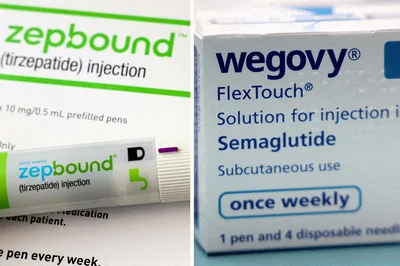
Danish drugmaker Novo Nordisk filed a lawsuit against U.S. competitor Eli Lilly in a New Jersey federal court on Tuesday, alleging that the company engaged in false advertising regarding the effectiveness of its weight-loss treatments.
The suit accuses Indianapolis-based Eli Lilly of violating federal and state laws through nationwide promotional campaigns for its obesity drug Zepbound and diabetes drug Mounjaro.
Novo Nordisk, the maker of competing weight-loss injection Wegovy and diabetes drug Ozempic, is asking the court to order Eli Lilly to stop the campaign, run corrective advertisements and pay damages derived from any profits tied to the marketing, as reported by Reuters.
“The ads are maliciously and deceptively false because Lilly knowingly cites outdated clinical trials that compare the highest doses of the Lilly medicines to lower doses of Novo Nordisk’s medicines,” according to the complaint.
Eli Lilly defended the claims, stating that its promotions were based on results from its SURMOUNT-5 clinical trial completed in 2024. A spokesperson for Eli Lilly told Reuters that the company intended to defend against the lawsuit vigorously and asserted that Novo Nordisk was seeking to block the public communication of trial results rather than compete on product merits.
Danish drugmaker Novo Nordisk is asking a federal judge to halt U.S. competitor Eli Lilly’s promotional campaign, force corrective ads, and surrender any profits earned from the misleading marketing claims (PA)
The dispute focuses on dosage comparisons used in marketing materials. Novo Nordisk General Counsel John Kuckelman told the publication that Eli Lilly’s ads displayed average weight loss of about 50 pounds for Zepbound compared to 33 pounds for Wegovy.
Kuckelman said those figures reflected comparisons between maximum doses of Eli Lilly’s drugs and lower, older doses of Wegovy, while ignoring a 7.2-milligram dose approved by the FDA in March. Separate late-stage trials of the highest approved doses showed average weight loss of roughly 48 pounds for Zepbound and 47 pounds for Wegovy, according to Kuckelman.
Novo Nordisk issued a cease-and-desist letter in April following the approval of the higher Wegovy dose, Kuckelman said, adding that Eli Lilly subsequently inserted an inadequate disclaimer while continuing a campaign that has logged over 700 million views since late April.
Legal experts say that while pharmaceutical companies routinely sue over patents, false advertising lawsuits are far less common.
Alexandra Roberts, a professor at Northeastern University's School of Law, told Reuters that potential damages could be significant given the market size, though any financial penalty may be limited by how recently the higher Wegovy dosage entered the market.
The lawsuit comes as both drugmakers fight for control of a U.S. weight-loss market that analysts estimate could top $100 billion by 2030. Following Tuesday’s filing, Novo Nordisk shares dropped 2 percent in Copenhagen, while Eli Lilly rose slightly by 0.5 percent.