Argentina Opens 50-Year Tender for Belgrano Cargas Freight Railway
Argentina · Economy
Bids close in November, and a clause shutting out state-controlled foreign firms has already been labelled anti-China by the local press.
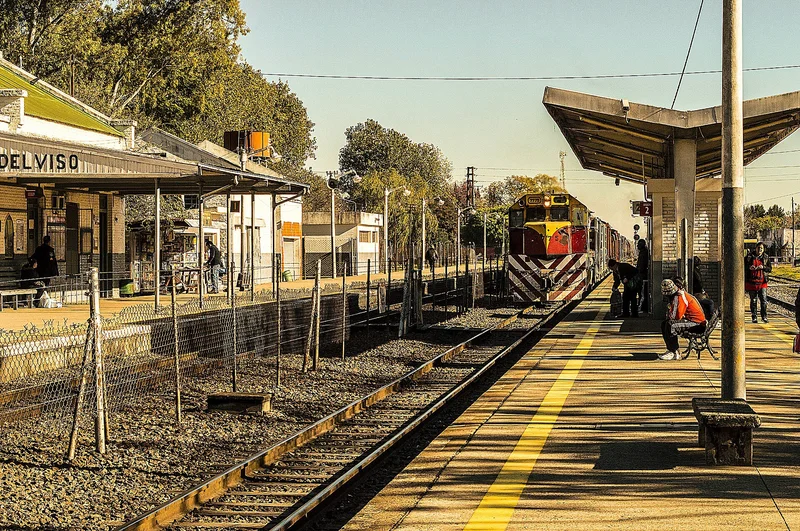
Argentina has opened a 50-year tender for the Belgrano Cargas freight railway network. Economy Minister Luis Caputo signed the call, published as Resolution 1350/2026 in the Official Gazette.
Bids are due in November, and the winners will run the tracks rather than the trains.
What Argentina Just Put Up for Grabs
The government has invited national and international bidders to take over three freight lines for half a century. They are the General Belgrano, the General San Martin and the General Urquiza.
Together they cover 7,594 kilometres of working track spread across 16 provinces. Infobae reports that the network also links to five international border crossings and the main export ports.
This is not a single sale. Instead, the state is running three separate contests, one for each line, so that no operator sweeps the whole map.
Inside the Belgrano Cargas Tender Terms
The Belgrano Cargas concessions cover the tracks and the land beside them, not the locomotives. Rolling stock is being sold off separately, and the workshops are tendered on their own.
Questions on the documents can be filed until October 28, 2026, at 10:00. Offers must land by November 11 at 09:59, and they are opened the same morning on the CONTRAT.
AR platform. Bidding is not a race to pay the state the most money.
Instead, offers are scored on a formula that rewards a low track toll and a big investment commitment.
The Clause Everyone Is Calling Anti-China
This is the part worth reading slowly. The rules bar state-owned companies, and firms controlled directly or indirectly by foreign governments, from taking part.
Infobae describes the text as limiting the involvement of companies controlled directly or indirectly by foreign states. Diario Popular reports that national and provincial state firms are excluded too.
So it is not a ban on Chinese companies as such. The wording is about state ownership and control, and no official text seen by reporters names China at all.
The practical effect is still blunt. China’s big rail groups are state-owned, so they are shut out, which is why the Argentine press calls it a clausula anti-China.
La Nacion notes the same formula was used in the Parana waterway tender and in the AMBA I power auction. That version barred legal entities under direct or indirect control of sovereign states.
As of the tender launch, no public reaction from Beijing or its embassy in Buenos Aires had been reported.
Open Access Is the Real Change
For decades the network worked as a closed shop. Under the new model, the concession holder maintains the line and must let any qualified freight operator run on it.
Those operators pay a toll, and the toll is capped inside a band set by the state. As a result, the concession holder earns from tolls and from developing land beside the tracks.
There is no state subsidy and no fee paid back to the treasury. That flips the old arrangement, in which the railway leaned on public money year after year.
The RIGI Tax Carrot
Argentina’s RIGI regime offers tax, customs and currency guarantees to very large projects. Caputo said bidders can tap those benefits if they invest at least US$200 million in renewing track.
That threshold is the RIGI floor rather than a minimum bid. Still, it tells bidders exactly how much they need to spend before the fiscal sweeteners kick in.
Official estimates put the mandatory works programme at roughly US$800 million. La Nacion reported the total investment tied to the 50-year concession at about US$1 billion.
Why Lithium and Copper Matter Here
The Belgrano line runs north into Salta, Jujuy and Catamarca, the heart of Argentina’s lithium country. It also threads through provinces where new copper projects are being built.
Moving mining output by truck over those distances is slow and expensive. Rail is the cheaper option, so the government treats the corridor as export plumbing rather than nostalgia.
Panorama Minero reports that officials are courting mining firms as partners to guarantee cargo volumes. Without those commitments, they warn, the concession model risks stalling halfway.
Who Might Actually Bid
Five grain giants have already shown their hand. La Nacion reported that Bunge, Cargill, ACA, AGD and Louis Dreyfus prepared a joint proposal through the Rosario Board of Trade.
Grupo Mexico Transportes is the most-cited foreign name, and reports say it has lined up an agreement with Wabtec. Rio Tinto and the local Roggio group have also been mentioned as interested.
None of this is confirmed by tender filings yet. Because the documents only just went out, the field will not be clear until offers are opened in November.
A Railway in Poor Shape
The company being carved up is not a healthy business. Reporting in 2025 put its payroll above 4,400 people and its 2022 traffic at 8.4 million tonnes.
That year it needed about US$112 million in state support. Since then, volumes have sagged, and one 2025 account described the operation as moving closer to 3 million tonnes a year.
The 2026 budget pencils in 7.63 million tonnes across the three lines. Even so, slow speeds and worn track keep the network far below what the export corridors need.
The Paper Trail Behind the Deal
The legal groundwork was laid in February 2025 by Decree 67/2025, which authorised full privatisation. It split the company into rolling stock, track and workshops.
Decree 282/2026 and Decree 718/2026 then reworked the money side. Proceeds from selling locomotives and wagons now flow into a trust earmarked only for works on the tracks.
Resolution 1350/2026 is the piece that finally calls the auction. Caputo announced it before publication, ending months of delays since the original plan slipped from 2025.
What Happens Next
The next milestone is October 28, when the question period closes. After that, bidders have two weeks to finalise numbers before the November opening.
Awarding the contracts and handing over the lines will take longer. Officials have talked about private operation before the end of 2026, although that timetable has already slipped once.
For shippers, the test is simple. Freight rates and reliability will show whether a 50-year concession does what decades of state ownership did not.
Frequently Asked Questions
What exactly is being privatised?
The 50-year concessions cover track and adjacent land on the Belgrano, San Martin and Urquiza freight lines. Locomotives, wagons and workshops are handled separately.
Does the tender ban Chinese companies?
No official text names China. The rules bar state-owned firms and companies controlled directly or indirectly by foreign governments, which in practice excludes China’s state rail groups.
When do bids close?
Questions on the documents close on October 28, 2026. Offers are due by 09:59 on November 11 and are opened that morning via CONTRAT.
How does the RIGI regime fit in?
Winners can enrol their track investment in the RIGI incentive scheme for tax and customs benefits. The regime requires a minimum of US$200 million.
This article was produced by The Rio Times’ automated newsroom system. How we use AI · Report an error