- See more This is Money on Google - save us as a Preferred Source
My wife and I are planning to put our home on the market next month and are hoping to move in time for Christmas all being well.
We have a second child on the way and urgently need more space. We've seen a couple of larger houses on the market that we'd be interested in, but obviously no estate agents will take us seriously until we have an offer on our home first.
We can see quite a few other similar-sized houses to our own in our neighbourhood that have not sold and have been sitting on the market for a number of months, which is a little worrying.
One of our neighbours went on the market in January and just came off last month saying they were barely getting any viewings despite cutting the asking price twice.
They said they'd try again next year in the hope that the market picks up.
We're not keen on waiting and realise that while we may not get as much as we might have hoped for on ours, we might be able to get a good deal on the one we end up buying.
Do you have any advice on how we might be able to secure a buyer quickly in the current market, short of setting a really low asking price?
Buyer's market: Our reader is wondering how they can sell their home in time for Christmas
Ed Magnus of This is Money replies: Selling a home is a challenge at the best of times – but in the current market it can feel like mission impossible.
One London-based developer recently described the property market as the worst they had seen in their 52-year career, while an experienced Birmingham estate agent told me it was the worst sales market they had ever known.
While experiences of selling will differ across the country depending on the exact location and type of property being sold, by-and-large it's a buyer's market right now.
Homeowners up and down the country are beginning to accept their home may not be worth as much as it was a few years ago. In London, some are having to accept their home is worth less than a decade ago.
The average time it takes for a property to go under offer is at its highest since 2012, according to estate agent Hamptons.
The priority is no longer about securing the highest possible sales price – it's about maximising viewings and offers – and just getting the property sold. That means standing out, either on looks or on price – or ideally both.
You are quite right to take the view that while you might not get a great price on your sale, you could get a bargain price on the house you end up buying.
The argument is that falling prices tend to help people who are looking to move to a bigger, more expensive house.
If, for example, your £500,000 home is now worth 10 per cent less at £450,000, then there is a good chance that the £1million home up the road could now be worth £900,000.
That could mean you lose £50,000 on your sale, but save £100,000 on your purchase.
For expert advice we spoke to Phil Spencer, co-presenter of the Channel 4 show Location, Location, Location and founder of the property advice website Move iQ, Nicholas Austin, branch manager of estate agency RiverHomes in south-west London and Simon Stone of Barker Stone estate agents in Berkshire.
Price your home to sell
Phil Spencer says: Selling in a buyer's market like this is tough. If you've decided to sell, get ready to face a lot of competition, price your home competitively and accept that you may have work to do to make it more attractive to potential buyers.
The first step is to acknowledge that your home may not be worth as much as you hope. To have any chance of selling, the price has got to be right.
Don't let your emotional connection to your home cloud your judgment when it comes to setting the price, and try to put yourself in the mind of a prospective buyer as they view it on a property portal and compare it to other places nearby.
Listing your home at too high a price initially can torpedo your selling strategy. Start too high and you may struggle to get viewings, let alone offers.
And if your house sits unsold for months, this can lead prospective buyers to assume there's something wrong with it – forcing you to reduce the price.
So being overly ambitious at the start can cause delays and deliver a lower price in the end.
Human nature is to regard your home as better than the comparable places for sale nearby; and to then ask for a slightly higher price.
But doing the opposite can sometimes be best; listing your home at slightly less than your competitors can make it really stand out and yield the viewings that will get you on the road to selling.
Nicholas Austin adds: The political strategist James Carville famously said, 'It's the economy, stupid.' Given the British economy right now, you can bake all the bread you like but if your house isn't priced to sell, it's just going to sit there.
Sure, you can de-clutter, put out fresh flowers and give your front door a new lick of paint but it'll all be for naught if your property is overpriced.
It's also worth bearing in mind that anyone with a phone or computer can go online and find out exactly how much you paid for it and compare the current pictures with the ones on the property portals when you bought it.
If you've done nothing to it and it is just the same as when you bought it but you're asking 20 per cent more, you don't have to be Phil and Kirstie to figure out that the property isn't worth the asking price.
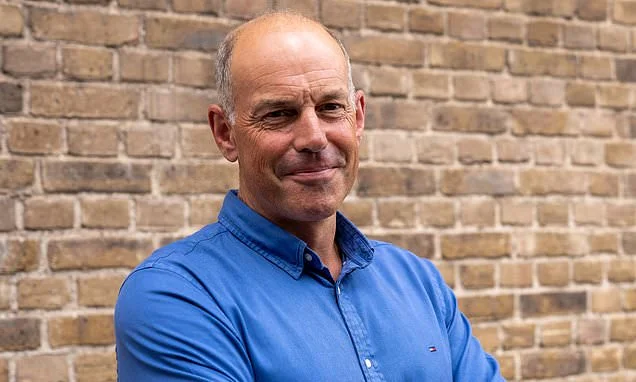
Phil Spencer co-presenter of the Channel 4 show, Location, Location, Location and founder of the property advice website Move iQ
Choose your estate agent carefully
Phil Spencer says: Another important thing to remember is that not all estate agents are created equal.
Picking the right estate agent can mean the difference between selling your home quickly and months of anxious waiting as it sits on the shelf.
Don't judge agents solely on how much commission they charge, or what valuation they give for your home.
Picking the one who gives you the highest valuation might even be a risk in the current market; focus instead on how tenacious they will be to get a sale and how their valuation compares to those of similar properties nearby.
Agents who are proactive and can demonstrate clearly all the steps they'll take to sell your home are the most likely to provide a good service and get you the best price.
It also helps if they're part of a professional organisation like Propertymark, as this is a sign they have suitable qualifications and provide a higher standard of service.
Make sure your home doesn't smell for viewings
Don't let your home smell like a wet dog, says Nicholas Austin, branch manager of estate agency RiverHomes in South West London
Nicholas Austin says: Having just done a viewing, the top tip I can give is get a room diffuser and do not go for a number two, ten minutes before the estate agent arrives.
In general, the number of properties over the years that I have been into that stink, I have lost count.
Don't be that person who does not empty their bin having cooked a prawn stir-fry two days before or that person with a house smelling of cat litter trays and wet dogs.
Avoid all things that contribute to a bad smell – particularly if you are selling a flat that is usually a very small area in which that smell is contained.
De-clutter and clean
Phil Spencer says: When preparing your home for sale, clear the clutter and clean like your life depends on it.
Remove any knick-knacks, photographs and other personal items that make the home look cluttered and lived in.
When potential buyers view your home, they want to imagine themselves living there, and it's hard to do that if the property looks a little too lived in.
That's not to say you need to depersonalise, but removing clutter and making everywhere tidy will get every viewing off to the best possible start.
Make sure you deep clean your home, so it looks and feels fresh. Most buyers decide whether or not to make an offer after only spending around ten minutes in the property.
You need to make that time count, and ensuring your home is sparkling clean is the first step to impressing potential buyers.
Consider renovating
Nicholas Austin says: Right now, no one wants to do any building work. If you have any unfinished projects around the house, no one will want to take them on.
Builders are now incredibly hard to come by and the cost of building materials has gone up. Get those works done before putting your property on the market.
Improve your home's energy efficiency rating
Simon Stone says: Things that are relatively recent but quite topical for most properties is upgrading the Energy Performance Certificate rating by taking the relevant measures.
It was never a factor before inflationary pressure on energy prices, and now it is becoming a hotter topic for potential buyers.
If sellers can achieve the relatively low cost improvements to bump up a band then that helps.
Offer your home chain free
Simon Stone, founder of Barker Stone estate agents in Berkshire
By highlighting your home is chain-free, it means your property isn't dependent on you finding somewhere else to live before it can be sold.
Chain-free sales typically have less chance of falling through or being held up – and many buyers know this.
Most property transactions are often linked to a chain of other buyers and sellers. All are connected and if one sale collapses or delays, the others are affected.
Simon Stone says: It's a known issue for buyers and they will target no chain properties.
Sellers who have made arrangements to move out can leverage that to make themselves more attractive than their chain-bound neighbours.
Also, be contract ready by instructing a solicitor and completing all protocol forms, digging out all the old paperwork and telling the agent and buyers that this has been done to expedite the conveyancing.
Include the furniture
Simon Stone says: This is more relevant in the flat and first-time buyer market, but it is amazing how a young buyer can be swayed by this due to the cash outlay if they are limited on their budget.