Branded Content
The hidden victims of drug abuse: The ripple effect on families and friends
Singapore’s Drug Victims Remembrance Day, an initiative by the Inter-Ministry Committee on Drug Prevention for Youths, honours those who fight their addiction and the people who stand by them on the path to recovery
Hidayah’s family never knew she was abusing drugs. But they could see a change in the way she carried herself, the shift in her attitude and the person she was becoming.
Driven by pressures at home and school, she had turned to drugs as a coping mechanism. “Taking drugs is just a temporary escape from reality. But when you run out of it, you come back to reality, and it’s 10 times worse than before,” the 18-year-old recalls.
When her parents noticed the behavioural shifts, they turned her in to the police – a choice that ultimately led to counselling and her recovery. Now drug-free, she was among the members of the public who visited The Library of Stories, Unfinished, a three-day exhibition at Suntec City organised by the Central Narcotics Bureau (CNB).
Watch how the community came together at Drug Victims Remembrance Day 2026:
For Hidayah, the exhibition’s message about the wider impact of drug abuse resonated with her own experience.
“Our family members might not know that we’re abusing drugs, but they notice the differences in our attitude and behaviour,” says the former drug abuser.
Her experience reflects the message behind Singapore’s third Drug Victims Remembrance Day: that drug abuse rarely affects only the person taking the drugs.
Held every third Friday of May, the annual observance on May 15 this year centres on a simple message: Drug abuse is not victimless. The three-day exhibition at Suntec City brought this to life by inviting visitors not just to learn about drug abuse, but to experience its impact through the lives of those left behind.
“When we designed the campaign’s exhibition, it had to truthfully show the gravity of drug abuse, the depth of consequence and the ripple effect it has beyond the abuser,” says Kaye Chow, CNB’s deputy director of Partnership and Outreach, DrugFreeSG Office.
Stepping into someone else’s story
At the heart of the exhibition was Ryan, a fictional 26-year-old whose story was inspired by real accounts of people affected by drug abuse. Visitors first met Ryan as a young man with dreams, close relationships and a passion for team sports before stepping into immersive booths where live actors portrayed the family and friends he left behind.
As visitors pieced together Ryan’s story through conversations and interactive elements in each booth, they witnessed how drug abuse reshaped not only his life, but also the lives of those closest to him.
For 23-year-old product executive Ellasandra Harfan, the experience of visiting the exhibition made the issue feel deeply personal.
“I was really surprised by how the actors were able to evoke emotions, to really touch your heart and make you feel like you’re a part of their journey,” she says.
A pop-up library complemented the exhibition, featuring biographies, news reports and personal accounts documenting how drug abuse affects individuals, families and society.
Megan Anne Kong, an intern who helped curate the collection, says the team wanted visitors to confront the emotional realities of addiction.
“We didn’t want to shy away from the raw emotion of it,” she says. “The victim accounts reinforce how addiction extends far beyond the individual, often leaving families and communities overwhelmed and in need of help.”
Singapore’s relatively well-controlled drug situation means many people may never encounter the effects of drug abuse first-hand. While that benefits society, Chow notes, it also makes it important to help the public understand the impact of drug abuse – both on the individuals victimised by drugs and the people around them.
“Though victims suffer tangible loss and deep emotional pain, drug abuse might still feel like a distant subject for many people,” she says. “Thematic variation and storytelling provide relatable context and connection with the issue of drugs.”
A community that shows up
Beyond the exhibition, this year’s Drug Victims Remembrance Day placed greater emphasis on engaging the wider community.
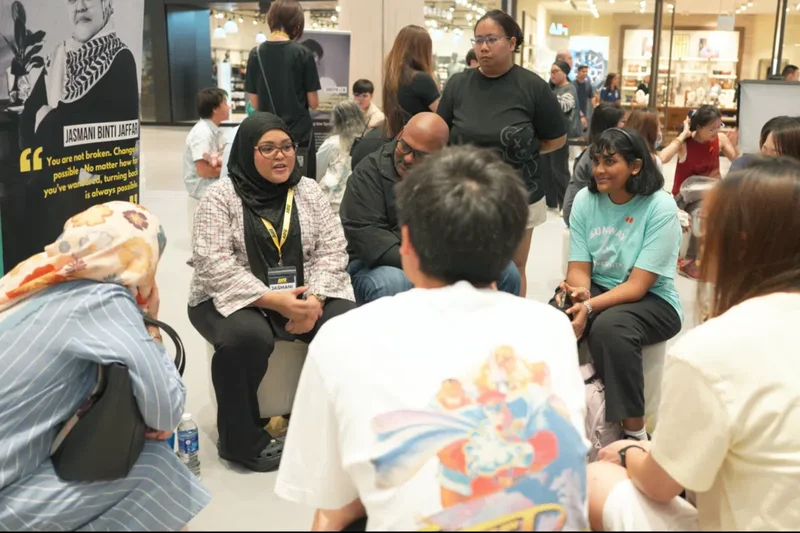
Community groups including Architects of Life, A Voice To Be Heard and Prison Fellowship Singapore organised dialogue sessions and storytelling programmes where former drug abusers and their families shared their experiences with members of the public.
“Often, we inadvertently overlook the quiet but vital work our community performs to re-establish the lives of victims,” says Chow. “Through direct engagement, we have the opportunity to recognise and honour the ones supporting the recovery of victims.”
Lydia, 47, who has been drug-free since 2012, is part of the Desistor Network, an initiative by the Singapore Prison Service and community partners that supports ex-offenders in leading crime-free lives. Having stopped abusing drugs after becoming a mother, she said the programmes helped shift how people viewed addiction.
“Instead of condemning and just saying, ‘Oh, you’re a drug addict’, it helped them see the reasons why someone might have taken drugs and why they ended up in that situation,” she says.
Some programmes also focused on prevention, and equipping parents, educators and youth workers with resources to start conversations about drugs with young people.
For visitor Lawrence Lim, the programmes prompted him to think more intentionally about discussing the issue with his 21-year-old daughter.
“It’s the parents’ role to spend time and effort during their children’s growing-up years, so that they will come to you,” he says.
The emphasis on prevention comes as new drug abusers continue to skew younger.
Latest statistics showed that more than half of new drug abusers arrested in Singapore in 2025 were below the age of 30, while the number of new abusers below 20 years old increased by 22 per cent from the previous year.
Looking beyond the exhibition
While the flagship exhibition at Suntec City lasted three days, CNB extended its outreach across Singapore until June 27.
Pop-up installations were rolled out at heartland locations like Tampines Hub, The Star Vista and Waterway Point, while institutes of higher learning and schools displayed information panels to encourage student reflections on the wider harms of addiction.
For National University of Singapore student Raynah Lim, 23, visiting the flagship exhibition ultimately changed the way she thought about the people around her.
“It was quite interesting to see that beneath the surface, there are a lot of things that can run deeper than meets the eye,” she says.
“It reminded me to pay closer attention to the people around us.”
That is ultimately what Drug Victims Remembrance Day hopes to encourage – not only awareness of the harm of drugs, but greater understanding of the families, friends and communities whose lives are impacted alongside the person caught in addiction.
Looking ahead, CNB hopes to involve more community partners to keep Drug Victims Remembrance Day organic, relatable and impactful.
“Support for victims and advocacy of harm prevention must always sit at the heart of why we gather every third Friday of May,” says Chow.