Warnings to take scabies seriously
It is time to stop treating scabies as a minor skin condition and recognise it can lead to serious conditions like rheumatic fever and heart disease, warn experts.
A group of medical professionals want the government to increase funding for screening, diagnosis and treatment of the condition.
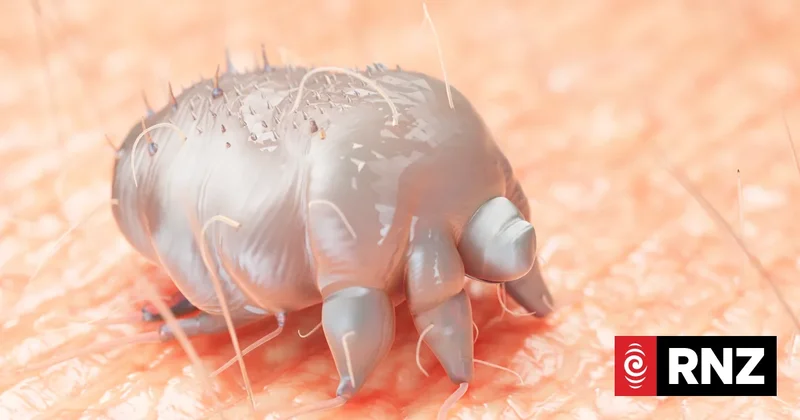
Highly infectious scabies is caused by a parasitic mite that burrows into human skin to lay its eggs.
Symptoms can include intense itching - that worsens at night - and a pimple-like or bumpy rash; and thin, raised, wavy burrows under the skin.
A Marlborough woman - who RNZ has agreed not to identify - said it had made life unbearable for her daughters.
"So they're just not sleeping at night. They wake up multiple times in the night, they cry, they think that the insects are in their room. My older daughter is just beside herself, she thinks the things are creeping in a biting her. Their skin's a mess."
This Whanganui mum, who had three boys, felt powerless.
"I'm frustrated, some days really overwhelmed and guilty that I can't really do anything for my boys especially when a couple of them are school age and they're a bit self-conscious now about wearing shorts or t-shirts or going swimming at school. It's frustrating."
She said getting a diagnosis was difficult in the North Island town which had been at the heart of an ongoing outbreak.
"Sometimes they say scabies, sometimes impetigo, sometimes it's hives, sometimes it's 'oh, that's really strange, we don't actually know'."
Dr Simon Thornley is a senior lecturer of epidemiology at Auckland University.
His research on scabies' prevalence in South Auckland found that about 50 percent of children in early childcare centres had clinical signs of the disease.
"You're looking at the relationship with scabies and rheumatic fever, scabies and skin infections, scabies and kidney disease. We've found an extraordinary strong link between having records of a diagnosis of scabies and coming into hospital with rheumatic heart disease."
Dr Thornley is one of a number of medical professionals who have penned an open letter calling for screening for scabies at at-risk early childhood centres and schools.
They also want administrative barriers to prescribing Ivermectin tablets removed and better funding for follow up care.
Dr Aidan Cabezas-Hayes has experience treating patients with scabies in South Auckland and was a signatory to the open letter.
"You just used to see it all the time and people would come in whole families affected and they had been trying to get rid of the infection for some time."
He said cost was a barrier to care.
"I think they find it very hard, very frustrating, stigmatising and it is obviously difficult to get into see a GP and a lot of people are struggling with the cost of living, and going to pay however much it is for to see an urgent care doctor is expensive."
Cabezas-Hayes said in some Pacific countries with a very high prevalence of scabies mass drug administration was used where everyone was treated.
"That could be a targeted option, but it's got to come from the communities that are affected, so that we're not reinforcing stigma."
National Public Health Service chief public health clinical officer, Maria Poynter, said scabies was not a notifiable disease, so Health NZ didn't have national case numbers, but it recognised it was a concern in some places.
"We are aware of emerging research on scabies and potential links with more serious conditions, including rheumatic fever and rheumatic heart disease. We will continue to monitor the evidence as it develops."
She said Health NZ's focus was on practical action, improving access to treatment and advice, as well as supporting consistent household treatment.
In the meantime, the Marlborough mother was at her wit's end.
"We've literally had all the medication we could possibly get in New Zealand and we've followed all the infectious disease procedures and we just can't get rid of it. They're just so uncomfortable."
Poynter said Health NZ was working with Pharmac to make permethrin creams more readily available through community pharmacies at a lower cost, to reduce the barriers to treating scabies.