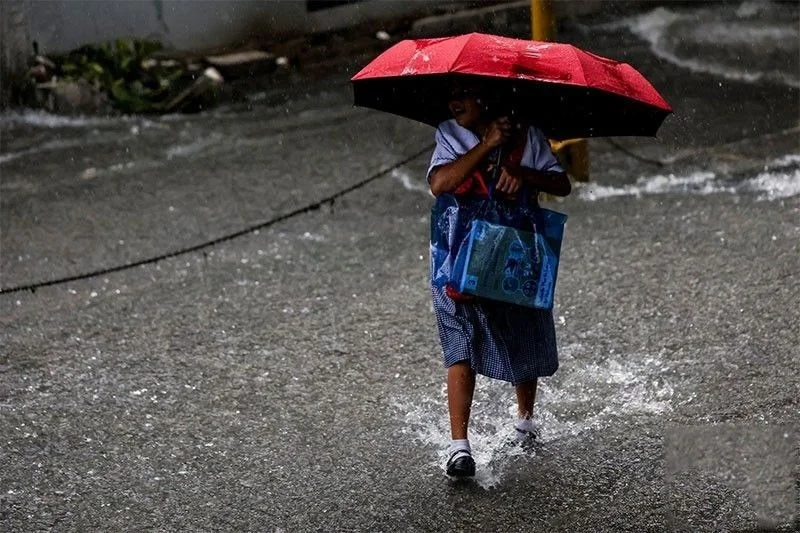
EDCOM 2 pushes for granular class suspensions
MANILA, Philippines — The Second Congressional Commission on Education (EDCOM 2) is pushing for localized and science-based decisions on class suspensions, saying repeated disruptions continue to take away valuable learning time from students.
EDCOM 2 has asked the Office of the President to amend Executive Order 66, s. 2012, which currently governs the suspension and resumption of classes during typhoons, floods and other calamities.
It noted that based on the latest analysis of DepEd data, schools lost an average of 15 days each school year due to calamity-related class suspensions in SY 2024-2025 and SY 2025-2026.
According to EDCOM 2, Negros Occidental was the hardest-hit single division, losing 71 school days due to the months-long Kanlaon Volcano eruption, followed by Canlaon City at 61 days.
In Metro Manila, EDCOM 2 said 16 divisions lost 15 days on average, driven almost entirely by monsoon and typhoons.
“Every day of disruption has a learning cost. When class suspensions accumulate, the lost learning cannot simply be made up through additional hours or Saturday classes. We need a system that more accurately responds to the conditions on the ground, while keeping the safety of students as our primary consideration,” EDCOM 2 executive director Karol Mark Yee said.
Opposing the one-size-fits-all suspensions, EDCOM 2 said the same hazard does not affect every school or community in the same way.
It said the amendment should establish a system for class suspensions, including automatic suspensions, when nationally prescribed hazard thresholds are reached; localized suspensions by local chief executives based on local risk assessments, scientific evidence and consultations with schools and school-level suspensions based on conditions at the specific school.
According to EDCOM 2, the framework will also allow classes to resume at the school level once conditions are assessed to be safe.
At the same time, EDCOM 2 said the Department of Education (DepEd) should also ensure learning continuity measures, citing its report where only 37 percent of teachers have laptops and just 17 percent of students have the gadgets needed for online learning, making a default shift to online classes unrealistic for many schools.
“Schools need to be prepared to use different ways of continuing instruction during disruptions, including printed learning materials, modules, home-based learning and other appropriate delivery modes depending on their circumstances,” Yee said.
The commission also pushed for schools to have an annual learning continuity plan in place before the school year begins, identifying in advance how teaching will continue when disasters, extreme weather or other emergencies force classes to stop.
“The recent policy of DepEd to move to a three-term calendar is meant to help buffer learning loss due to suspensions. The department has also reported that learning packets have been pre-distributed to students to provide them ready materials in case of suspensions. We will continue to study these interventions to assess their effectiveness, as we continue to find solutions in preventing learning loss as we continue to confront our literacy crisis,” Yee added.
- Latest
- Trending