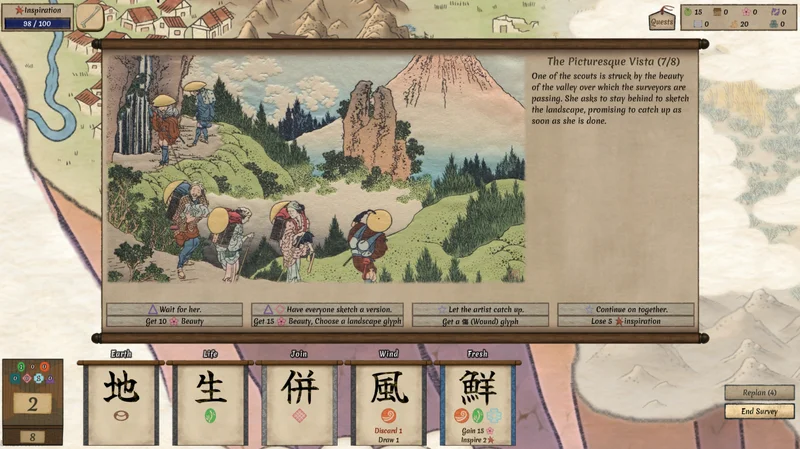
A game about rebuilding a world shattered into 10,000 pieces by an environmental apocalypse sounds like a splashy, big-budget blockbuster, but Worlds Upon the Wind is anything but.
Created by Russian-Jordanian solo developer Max Shawabkeh, the game is instead a nonviolent, deliberately paced, idiosyncratic mashup of a digital card game with Japanese language-learning software — all portrayed in an art style influenced by ukiyo-e and emaki (painted handscrolls).
Players start as a disembodied deity-like figure looking out onto “shards” of the broken world floating among the clouds. To rebuild this ruined world, there’s a deck of kanji-bearing cards inscribed with “essences” that allow the player to build, explore or gather resources.