Brazil · HEALTH
The new device could shorten treatment courses for some cancer patients, but it is not yet operating.
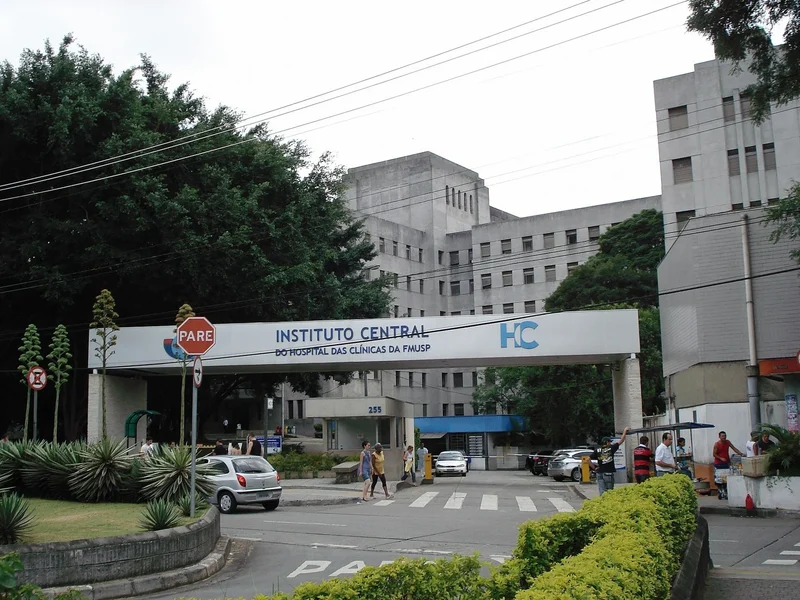
São Paulo radiotherapy is getting a boost with a new linear accelerator at a major public hospital, according to an Estadão column. The equipment, purchased by the Instituto de Radiologia do Hospital das Clínicas (InRad), could reduce treatment time for some cancer patients.
New Accelerator for São Paulo Radiotherapy
However, São Paulo radiotherapy is set to improve with a new linear accelerator acquired by InRad. As Estadão reported on 18 August 2026.
The machine, costing R$ 8 million, is part of the institute’s equipment renewal. The accelerator should begin operating between September and October, according to the column.
It is not yet treating patients, as the start date was still in the future when reported. The investment was R$ 8 million, according to Estadão.
However, the funder was not identified in any source. The equipment report rests solely on the Estadão column of 18 August 2026.
No official confirmation from the hospital or government has been found.
What the Estadão Column Says
The report comes from a single column by Alice Ferraz in Estadão, not from an official hospital announcement. Neither Hospital das Clínicas nor the state government has announced the purchase.
The column states that the new linear accelerator will allow the treatment time of some cancer patients to be reduced. This is a key development for São Paulo radiotherapy, though it is not yet operational.
The column quoted Dr. Heloísa de Andrade Carvalho, coordinator of the radiotherapy service. She described the benefits for some patients, but the machine is not yet operational.
The column states the machine will allow treatment time to be reduced for some cancer patients. However, it is not yet operational, as the start is scheduled for later.
Shorter Courses for Some Cancers
Dr. For example, Heloísa de Andrade Carvalho told Estadão that breast cancer patients who used to receive 25 days of treatment have moved to 15 days. Or as few as 5.
This refers to the number of treatment days in a course, not the length of each session. For prostate cancer, Carvalho said the number of days is cut to almost half, depending on the case.
However, these reductions apply only to some patients and some cancers, not universally. Carvalho’s comments were reported by Estadão on 18 August 2026.
These reductions, however, are not universal and depend on the case. These reductions are limited to certain patients and cancers, as the doctor noted.
Meanwhile, the exact number of days depends on the case.
Understanding Radiotherapy Courses
A radiotherapy course is the full series of appointments a patient attends, counted in days. A session is one single appointment, measured in minutes, but no source reports session lengths.
Therefore, newer linear accelerators can deliver doses more precisely, allowing fewer, larger daily doses for some cancers. This is the standard machine used in external-beam radiotherapy.
A linear accelerator generates high-energy beams directed at a tumour. Newer machines can deliver doses more precisely, enabling shorter courses for some cancers.
A course is the full series of appointments, counted in days, while a session is one appointment. However, no source reports the length in minutes of any session.
InRad and Hospital das Clínicas Context
InRad is the diagnostic imaging and radiotherapy institute inside the Hospital das Clínicas complex of the University of São Paulo medical school. The hospital, known as HC-FMUSP, is a public university teaching hospital and one of the largest in Latin America.
Still, in 2016, the São Paulo state government described the complex as the largest public radiotherapy centre in Latin America. But that claim is from an earlier project.
The complex is tied to the São Paulo state government and the University of São Paulo. In addition, it is widely described as one of the largest hospital complexes in Latin America.
InRad is part of the Hospital das Clínicas complex, tied to the University of São Paulo. In addition, the complex is described as one of the largest in Latin America.
SUS Waits and the 60-Day Law
The SUS, Brazil’s public health system, is free at the point of use. In addition, a 2012 law gives patients with malignant tumours the right to begin first treatment within 60 days of diagnosis.
However, waiting times are long. By contrast, according to Todos Juntos Contra o Câncer, reported by g1.
An SUS patient waits 50 days for diagnosis confirmation and another 75 days for first session. The 60-day law was passed in 2012, according to the fact sheet.
Still, waiting times remain long, as reported by g1. The 60-day law guarantees treatment start within that period after diagnosis.
However, the g1 report cites long waits for confirmation and first session.
Radiotherapy Equipment in Brazil
In fact, Brazil’s health ministry technical note from 2025 says the country has 370 radiotherapy machines for the SUS. Counting all legal categories.
Of these, public and non-profit establishments hold 318 linear accelerators, with 94 being over 15 years old and becoming obsolete. A separate 2026 health ministry presentation counts 365 accelerators in use in the SUS and 200 exclusively private ones.
These are different counts on different bases and should not be merged. The health ministry’s 2026 presentation counts 365 accelerators in the SUS.
Meanwhile, a separate 2025 note reports 318 in public and non-profit facilities. The health ministry’s 2025 note counts 370 machines for the SUS, while a 2026 presentation counts 365.
These are separate counts, so they must be reported distinctly.
Other Hospital Deliveries
Meanwhile, in June 2026, the federal government announced a linear accelerator for Hospital Santa Marcelina in São Paulo. With capacity for up to 1,000 treatments a year.
This is separate from the InRad purchase. Moreover, in April 2026, Agência Brasil reported the federal delivery of five new high-technology radiotherapy machines.
With São Paulo state receiving R$ 195 million. Hospital das Clínicas was not identified as a recipient.
The Santa Marcelina accelerator and the five federal machines are separate from InRad. As a result, they should not be linked to the new purchase.
Future of São Paulo Radiotherapy
The new accelerator at InRad could help ease some pressure on São Paulo radiotherapy services, but it is not yet in operation. Estadão reported it should start between September and October.
Meanwhile, the need remains high. Despite that, a 2022 presentation cited a WHO parameter of one accelerator per 250,000 to 300,000 inhabitants.
Suggesting Brazil would need 708 machines. The new machine could help some patients, but it is not yet in use.
However, the need for more equipment remains, according to a 2022 presentation. The new accelerator could help some patients, but it is not yet in use.
However, the need for more equipment remains, according to a 2022 presentation.
Frequently Asked Questions
What is the new São Paulo radiotherapy equipment?
The equipment is a new linear accelerator purchased by InRad, the Institute of Radiology at Hospital das Clínicas in São Paulo. It was reported by Estadão and cost R$ 8 million.
When will the new accelerator start operating?
According to Estadão, the machine should begin operating between September and October. It is not yet treating patients, as the start date was still in the future when reported.
How will the accelerator reduce treatment time?
For some cancer patients, the number of treatment days in a course can be reduced. For example, breast cancer courses may drop from 25 days to 15 or even 5 days.
Is the reduction in treatment time for all patients?
No, the reduction applies only to some patients and some cancers, as stated by Dr. Carvalho and Estadão. It is not universal or automatic.
This article was produced by The Rio Times’ automated newsroom system. How we use AI · Report an error