Long before âartificial intelligenceâ became a regular part of the everyday lexicon, Amazon came up with the concept of âartificial artificial intelligence,â or, in other words, work that appeared to be automated but, in reality, was completed by humans.
Amazon brought this type of work to the masses via its crowdsourcing marketplace called Mechanical Turk. Launched in 2005, the marketplace offered up a wide variety of tasks that humans were still better at completing than their computer-based counterparts.
Mechanical Turk got its name from an 18th-century chess-playing machine that had appeared to play the game of chess with great intelligence and skill.
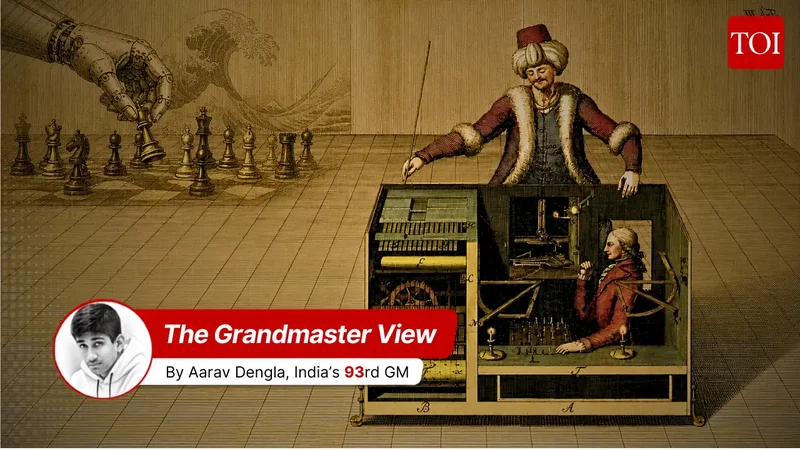
The Mechanical Turk first appeared in 1770, when the inventor and civil servant Wolfgang von Kempelen showed his contraption to the Habsburg court of Empress Maria Theresa. The contraption had a large wooden figure, dressed in Ottoman robes, sitting behind a large cabinet with a chessboard on top.
It was presented as a machine that could think and play against a human. Over the next eight decades, dotted with long dormant stretches, it would tour Europe and the Americas and would play against prominent figures such as Benjamin Franklin and Napoleon Bonaparte.
The Turk was not an autonomous machine. A skilled chess player sat inside the cabinet and operated its moves.
Magnetic chess pieces allowed the operator to follow the game on the board above, and a system of levers transmitted the operatorâs movements to the mannequinâs arm.
The cabinet created for the demonstration was designed to deceive the spectators. During the demonstration, the doors of the cabinet would be opened to reveal rows of gears and other machinery. The operator used a system of sliding panels and a movable seat to remain hidden at those moments. The cramped arrangement was physically demanding for the operator.
Following the death of Kempelen in 1804, the Turk was sold to Johann Mälzel. Several leading chess players are known to have operated the Turk. Johann Baptist Allgaier is credited with being the operator during the game against Napoleon in 1809.
In later exhibitions in Britain, the Turk was operated by Jacques François Mouret and William Lewis. The principal operator of the Turk during Mälzelâs tours of the United States was William Schlumberger. However, the identities of the operators for von Kempelenâs earliest exhibitions of the Turk remain unknown to this day.
The obvious question is why so many successful chess players in the early 19th century would endure such punishing surroundings and play hidden in a machine. The answer lies in how even elite chess players struggled to make a living otherwise.
They were offered generous pay for operating the Turk, which playing the game itself rarely provided. Earnings from coaching, exhibition games and occasional stake-matches were limited and inconsistent and not enough to support a living. Operating the Turk therefore offered steady and reliable income, even though it required secrecy, travel, and long periods inside a claustrophobic cabinet.
The Turk remained the subject of suspicion throughout. In an essay published in 1836, Edgar Allan Poe noted that a machine should make moves at regular intervals while the Turkâs timing varied, which mirrored the human way of playing. Poe concluded that a human was involved, but he could not pin down how.
The first full and reliable account came in 1857, less than three years after the original Turk was destroyed in a fire, when Silas Weir Mitchell, son of the last private owner of the Turk, published a detailed account.
That the Turk endured for so long despite widespread skepticism is the fascinating bit. Solving the riddle of how it worked was part of the attraction. Its long existence coincided with an age of rapid mechanization when people were beginning to ask which forms of human labor might be reproduced by machines.
Amazonâs Mechanical Turk borrowed the old illusionâs central idea: a process can look automated but, in reality, require human effort to complete. While the comparison isnât perfect, it does give us a sense of how new technologies can first appear to do something and, when we look closer, reveal hidden human labor behind them.
In our current era of rapid advances in artificial intelligence, itâs too early to predict exactly how far artificial intelligence will go, or whether synthetic systems will ever be able to fully replace human thought. The Turk, in short, is just a reminder of how the impression of an autonomous mind can hide the reality behind it.
(Aarav Dengla is Indiaâs 93rd Grandmaster. He is a keen observer and student of world history in general and chess history in particular.)