Zafiri’s $176 Million Push to Power Rural Africa
AFRICA · ENERGY
Inside the Zafiri energy fund
Zafiri launched on 18 June at the Africa Energy Forum in Cape Town with $176 million in committed capital. It is managed by Inspired Evolution, a Cape Town-based investment firm.
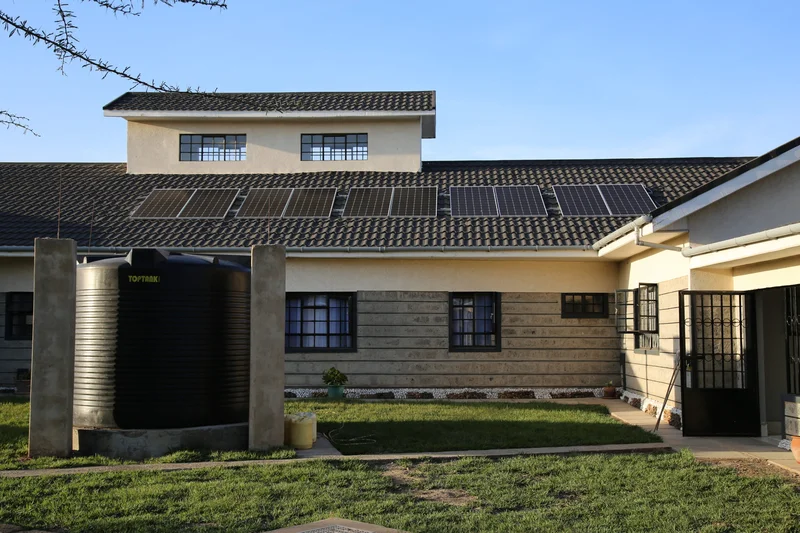
The fund backs distributed renewable energy rather than large national power plants. That means mini-grids, solar home systems, productive-use equipment and clean-cooking businesses.
At least half of the capital is earmarked for those areas. The managers aim to reach a first close of $300 million within a year and to scale the platform toward $1 billion over time.
Who is putting up the money
The backers are mostly development institutions and foundations. Founding investors include the International Finance Corporation, the African Development Bank and the Trade and Development Bank.
They are joined by the Rockefeller Foundation, the Nordic Development Fund, the MacArthur Foundation and South Africa’s FirstRand. The mix blends public money with private balance sheets.
That structure is deliberate. Concessional and philanthropic capital is meant to absorb early risk and draw in commercial investors who would not lend alone.
The fund is built in tranches, so investors with different risk appetites can take different layers. That layering lets pension money and philanthropy sit in the same vehicle.
The problem it is trying to fix
Around 600 million people in sub-Saharan Africa still live without reliable electricity. Closing that gap by building only central grids and power stations would take decades and vast sums.
Distributed systems offer a faster route. A solar mini-grid can light a village in months, and a home system can replace kerosene almost immediately.
Zafiri is tied to Mission 300, a World Bank and African Development Bank goal to connect 300 million people in sub-Saharan Africa by 2030. The fund’s own target is 10 million connections.
The need is uneven across the map. Rural areas and fragile states lag furthest behind, which is exactly where grid extensions are least profitable and distributed power makes most sense.
Why investors are circling energy access
Energy access has long been treated as aid. It is now also being treated as a market, with paying customers and predictable revenue.
Falling solar and battery costs have changed the maths. Pay-as-you-go models let households buy power in small amounts by mobile money.
For outside investors, that turns electrification into an asset class. The risk is real, but so is demand that grows with every new connection.
Returns are not guaranteed. Currency swings, theft and unpaid bills have tripped up earlier off-grid ventures across the region.
What to watch
The first measure of success will be the move from $176 million to the planned $300 million close. A quick step up would signal confidence in the model.
The second will be how many of the promised connections actually arrive, and how fast. Energy-access funds have made big pledges before.
If Zafiri delivers, it strengthens the case that Africa’s power gap is an opportunity rather than only a burden.
Energy-access investments also live or die on collection. Funds must prove that customers keep paying once the novelty of light wears off.
A continental race for power
Zafiri is not alone in the field. Governments, development banks and private firms are all chasing the same electrification goal from different angles.
Large grids, gas plants and hydropower dams still account for most planned capacity. Off-grid solar fills the gaps they cannot reach quickly or cheaply.
The competition is welcome, because the scale of the problem dwarfs any single fund. Mission 300 alone implies tens of billions of dollars of investment over the next five years.
What it means for our readers
Energy access is also an investment theme that travels. The same pay-as-you-go solar model has spread from East Africa to parts of Latin America and South Asia.
For investors weighing frontier markets, Africa’s power gap is becoming a test case. It asks whether patient capital can earn a return while doing visible good.
The lesson for Latin America is familiar. Markets long dismissed as too poor to serve often prove large and loyal once the price is right.
Frequently Asked Questions
What is the Zafiri energy fund?
Zafiri is a $176 million investment vehicle, managed by Inspired Evolution, that backs distributed renewable energy across sub-Saharan Africa. It launched on 18 June 2026 in Cape Town.
How many people will it reach?
The fund aims to connect more than 10 million people to electricity by 2030. It supports Mission 300, a broader goal of reaching 300 million people in sub-Saharan Africa.
Who funds Zafiri?
Founding investors include the IFC, the African Development Bank, the Trade and Development Bank, the Rockefeller and MacArthur foundations, the Nordic Development Fund and FirstRand.
What will the money pay for?
At least half of the capital is set aside for mini-grids, solar home systems, productive-use energy and clean-cooking enterprises. Managers plan to grow the fund to $300 million within a year.
LatAm Markets: Live Signals → — real-time movers, turnover leaders and FX across Latin America.