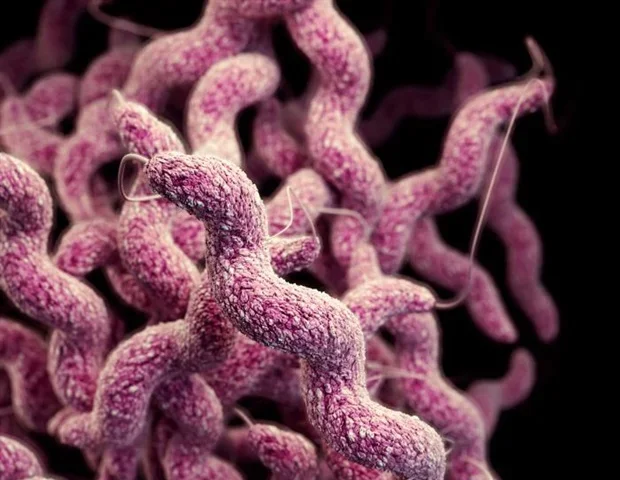
A new study by the Ineos Oxford Institute for antimicrobial research, University of Oxford, reveals that industrial poultry farming has led to more than 100-fold increase in the movement of Campylobacter, allowing strains that once circulated in wild birds to mix extensively in commercial poultry populations.
Campylobacter is the most common bacterial cause of diarrhoea worldwide, causing more than 3.5 times as many gastroenteritis cases in the UK each year as all other monitored foodborne bacteria combined. Rising rates of antimicrobial resistance (AMR), which occurs when bacteria resist drugs designed to kill them, are making Campylobacter infections increasingly difficult to treat.
In the new study, published in the Proceedings of the National Academy of Sciences (PNAS), researchers analysed nearly 2,800 bacterial genomes collected from chickens and wild birds in 30 countries (including UK and USA) between 1979 and 2024. They found that the huge global expansion of chicken farming has created ideal conditions for the bacterium to spread, mix and acquire new traits that help it survive.
Since the 1960s, global chicken numbers have increased seven-fold to approximately 31 billion birds. Today, chickens account for around 70% of all bird biomass on earth. While this increase in numbers has led to the production of affordable animal protein at scale, it has also created ideal conditions for bacteria to adapt and spread.
Using genomic analyses, the researchers identified genetic changes in Campylobacter that were associated with adaptation to the chicken environment. These included genes involved in antimicrobial resistance, oxidative stress tolerance, metal acquisition and motility, and traits that can help bacteria survive and thrive in modern poultry production systems.
Industrial farming has created one of the largest animal habitats on the planet. Our findings provide new evidence that human-driven environmental change can increase the spread of infectious diseases.
As chicken populations have grown, bacteria that were once largely confined to wild birds have gained far more opportunities to enter poultry flocks, spread and become established. Understanding these evolutionary consequences is essential if we are to reduce future risks from zoonotic disease and antimicrobial resistance."
Professor Sam Sheppard, Professor of Microbial Genomics and Evolution, University of Oxford and senior author of the paper
The study also suggests that vast, densely populated chicken flocks may act as ecological 'pathogen sponges', absorbing and amplifying bacterial strains from multiple sources. Mathematical modelling showed that once chicken populations reach a critical scale, strains originating in wild birds can become self-sustaining within poultry populations, even when poorly adapted to their new host.
A previous study from the IOI found that 80% of human Campylobacter infections in Oxfordshire are associated with poultry meat, and that many of these infections are resistant to antibiotics.
Oakem Kyne, DPhil student, University of Oxford and first author of the paper said: "As Campylobacter strains adapt to life in poultry, they can acquire traits that help them survive in challenging environments, including traits linked to antimicrobial resistance. Understanding how farming practices influence bacterial evolution is an important step towards reducing the burden of foodborne disease."
Source:
Journal reference:
Accelerating Campylobacter zoonosis in the Anthropocene. Proceedings of the National Academy of Sciences. DOI: 10.1073/pnas.2609969123