…we propose the urgent convening of a Yoruba Security and Civic Renewal Summit, to bring together governors, traditional rulers, legislators, security practitioners, academics, labour leaders, business executives, youth organisations, women’s groups, and representatives of civil society. The purpose of such a summit should neither be merely ceremonial, nor politically partisan. Rather, it should serve as a platform for developing practical strategies for regional security cooperation, strengthening intelligence-sharing mechanisms, enhancing community resilience, improving coordination with security agencies, and promoting sustained civic engagement on matters affecting public safety.
Their Excellencies, Governors of the South-West States and their Deputies;
Their Imperial Majesties, Royal Majesties and Royal Highnesses, Custodians of Yoruba Heritage;
Distinguished Senators and Honourable Members of the South-West Caucus in the National Assembly;
Distinguished Speakers and Members of the Houses of Assembly across the South-West States;
Vice Chancellors and Leaders of Institutions of Higher Learning;
Captains of Industry and Leaders of Commerce;
Presidents and Executives of Professional Associations;
Market Men and Women Leaders;
Religious Leaders;
Youth and Student Leaders; and
All Stakeholders committed to the progress, security, and future of Yorubaland and Nigeria.
Introduction
We write at a moment of profound significance for Yorubaland and, indeed, for the Nigerian federation. Across the country, citizens are confronted with multiple and overlapping challenges that have combined to produce widespread uncertainty about the future. Economic hardship has intensified pressures on households and businesses; public confidence in institutions has weakened; and concerns about security have assumed unprecedented prominence in everyday life. While these developments are national in scope, their manifestations within Yorubaland deserve particular attention because of the implications they carry for social stability, economic productivity, cultural continuity, and democratic governance.
| | |
|---|
The purpose of this letter is not to apportion blame, advance partisan interests, or inflame public sentiment. Rather, it is to draw attention to a matter of urgent collective concern and to encourage a level of coordinated engagement commensurate with the gravity of the challenge before us. The deterioration of security across significant parts of Yorubaland has reached a stage where silence, complacency, and isolated interventions are no longer sufficient. What is required is a broad-based and sustained mobilisation of the moral, intellectual, political, economic, and cultural resources available within the region.
Throughout history, societies have been judged not merely by the crises they encounter but by the quality of their responses to those crises. Moments of uncertainty often reveal the strength or weakness of public institutions, the resilience of civic culture, and the capacity of leaders to rise above immediate interests in defence of the common good. The present moment represents such a test. It calls for thoughtful leadership, principled engagement, and a renewed commitment to the values that have historically defined public life for the Yoruba people.
Insecurity as an Existential Crisis
There is little disagreement today that insecurity has become one of the most pressing challenges confronting communities across Yorubaland. Reports of kidnapping, violent attacks, criminal occupation of forest corridors, assaults on travellers, and threats to rural livelihoods have become increasingly frequent. What was once perceived as a distant or isolated phenomenon has evolved into a recurring feature of life in many communities, affecting both urban and rural populations, and generating widespread concern among citizens.
The consequences of these developments extend far beyond the immediate victims of criminal violence. Farmers increasingly face difficulties accessing agricultural lands, with implications for food production and rural economic activity. Commercial interactions that depend on the movement of people and goods have been disrupted by growing anxieties about safety on major transportation routes. Families are compelled to make critical decisions regarding education, travel, and investment under conditions of uncertainty. In many communities, the psychological burden of insecurity has become as consequential as the physical threats themselves.
Particularly troubling is the increasing vulnerability of groups traditionally regarded as deserving of the highest levels of societal protection. The targeting of schoolchildren, students, educators, and ordinary citizens for abduction and extortion represents not merely a criminal challenge but a direct assault on the foundations of social order. The recent abduction incident in Oyo State, though ultimately resolved with the release of the victims, exposed the fragility of public confidence and underscored the extent to which insecurity now threatens institutions that are central to societal development. Such incidents leave enduring psychological consequences for victims, families, and communities, while simultaneously reinforcing a broader atmosphere of fear and uncertainty. This is a very big burden to bear for a people already battered by the consequences of economic policies that have deepened poverty, and widened the inequality gap between the haves and have nots.
The cumulative effect of these developments is the gradual erosion of public trust in the capacity of institutions to guarantee security and protect fundamental rights. If left unchecked, such erosion can have profound implications for governance, economic development, social cohesion, and democratic stability.
A Very Loud Silence
Equally deserving of attention is the apparent absence of a coordinated and sustained societal response to the growing security challenge. Historically, Yorubaland has occupied a distinctive place within Nigeria’s civic and political landscape. The region has long been associated with robust public debate, intellectual engagement, organised civic action, and a willingness among institutions and citizens alike to speak forcefully on matters affecting the collective welfare.
At critical moments in Nigeria’s history, traditional rulers, labour organisations, professional bodies, religious institutions, students’ movements, market associations, academics, and civil society organisations have played important roles in shaping public discourse and influencing policy outcomes. Their interventions were not always uniform, nor were they always successful, but they reflected a shared understanding that public affairs are too important to be left solely in the hands of governments.
Against this historical backdrop, the relative quietness that has accompanied the present security crisis is difficult to ignore. While individual voices have spoken out and isolated interventions have occurred, the region is yet to witness the level of coordinated civic engagement that the scale of the challenge arguably requires. This observation is not intended as a criticism of any particular institution or leader. Rather, it is an invitation to collective reflection on whether the structures and traditions that once enabled effective civic mobilisation have weakened and, if so, what might be required to revitalise them.
For us as Omo Oduduwa Collective, we believe that the unhealthy silence in the face of existential danger is motivated in large parts by politics. We are currently witnessing a situation in which many stakeholders, either for personal or primordial reasons, consider it prudent to be indifferent to the dangers we face collectively on account of political calculations. We consider this approach short-termist and ultimately self-defeating.
A healthy society depends not only on the effectiveness of its governments but also on the vitality of its civic institutions. As a matter of fact, the effectiveness of the government is sometimes directly proportional to how well civic institutions play their roles as watchdogs, critics and policy shapers. Therefore, where insecurity persists and public concern grows, as is currently the case across Yorubaland and the country in general, institutions possessing moral authority and social influence have a responsibility to contribute to public dialogue, advocate for solutions, and help sustain democratic accountability.
The fulfilment of that responsibility becomes especially important when citizens increasingly look to trusted institutions for reassurance, direction, and leadership. To also emphasize, keeping a Yoruba-led government on its toes, holding it accountable, and partnering with it where necessary to overcome pressing challenges, is not an attack on the homefront. It is a sacred duty in defence of its gatepost.
The Risks of Inaction
The long-term consequences of failing to respond adequately to the current security situation should not be underestimated. Persistent insecurity undermines economic growth by discouraging investment, disrupting commercial activity, and increasing the cost of doing business. It weakens educational outcomes when learning environments become associated with fear rather than opportunity. It accelerates rural decline when agricultural communities become vulnerable to displacement and criminal intimidation. Perhaps, most significantly, it erodes social trust and weakens the relationship between citizens and public institutions.
History demonstrates that societies rarely experience institutional decline suddenly. More often, deterioration occurs gradually through the normalisation of conditions that would once have been considered unacceptable. Communities adapt to insecurity, citizens lower their expectations of public institutions, and extraordinary events become treated as ordinary occurrences. The danger lies not only in the immediate harm caused by criminal violence but also in the possibility that society becomes resigned to living with it.
It is precisely because this danger exists that a more deliberate and coordinated response is required. The challenge before Yorubaland is not simply how to address individual incidents of insecurity. It is how to prevent the emergence of a culture of resignation in which fear becomes normalised and the public expectations of safety continue to decline.
Addressing the current challenge requires a recognition that the security of the people is primarily the sole basis for the existence of the government. This however does not also imply that safety is solely the responsibility of security agencies. Effective responses emerge when governments, traditional institutions, civil society organisations, professional bodies, religious communities, educational institutions, and citizens work within a framework of shared responsibility and mutual accountability.
Our Proposal
Accordingly, we propose the urgent convening of a Yoruba Security and Civic Renewal Summit, to bring together governors, traditional rulers, legislators, security practitioners, academics, labour leaders, business executives, youth organisations, women’s groups, and representatives of civil society. The purpose of such a summit should neither be merely ceremonial, nor politically partisan. Rather, it should serve as a platform for developing practical strategies for regional security cooperation, strengthening intelligence-sharing mechanisms, enhancing community resilience, improving coordination with security agencies, and promoting sustained civic engagement on matters affecting public safety.
Without preempting the substantive outcomes of such a summit, we envisage a gathering whose resolutions would result broadly in the establishment of a standing consultative mechanism on regional security, including traditional rulers, professional and labour organisations, women and youth groups, among others. We also hope at the very least for coordinated advocacy efforts that hold governments across levels accountable, to the degree of their constitutional responsibilities.
We also hope that it will stimulate our universities, research institutions and intellectuals to contribute evidence-based policy recommendations that will be aggressively pursued by all, irrespective of political leanings. In this regard, our governors and legislators become very critical, not only for ensuring that the outcomes of the summit are legally codified as much as possible, but that they are effectively implemented with a view to ensuring greater accountability and effectiveness in security governance.
Conclusion
Yorubaland possesses immense human capital, strong cultural traditions, vibrant institutions, and a long history of civic engagement. These assets provide a solid foundation upon which an effective response to the present challenge can be built. What is required now is not panic, recrimination, or despair, but uncomfortable truths, leadership, coordination, and a renewed commitment to the common good. The security of communities, the wellbeing of families, the future of young people, and the continued prosperity of the region, are matters that transcend partisan affiliations and political cycles. They demand a level of seriousness and collaboration equal to their importance.
The present moment therefore calls upon all stakeholders to act with foresight, courage, and responsibility. Future generations will assess not only the challenges that confronted us, but also the quality of leadership and collective action that those challenges inspired. Our hope is that this period will ultimately be remembered as a moment when the institutions and people of Yorubaland chose engagement over indifference, cooperation over fragmentation, and purposeful action over opportunistic silence.
Signed
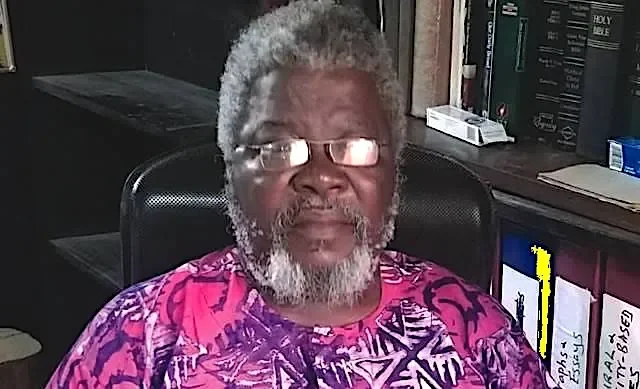
Professor Akinyemi Onigbinde (Convener)
Senator Babafemi Ojudu
Barrister Dele Farotimi
Dr Adeolu Oyekan
Dr Olasunkanmi Olapeju
Mr Kazeem Olasupo
Mr Samuel Arinloye
Barr Kayode Okenla
For: Omo Oduduwa Collective