Argentina · Business
Argentina’s national government has formally approved the Vicuna copper project under its flagship incentive regime for large investments, locking in a US$9.737 billion (9,737 million) initial commitment that stands as the largest mining investment in the country’s history. The Economy Ministry’s Resolution 1154/2026, issued in July 2026, classifies the BHP and Lundin Mining joint venture as a Strategic Long-Term Export Project, or PEELP, granting it three decades of legal and tax stability.
What the RIGI Regime Actually Grants
For foreign investors unfamiliar with Argentina’s volatile regulatory history, the RIGI (Régimen de Incentivo para Grandes Inversiones) is President Javier Milei’s central tool to attract capital. It applies to projects exceeding US$200 million and aims to create a predictable island of rules that cannot be changed unilaterally by future governments.
Under the PEELP classification, the Vicuña copper project secures a fixed 25% corporate income tax rate. It also locks in zero export duties after the first three years of production and eliminates import tariffs on capital goods and supplies.
Crucially, the regime guarantees free availability of foreign currency. The company can retain export proceeds abroad and is not forced to liquidate dollars into the local peso market at the official rate, which currently hovers near 1,320 pesos per US dollar. This removes a major risk that has historically deterred hard-rock mining investment in Argentina.
Scale of the San Juan Investment
The initial US$9.737 billion commitment is just the first phase. Regulatory filings indicate the total capital expenditure could scale to roughly US$18 billion over a decade as the project moves from construction into full-scale extraction and processing. The company is obligated to deploy a minimum of US$2.009 billion within the first two years.
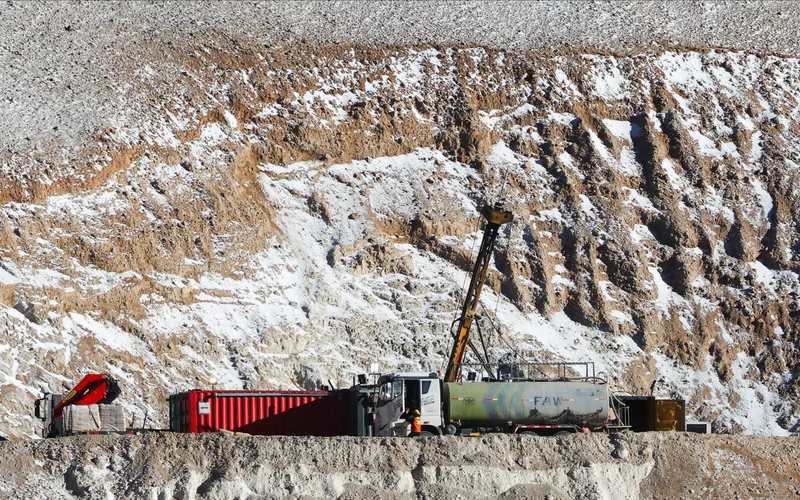
The Vicuña district straddles the high Andes in San Juan province, a jurisdiction that has actively courted miners while other Argentine provinces have restricted activity. The project consolidates the development of the Josemaría and Filo del Sol deposits, which hold significant copper, gold, and silver resources.
Once operational, the project is projected to generate annual exports worth roughly US$2,600 million. This single mining complex would therefore make a material impact on Argentina’s trade balance, which has been under severe pressure due to the country’s chronic shortage of US dollars.
The BHP-Lundin Partnership
Vicuña Argentina S.A. is the local entity controlled equally by Australia’s BHP and Canada’s Lundin Mining. The two global firms formed the joint venture to combine their adjacent landholdings and share the massive infrastructure costs required to mine at altitudes above 4,000 meters.
BHP, the world’s largest mining company, brings deep capital reserves and experience in operating giant copper mines in Chile. Lundin Mining has a long operational history in the Americas. Their partnership signals to the market that Argentina’s regulatory framework, under RIGI, now meets the threshold required for institutional-grade mining investment.
The approval is the 22nd project to enter the RIGI framework since its creation. However, no previous approval comes close to the financial scale of Vicuña, making it the definitive test case for whether the Milei administration’s incentive package can deliver a mega-project on time and on budget.
Why Copper Matters Now
Global copper demand is projected to double by 2035, driven by electrification, renewable energy infrastructure, and electric vehicles. Existing mines are aging and grades are declining, creating a structural supply deficit that has pushed major miners to seek new frontiers.
Argentina sits on a stretch of the same Andean copper belt that has made Chile the world’s top producer. Yet Argentina has never brought a world-class copper mine into production. The Vicuña copper project is designed to change that, potentially positioning San Juan as a globally significant copper district.
For expatriates and investors living in Argentina or watching from abroad, the project’s approval under RIGI represents a real-time stress test. If the legal guarantees hold and infrastructure is built, it could unlock a pipeline of other stalled copper projects in the region.
Economic and Political Context
The approval comes as the Milei government seeks to anchor investor confidence through concrete milestones rather than rhetoric. The RIGI regime was passed as part of a broader emergency economic package and is designed to bypass provincial tax instability by offering a federal umbrella of protections.
San Juan province has long been mining-friendly, but national policy swings have previously killed investor appetite. The 30-year stability granted to Vicuña means that even if a future government raises corporate taxes or imposes capital controls, the project’s original terms remain legally binding.
More than 31,000 jobs are expected to flow from the project, a significant figure for a province with a population of roughly 800,000. Local supply chains, logistics firms, and service providers in San Juan are already positioning to capture contracts during the initial two-year, US$2.009 billion deployment phase.
Risks and Next Steps
Despite the federal approval, the project must still navigate provincial permitting, water access rights, and community agreements in the high-altitude desert region. Argentine courts have historically been receptive to environmental injunctions against mining projects, though RIGI includes provisions to expedite legal challenges.
The joint venture must also finalize a definitive feasibility study that integrates the Josemaría and Filo del Sol deposits into a single mine plan. Infrastructure requirements are daunting: new roads, power lines, and possibly a dedicated processing plant must be built in remote terrain.
For foreign investors, the immediate signal is clear. Argentina has put its legal framework behind a world-class copper asset. The execution risk now shifts from the government to the companies, and the global mining industry will be watching whether BHP and Lundin can turn a regulatory victory into a producing mine.
Frequently Asked Questions
What is the Vicuña copper project?
It is a US$9.737 billion joint venture between BHP and Lundin Mining to develop the Josemaría and Filo del Sol copper-gold-silver deposits in San Juan province, Argentina. It is the largest mining investment in Argentine history.
What does the RIGI regime guarantee to foreign investors?
RIGI grants 30 years of tax stability, including a fixed 25% corporate income tax rate, zero export duties after year three, and free access to foreign currency without mandatory conversion to pesos. It applies to investments over US$200 million.
How many jobs will the Vicuña project create?
The project is expected to generate more than 31,000 direct and indirect jobs during construction and operation, with projected annual exports of roughly US$2,600 million once operational.
Sources & Further Reading
Infobae · Diario Rio Negro · Ambito