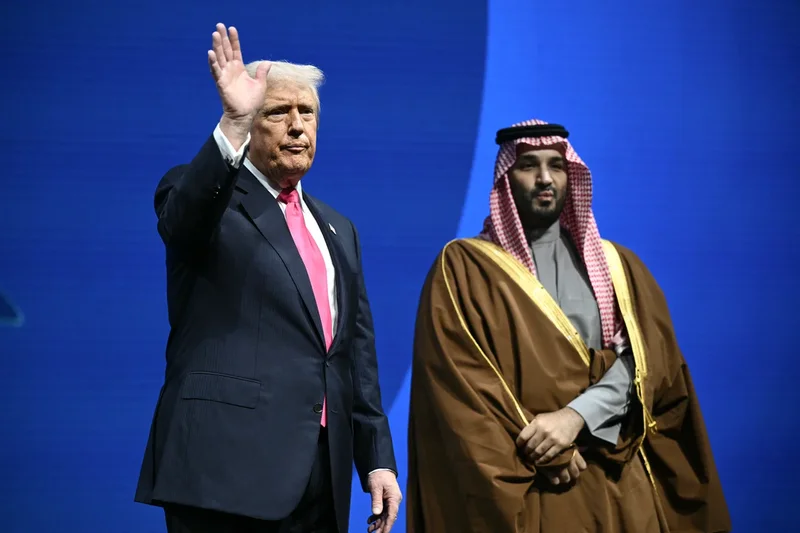
In 2018, Mohammad bin Salman was asked whether Saudi Arabia would ever develop a nuclear weapon.
“We do not want to develop a nuclear bomb. But without doubt, if Iran developed one we would follow suit as soon as possible,” he told CBS, in an interview that sparked alarm across the Middle East.
Eight years later, Saudi Arabia announced a historic deal with President Donald Trump to use American technology and expertise to develop a civilian nuclear programme.
It arrived five months after Washington and Israel began a military campaign against Iran, with the stated aim of destroying any chance of Tehran developing a nuclear bomb.
More than a week after announcing the deal though, its future is uncertain with Trump declaring that Saudi Arabia must recognise Israel in return.
An expert told The Independent that the agreement sets a “dangerous precedent” in the Middle East and may potentially set off a nuclear arms race in any already volatile region.
What does the deal involve?
The agreement allows for American companies to develop and operate commercial nuclear power plants on Saudi soil, and potentially includes grounds for a uranium-enrichment facility.
For Saudi Arabia, the agreement follows two decades of stop-start negotiations. Progress has been hampered by two key American demands: the normalisation of relations with Israel and a safeguard against enrichment for nuclear weapons.
While details on the agreement have not yet been made public, The Washington Post reported that the text did not mandate International Atomic Energy Agency (IAEA) inspection, and also dropped the precondition that the Kingdom recognise Israel.
But just 24 hours after the deal was signed, Trump appeared to backtrack - insisting that the deal remains “totally subject to Saudi Arabia joining the very respected and successful Abraham Accords”, which established formal diplomatic ties between Israel and several Arab nations. It remains unclear whether the Kingdom will accept Trump’s demand.
Deal sets a ‘dangerous precedent’
Georgia Cole, an associate at Chatham House’s International Security Programme, said the deal sets a “really dangerous precedent” in the region regardless of whether it goes through.
“The conflicts across the Middle East have raised so many questions about the reliability of US security guarantees,” she told The Independent.
“In spite of assurances they have had in the past, Gulf states have seen themselves targeted, repeatedly — and it’s placed pressure on them to boost their own defence capabilities.”
Because of this, Saudi’s attempts to procure a potential path towards nuclear weapons will act as an “additional pressure” that could encourage other states to look towards developing their own nuclear infrastructure, Ms Cole added.
As the conflict with Iran continues to escalate, countries across the Middle East have already looked to build up their defence systems. Below, The Independent looks at the nuclear ambition of each one.
Saudi Arabia
While Saudi Arabia has been open about its willingness to secure a nuclear deterrent, previous attempts to do so have proven unsuccessful.
In 2023, the Kingdom signed a Chinese-brokered rapprochement with Iran that saw both countries agree to re-establish diplomatic relations. But this has done little to shield Saudi from Iranian missile attacks over the past few months.
In September 2025, the Kingdom signed a mutual defence pact with Pakistan, the Southwest Asia and North Africa (SWANA) region’s only confirmed nuclear power.
The agreement provides the Kingdom with a nuclear umbrella, where “any aggression against either country shall be considered an aggression against both.”
But in seeking the US deal, Riyadh appears not to be assured that Islamabad can offer the protection it needs - in part due to political chaos in the country, where no prime minister has ever completed their term.
The United Arab Emirates (UAE)
Following the announcement of the Saudi-Pakistan deal, the UAE turned to India — where both countries agreed to explore cooperation in “advanced nuclear technologies” in January.
While this partnership has been framed as strictly for civilian use, it has raised concerns for Saudi Arabia, as both nations continue to battle in a devastating proxy-war in Sudan.
In further attempts to diversify their security partners, the UAE signed a memorandum of understanding worth more than $35 billion with South Korea. The deal deepens defence cooperation across air defence, naval systems and the air force.
Israel
Israel is widely believed to possess nuclear weapons but officially maintains a policy of deliberate ambiguity.
The Arms Control Association, a US-based think tank, estimates Israel's nuclear stockpile ranges from 90 to 400 warheads
Speaking to The Independent, Ms Cole said: “We’ve known Israel has had a nuclear programme for decades
“It is a big factor contributing to pushing up pressures in the region.”
Iran
While Iran is believed to have had the capacity to enrich uranium to weapons-grade levels, US-Israel strikes across nuclear research facilities in the country last June are thought to have significantly damaged any progress.
However, nuclear enrichment is suspected to have continued on Pickaxe Island, which lies on the south side of Iran's Natanz nuclear enrichment site.
These reports remain unconfirmed, as the United Nations' nuclear watchdog has never gained access to the site.
Experts however, maintain that geopolitical tensions have ensured Iran remains bent on achieving the ability to create nuclear weapons.
Ms Cole explained: “For Iran, Israel being a nuclear power is one of the biggest capability differences — and does definitely influence Iran’s own desires for nuclear capacity.”
Deal could create a ‘domino effect’
Together, experts say these moves reflect broader regional efforts to diversify security in the face of dwindling American guarantees.
After a fragile peace deal collapsed earlier this month, attacks on US allies in the Middle East have resumed. This week, Iran attacked Jordan, Kuwait, and Bahrain.
“It’s almost a domino-effect,” said Ms. Cole. “And this nuclear partnership raises a real concern — more countries want to be in a hedging position, where they could defend themselves.”
However, enriching uranium to weapons-grade levels requires years of technical development.
For Ms Cole, the greater concern is not that Saudi Arabia is on the cusp of developing a nuclear weapon, but that Washington may have weakened a longstanding principle of nuclear non-proliferation.
"If countries believe the United States is prepared to relax the conditions attached to civilian nuclear cooperation for one regional partner, others are likely to ask why the same rules should not apply to them — it sets a clear double-standard.”
“This is where proliferation could then grow to become a real worry.”