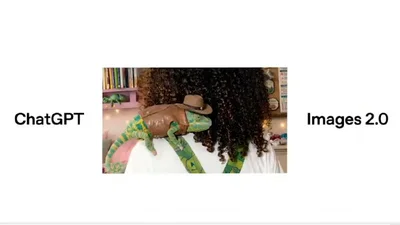
OpenAI has released a new image generation model for its users. The new model, called ChatGPT Image 2.0, can produce “precise, immediately usable visuals,” as per OpenAI. This has come days after the company shut down its Sora video generation model to focus resources on coding capabilities due to the increasing popularity of Anthropic.
In a blog post, the company said that its new image generation model follows detailed instructions, can relate objects accurately, and render text in images. The company says that the model is capable of producing images that feel “less AI-generated and more intentionally designed” due to its sense of composition and visual taste.
Image 2.0 can also create images across aspect ratios.
Now available with thinking capabilities
OpenAI was testing this new image generation model for quite some time, and it is now available to all ChatGPT and Codex users. The new ChatGPT Image 2.0 model is also the company’s first model that comes with thinking capabilities.
When a user selects thinking or pro mode in ChatGPT, Image 2.0 can search “the web for real-time information, create multiple distinct images from one prompt, and double-check its own outputs.” Advanced outputs with thinking are available to ChatGPT Plus, Pro, and Business users.
Improved usability and fine details
While image generation through AI is not new, people have struggled with outputs, as they were often something vaguely in the neighbourhood of what they meant. OpenAI says the new model provides users with something that they can actually use.
The model can render fine elements such as “small text, iconography, UI elements, dense compositions, and subtle stylistic constraints.”
Demo and realism push
OpenAI also showcased ChatGPT Image 2.0 via an X post, where it shared a screenshot of a ChatGPT conversation with a caption saying that it is not a screenshot. The shared image had all the elements of ChatGPT on macOS.
OpenAI post showcasing capabilities of ChatGPT Image 2.0.
OpenAI is also building on the success of GPT-4o image generation, which grabbed attention with the “Studio Ghibli” craze. With this new model, users can produce visuals in different styles, such as Japanese seinen manga, movie posters, midcentury pastel comics, and more.
Stronger text and multilingual support
People also struggled with text in images, as it was often incorrect and had spelling mistakes. OpenAI says Image 2.0 also goes beyond English and has multilingual understanding. The company claims the model has made significant gains in non-Latin languages and can render text in Japanese, Korean, Chinese, Hindi, and Bengali correctly.
The model can be helpful for users who want to create a book or a comic as it does some of the heavy lifting on its own. Users can ask it to generate a coherent set of up to eight outputs in one go, and the tool will build character and object continuity on one another on its own.
In thinking mode, it can create multiple distinct images at once, even in different aspect ratios and languages.
- Ends
Published On:
Apr 22, 2026 11:10 IST