Medical researchers today are searching for ways to head off illness before it sets in, improving the quality of healthy life right up until its natural end in old age. We talk to a leading figure in the field about how cutting-edge techniques, iPS cells, and even AI are contributing to advances in human health.
AI and iPS Cell Technology: Staying Healthy Until the Last?
We are inching closer to a future where staying healthy until the very end could be a reality for all. Wearable devices like smartwatches can now track heart rate, sleep, and other biometrics around the clock, and AI can analyze this stream of data to flag potential risks at an early stage. Such insights make it possible for us to adjust lifestyles and seek treatment before symptoms emerge, making it easier for people to maintain good health. Yet there are diseases and injuries that cannot be prevented or managed through these measures alone. For such cases, the “last line of defense” could be regenerative medicine using induced pluripotent stem (iPS) cells.
iPS cells are made by reprogramming ordinary cells, such as those from the skin or blood, by introducing a small number of genes, returning them into a state where they can be transformed into other types of cells. It has now been 20 years since Professor Yamanaka Shin’ya of Kyoto University first succeeded in creating iPS cells in mice in 2006. Today, researchers and pharmaceutical companies worldwide are racing to turn that discovery into real-world treatments capable of restoring bodily functions lost to disease or injury.
(© Yokozeki Kazuhiro)
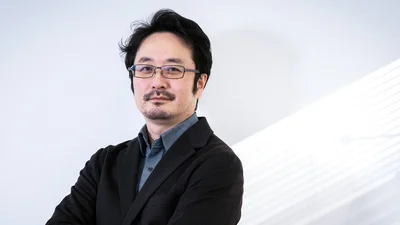
Professor Kawakami Eiryo of Chiba University has been engaged in medical research using mathematical and scientific methods, including AI and machine learning. His approach is deeply data-driven.
Among patients receiving the same diagnosis, one medication may be effective for some and ineffective for others. Likewise, while some patients with early-stage cancer experience recurrence within a few years, others diagnosed with terminal cancer survive for many years without recurrence. Faced with such variation, Kawakami questioned whether treatment decisions should rely solely on a doctor’s experience, leading to the idea to classify patients based on data and build a deeper body of knowledge to provide more effective care.
Kawakami is also active at the Riken scientific research institute. There he serves as team director of the Predictive Medicine Special Project, which aims to realize healthcare that prevents diseases before they occur through the use of AI and medical science. This places him at the forefront of research in the field.
“I believe medicine that enables people to live long, stay healthy, and then die without prolonged illness is something that we can realistically achieve. Five or ten years won’t be enough, but I hope that we will see this come to fruition by around 2050.”
The Current State of AI and iPS
How far has the study of iPS cell medicine using AI progressed thus far?
In June 2022, a research group led by Epistra, an AI startup based in Tokyo focused on life sciences, announced that it had successfully developed an optimization system in which AI automatically searches through vast combinations to identify the best conditions for culturing iPS cells and other cells used for regenerative medicine.
Until now, the culturing of cells has largely relied on the experience and intuition of seasoned researchers, making it difficult to consistently produce high-quality cells in an efficient manner. But that is now changing. In this study, the team used a robot called Mahoro and an AI analysis software package called Epistra Accelerate. The AI determines conditions such as temperature and nutrient delivery, and the robot cultures the cells based on those instructions. The results are then analyzed and used to determine the next set of conditions to test. By repeating this cycle, researchers have been able to efficiently produce high-quality cells.
Mahoro, the robot that cultures iPS cells at Riken in Kobe. (© Jiji)
“In the life sciences field, optimization approaches—also a core component of AI—have been playing an increasingly vital role in recent years. The four genes known as ‘Yamanaka factors,’ which are necessary for making iPS cells, were discovered from a large number of candidates through experimentation. The same challenge of finding the right conditions applies to cultivating cells for regenerative medicine. The quality of those cells can vary widely depending on which elements—genes, proteins, and others—are introduced, in what amounts, and in what sequences. Conditions that once required significant time and effort to identify can now be determined more efficiently with AI.”
In regenerative medicine, it is important to be able to stably produce a large number of cells to transfer to patients, and these cells must be of high quality. By combining AI and robotics, variability in processes can be reduced, and time and costs can also be lowered. This technology is attracting attention as a means of promoting the social implementation of regenerative medicine derived from iPS cells.
“About fifteen years ago, we were conducting experiments on the proliferation of the influenza virus, using 100 boxes of disposable chips to handle tiny amounts of liquid each day. I strongly felt that this was not work meant for humans. It’s difficult for people to maintain the same conditions over long periods by hand, and this is even more true for delicate procedures involving cells. Robots, on the other hand, can accurately repeat the same movements over and over. Both robotics and AI technology are extremely effective in iPS cell medicine.”
These advancements are beginning to transform iPS cell medicine from a manual craft into a reproducible technology.
Finding the Right Treatment for Each Individual
In recent years, research on what are called “organoids” has also been advancing significantly. Organoids are three-dimensional tissue cultures just a few millimeters in diameter that replicate part of the structure and function of a real organ—in other words, a kind of “mini-organ.” They are usually derived from iPS cells or similar cells.
Because organoids can reproduce the characteristics of human cells outside the body, they are used in research as disease models to closely study the onset and progression of illnesses. They are also being used in research on personalized medicine, which seeks to discover effective drugs and identify treatments suited to each patient’s physiology and condition.
To give a specific example, a research team led by the Institute of Science Tokyo used iPS cells to create kidney organoids lacking the gene responsible for nephronophthisis, which is a government-designated intractable disease in Japan. Then, comparing them with ordinary kidney cells, they were able to discover an abnormality in molecules involved in fibrosis, a process in which tissues become stiff. They also discovered medicine that prevents this abnormality, opening the way to new treatment methods.
Through combination with AI image analysis and “omics data analysis,” which comprehensively examines genes, proteins, and more, researchers are exploring potential advances in drug discovery and personalized medicine. Organoids and AI are now being increasingly integrated.
Kawakami says that he is planning to begin new research with Takebe Takanori, a professor at Osaka University known as a pioneer in the research of organoids. “A major difference between AI and humans is cognitive ability,” notes Kawakami. “When it comes to intuitive processing, humans are limited to relatively simple structures that we can visualize. AI, on the other hand, can analyze the complex three-dimensional structures of organoids, which evolve over time, without simplifying them. AI technology is most effective in fields that involve data too complex for humans to comprehend instantly. By allowing AI to take on decision-making that has traditionally relied on the experience and intuition of experts, and making the results reproducible, I believe that we will see further development in drug discovery and personalized medicine.”
Humans Will Continue to Be Responsible for Trial and Error
As AI expands into various areas of society, what roles will humans play going forward? “While it’s said that AI has higher intelligence and processing power, in reality, AI is only useful when humans provide direction and define the questions,” Kawakami points out. “It can’t produce good results on its own without instructions or by simply thinking autonomously. Determining what kind of society we want to create and designing its direction will remain a vital role for humans.”
He says that since AI lacks physicality, it cannot directly act in our world, or experience the results of its actions. “AI can predict outcomes based on data, but it can’t experience what actually happens or learn from the real-world consequences. The role of physically engaging with the environment, observing changes, and refining approaches through trial and error must continue to be carried out by humans.”
In this evolving partnership, humans will set the questions and take on the roles of real-world decision-making and implementation, while AI handles the complex task of making predictions from vast amounts of data. As this collaboration deepens, we can look toward a future in which illness is not treated only after it occurs, but one where people can live healthy lives with more freedom and dignity until the end.
(© Yokozeki Kazuhiro)
(Originally published in Japanese. Reporting and text by Sugihara Yuka and Ōkoshi Yutaka of Team Pascal, with editing by Power News. Banner photo: Kawakami Eiryō, a researcher at the forefront of medical data science and AI-enabled healthcare. © Yokozeki Kazuhiro.)