Manufacturing smartphones is getting much more expensive.
Credit:
Counterpoint Research
Manufacturing smartphones is getting much more expensive.
Credit:
Counterpoint Research
The good news for Samsung is that while the MX division struggles, its semiconductor division is raking it in. Samsung Semiconductor has smashed records in the first quarter of 2026, earning an estimated $38 billion (KRW 57.2 trillion) in profit. That’s more than seven times its net from Q1 2025.
Samsung, Micron, and SK Hynix are all accelerating plans to expand memory and storage production lines—Samsung specifically has started spinning down LPDDR4 production to boost the supply of LPDDR5—but Nekkei Asia projects that won’t be enough. Even with best-case improvements in output, DRAM production in 2027 could fall 40 percent short of expected demand. The only thing that could challenge that prediction is a substantial change in demand for AI applications. With most of the world’s tech giants firmly committed to expanding AI compute through next year, it’s unlikely that supply constraints will ease soon.
Higher demand, higher prices
There are already signs that RAM and storage costs are making phones more expensive. Motorola recently raised the price of its Moto G budget phones by up to 50 percent. Low-cost devices like the Moto G will feel the rising cost of components the most, making the very idea of a budget phone in the coming years suspect.
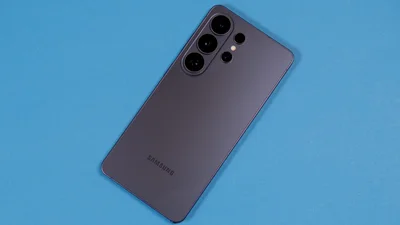
With the prospect of sinking profitability in 2026, Samsung is also making changes. The recently released Galaxy A37 and A57 mid-range devices come with a $50 price hike over the last generation. The company has also increased prices on some more expensive devices, adding $80 to the Galaxy Z Flip 7 (512 GB) and Z Fold 7 (512 GB and 1 TB). Some of its tablets are also more spendy, including a $100 increase for the Galaxy Tab S11.
With profitability in doubt, Samsung is on the verge of releasing new, ultra-expensive phones. This summer, the company will debut a new generation of Galaxy Z foldables, which are always priced even higher than the Galaxy S series. These devices come with ample storage and RAM to help justify the exorbitant price tags. That could make them prime candidates for price hikes that make them even more unrealistically expensive.