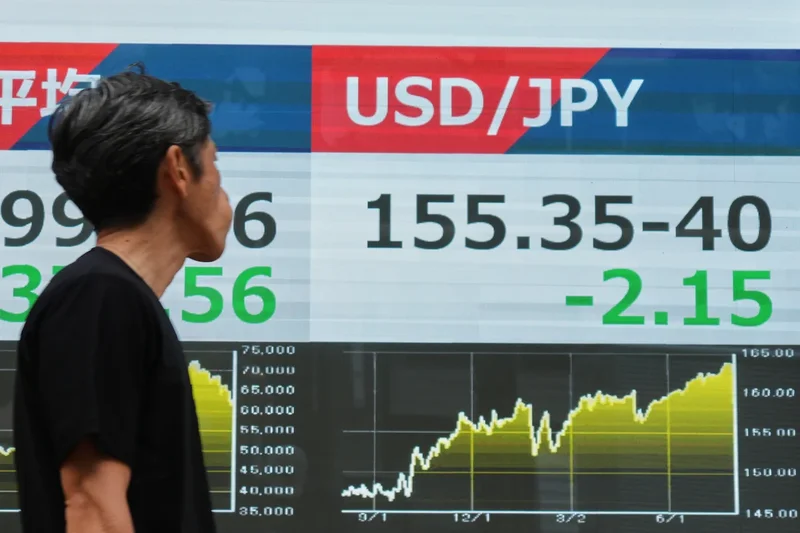
The U.S. dollar weakened sharply Monday against the Japanese yen after U.S. President Donald Trump and Japan’s finance minister confirmed both sides had intervened in markets.
Before late last week, the dollar was trading above 163 yen, touching 40-year highs. After regulators were suspected of stepping in, it fell below 160 yen.
Early Monday, after the official announcement of the intervention, the dollar dropped about 1% to 156.34 yen. That’s a big change for the exchange rate.
The yen's prolonged weakness against the dollar has been a source of frustration for Tokyo. Since Japan imports so much of what it consumes, a weak currency pushes prices higher, increasing inflation.
Efforts earlier this year to raise the value of the yen against the dollar did little to budge the exchange rate.
Last week, the U.S. side was suspected of lending a hand. When asked why Washington was helping, Trump said Sunday that “We have a good relationship with Japan. We’re very strong —- very, very strong financially — and they are, you know, they have a weakening yen, and they wanted a little bit of help, and we’re always there for Japan. Japan’s been very good to us, with the exception, of course, of Pearl Harbor.”
Trump said the U.S. got “financial benefit” out of the intervention, calling it a “signal of friendship.” “It’s also good for the world economy.”
In Tokyo, Finance Minister Satsuki Katayama issued a statement confirming the intervention, saying the finance ministry had purchased yen in coordination with the U.S. Treasury Department.
The move followed a joint statement last year and “countered excessive volatility and disorderly movements in the Japanese yen in recent months,” it said.
It added that the ministry would not hesitate to act further if necessary.