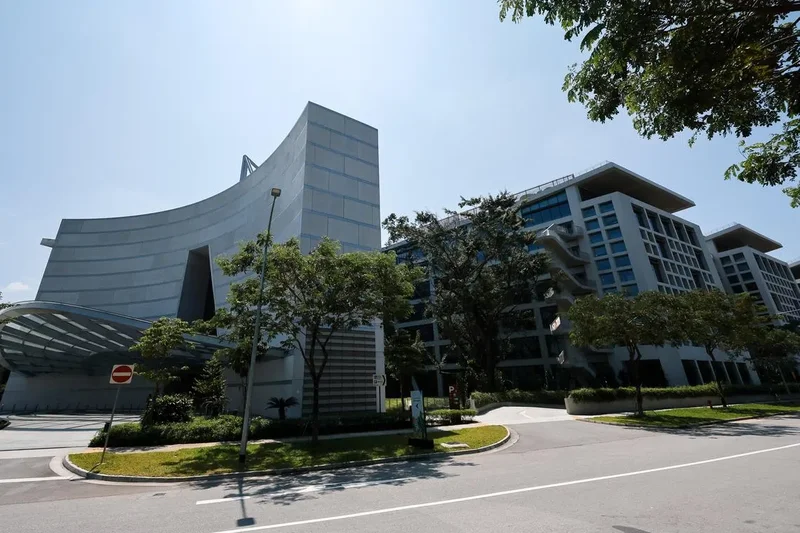
SINGAPORE – Three commercial buildings that incorporated long-term maintenance features into their design saved manpower and upkeep costs of up to nearly $1 million each year, a new BCA study has found.
When such “Design for Maintainability” (DfM) elements were integrated into a new residential project, the cost savings were up to $110,000 a year, said National Development Minister Chee Hong Tat.
Speaking at the Singapore Architecture Festival or Archifest on July 22, Chee said the study – which assessed the benefits of the design features and is the first of its kind – involved four buildings in Singapore.
The Building and Construction Authority (BCA) worked with Surbana Jurong to study two existing commercial buildings, one new commercial project, and the new residential development.
They are: the Surbana Jurong campus, the Ascent building in Science Park Drive, Shaw Tower and Copen Grand executive condominium.
Chee said: “Across the three commercial buildings studied, the potential annual operational savings from adopting DfM ranged from $310,000 to $950,000...
“For the residential development, the potential operational savings can be up to $110,000 a year.”
In his speech, he added that so far, 67 projects have got the Green Mark maintainability badge for adopting DfM measures.
Chee said BCA has been encouraging the built environment sector to adopt a DfM mindset, which entails incorporating longer-term maintainability considerations into the design process and investing more capital expenditure upfront, to enjoy greater cost and manpower savings across the building’s life cycle.
For instance, Shaw Tower included a simple cat-ladder access to its cooling tower, which enabled efficient, safe, and easy access to maintain the fan and basin at the top, instead of setting up scaffolding each time maintenance is needed.
“With this, Shaw Tower can enjoy lifecycle savings of over $750,000 with a payback period of just three years. With cooling towers having a typical 15-year service life, recovering the investment in three years means net positive returns thereafter for the remaining 12 years,” he said.
Across the three commercial buildings studied, the extra cost of incorporating DfM measures amounted to 0.6 per cent to 1.5 per cent of total construction cost. For the residential development, it was just 0.2 per cent of the total construction cost.
Less manpower
There are also meaningful manpower productivity gains. The study found that DfM features helped cut annual maintenance, with many achieving savings of more than 60 per cent.
Chee said: “The biggest gains came from architectural decisions – choices about design specifications, floor materials, ceiling types, and facade access – reinforcing the point that maintainability should be an upfront design consideration.”
He added that BCA will be working with the Singapore Institute of Architects and others to get feedback on how the study’s findings can be of more use before the final report is released later this year.
Changes to Corenet X platform
Chee also touched on the adjustments made to Corenet X, a digital platform to help streamline the approval process for construction projects on a single platform, instead of going through multiple agencies.
From Oct 1, 2026, all new projects with 5,000 sq m gross floor area (GFA) and above will be required to make submissions via Corenet X.
This will extend to medium-sized projects, which number about 50 new projects a year, he said.
It is also no longer mandatory for projects with GFA below 5,000 sq m to make submissions via Corenet X.
For now, ongoing projects and projects below 5,000 sq m can continue to use the Corenet 2.0 system, which is an e-submission system for building plans approval, and requires separate submissions to multiple agencies.
Firms that are ready to use Corenet X for these projects are still encouraged to do so, as there are benefits to using Corenet X even though it is not mandatory, Chee said.
Since becoming mandatory from October 1, 2025 for new projects with GFA above 30,000 sq m, more than 140 projects involving 300 firms have been submitted via Corenet X.
Firms have seen time savings of up to two months from faster regulatory approvals, cost savings from reduced abortive work and fewer resubmissions, as well as greater coordination, he added.
Chee said: “We are pragmatic and focus on solving practical problems to help our companies. When we need to change, we are prepared to change.”
Jubilee Park in Fort Canning
There are plans to develop a new pavilion and public space at Jubilee Park in Fort Canning, and the Urban Redevelopment Authority, with the support of the National Parks Board, will carry out a public engagement exercise and design competition, Chee added.
In recent competitions for Raffles Place Park and the Queensway node of the Rail Corridor, public engagement played a key role, he said.
Designers, communities, and stakeholders were included early in discussions to ensure the design brief proposed during the competition was grounded in how people use and experience these spaces, he added.
Chee said: “As we know, Fort Canning holds a very special place in Singapore’s history and in the hearts of many Singaporeans, and this is an opportunity to add a new layer to that story.”