Your support helps us to tell the story
From reproductive rights to climate change to Big Tech, The Independent is on the ground when the story is developing. Whether it's investigating the financials of Elon Musk's pro-Trump PAC or producing our latest documentary, 'The A Word', which shines a light on the American women fighting for reproductive rights, we know how important it is to parse out the facts from the messaging.
At such a critical moment in US history, we need reporters on the ground. Your donation allows us to keep sending journalists to speak to both sides of the story.
The Independent is trusted by Americans across the entire political spectrum. And unlike many other quality news outlets, we choose not to lock Americans out of our reporting and analysis with paywalls. We believe quality journalism should be available to everyone, paid for by those who can afford it.
Your support makes all the difference.
Read more
From microplastics clogging up our oceans to landfills leaching out dangerous chemicals, plastic waste is a serious and growing problem for human health and the environment. We need to recycle more, and crucially, recycle better.
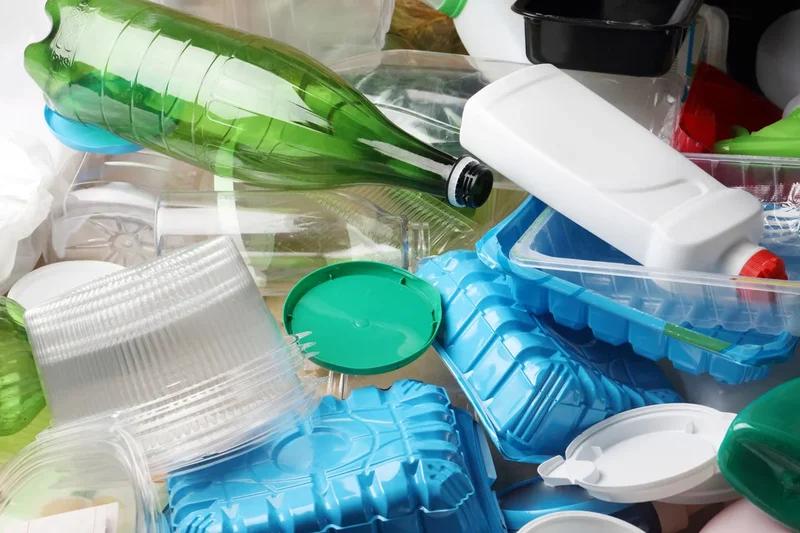
Most plastic that is recycled is melted and remoulded into lower-quality products such as carpet fibres and garden planters, before eventually ending up in landfill or the incinerator. This is downcycling rather than proper recycling. Current methods don’t enable the recovery of the original components of the waste – that means they cannot be truly recycled back into new high-quality plastic.
Most plastic that is recycled is melted and remoulded into lower-quality products such as carpet fibres and garden planters (Getty Images/iStockphoto)
A 2026 study from the University of Manchester marks a potential turning point in our ability to recycle better. The study focused on polycarbonate, a type of hard plastic. These plastics are common, but notoriously difficult to degrade as they are specifically designed for strength and durability for use in safety glasses, electronics and as machine parts.
The Manchester authors report a way to rapidly digest polycarbonate back to its original building blocks. They did this by creating an enzyme (proteins that carry out chemical reactions) to digest the polycarbonate. This is part of a major emerging field, using super-enzymes for green recycling of our waste.
Enzymes are nature’s nano-machines, they speed up reactions to make and break chemical bonds, converting one compound into another. For example, digestive enzymes can break starch in bread back to the simple sugars from which it is made. If enzymes could similarly digest plastic into its original building blocks these blocks could then be re-used to synthesise new plastic. So, a double win, less waste, plus this could drastically decrease the need to extract crude oil to manufacture new plastic.
However, there are two big problems. First, plastics need heating to around 70°C to open up their structures enough for the enzymes to get at the chemical bonds that hold them together. But enzymes are proteins, and proteins get destroyed by heat, think of the way the clear protein in your egg white solidifies and permanently changes as it hits the pan. The other issue is that enzymes have evolved to work on natural compounds, not human-made synthetics.
Ancient evolution can help with the heat problem. Some microbes, called extremophiles, live at temperatures of more than 100°C, in volcanoes and deep-sea hot springs. To be able to do this, their proteins have evolved special features to make them thermo-resistant. These include a rigid outer shell, and lots of high-strength bonds between different parts of the protein, acting like steel girders to reinforce the structure against the effects of heat. These evolutionary innovations give us a blueprint for making our plastic digesters heat-resistant.
That still leaves the difficulty of how to get enzymes to work on synthetic materials. Here we can turn to some of the tricks used by protein engineers like me. One approach is directed evolution, a way of breeding better proteins by repeated mutation and selection, just like natural evolution but compressing that process in the lab into just a few weeks. Directed evolution can train proteins to work on plastics rather than their natural substrates, and this was a key method employed by the Manchester group in their development of a polycarbonate digester.
Supercharging with AI
Artificial intelligence can supercharge the process of protein and enzyme design. By training machine learning models to analyse millions of existing proteins, correlations between the specific functional activity of each protein and the structural features that make up that protein can be mapped. The computer can then predict what structural features we need to introduce or modify in our starting protein to achieve a particular target function.
Nick Brindle is a Professor of Cell Signalling, University of Leicester. This article was first published by The Conversation and is republished under a Creative Commons licence. Read the original article.
Combining strategies like directed evolution and AI, and adding the hacks for heat resistance learned from the extremophiles, lets scientists build super-enzymes, stable at 70°C and trained to digest plastics and spit out the very components needed to make a truly circular plastic economy.
Using super-enzymes for green recycling is on the horizon for other types of waste as well, including synthetic textiles, electronics and even astronaut waste deep in space. By looking back to ancient evolution and combining this with the latest lab evolution and AI we could improve our future, potentially changing plastic waste from a problem into a resource.